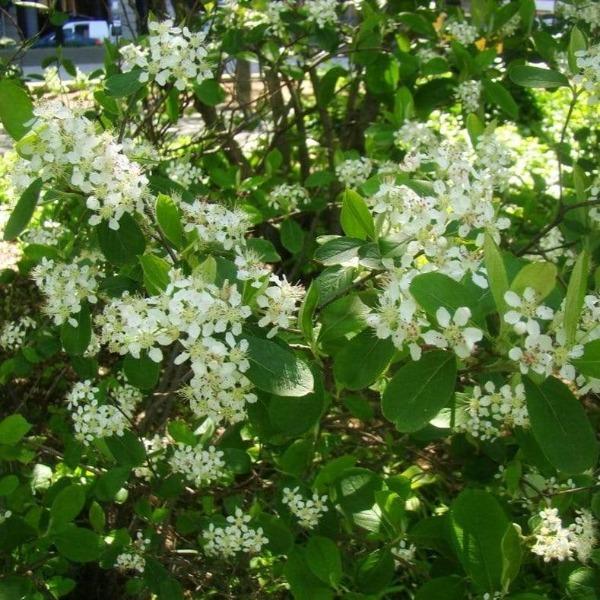
Red Chokeberry
Brilliant Red Fall Color That Steals The Show
Red Chokeberry ‘Brilliantissima’ is famous for one reason gardeners never forget: the fall color. When nights cool down, the glossy green foliage turns vivid red, with deep purple tones, creating a high-impact autumn display that reads bold from the street and looks even richer up close. It’s a simple way to make your landscape feel more intentional, especially when planted where the setting sun catches the leaves.
Because it’s a densely branched shrub, the color doesn’t disappear into the background. Instead, it forms a full, upright presence that looks great as a specimen, in a mixed border, or planted in repeating drifts for a more designed look. If you want fall color that shows up every year without constant fussing, this is a dependable, plant-it-once choice.
Glossy Dark Red Berries For Winter Interest And Birds
After the spring bloom, Red Chokeberry develops clusters of glossy, dark red berries that hang on well into winter. That fruit display adds texture and seasonal detail when many shrubs are bare, especially when planted where you can see it from windows, a walkway, or the patio. It’s the kind of winter interest that makes a landscape feel alive even in the quiet months.
The berries are edible but very tart and astringent when eaten fresh, which is why chokeberry earned its name. Where they shine is in the landscape: birds are commonly the main “harvesters,” and the berries can also be used for jams and jellies if you like experimenting in the kitchen. Either way, you get beauty with a purpose—ornamental fruit that lasts.
A Hardy Shrub That Handles Wet Spots And Real-World Soil
This improved red chokeberry is tough enough for everyday landscapes, including sites that frustrate more delicate shrubs. It grows well in full sun to part shade, and it’s notably tolerant of a wide range of soils. If you have a spot that stays consistently moist or occasionally gets “wet feet,” it can still perform, just avoid permanently waterlogged ground and give it some breathing room.
In full sun, you’ll typically see the strongest flowering, the best berry set, and the most intense fall color. In part shade, it still grows well, especially in warmer areas where a little afternoon shade can be helpful. Once established, it’s a low-maintenance workhorse: keep weeds and turf away from the base, mulch lightly, and water well the first season so the root system settles in strong.
Low-Fuss Maintenance With Simple Pruning For Long-Term Beauty
Red Chokeberry looks best when it’s allowed to keep its natural, upright form, full, densely branched, and slightly informal in a way that feels right in both native and polished landscapes. The main maintenance job is occasional thinning to keep the shrub vigorous and attractive over time. That’s good news: this is not a plant that needs constant shaping to look “finished.”
Prune in late winter or early spring by removing a portion of the oldest stems at the base to encourage fresh new growth. This keeps the plant from getting woody, improves airflow, and supports better flowering and fruiting on newer stems. Bonus confidence point: it’s self-pollinating, so a single plant can produce fruit. Add more only if you want a fuller hedge, a bigger berry display, or a stronger mass-planting effect.
Brilliant Red Fall Color That Steals The Show
Red Chokeberry ‘Brilliantissima’ is famous for one reason gardeners never forget: the fall color. When nights cool down, the glossy green foliage turns vivid red, with deep purple tones, creating a high-impact autumn display that reads bold from the street and looks even richer up close. It’s a simple way to make your landscape feel more intentional, especially when planted where the setting sun catches the leaves.
Because it’s a densely branched shrub, the color doesn’t disappear into the background. Instead, it forms a full, upright presence that looks great as a specimen, in a mixed border, or planted in repeating drifts for a more designed look. If you want fall color that shows up every year without constant fussing, this is a dependable, plant-it-once choice.
Glossy Dark Red Berries For Winter Interest And Birds
After the spring bloom, Red Chokeberry develops clusters of glossy, dark red berries that hang on well into winter. That fruit display adds texture and seasonal detail when many shrubs are bare, especially when planted where you can see it from windows, a walkway, or the patio. It’s the kind of winter interest that makes a landscape feel alive even in the quiet months.
The berries are edible but very tart and astringent when eaten fresh, which is why chokeberry earned its name. Where they shine is in the landscape: birds are commonly the main “harvesters,” and the berries can also be used for jams and jellies if you like experimenting in the kitchen. Either way, you get beauty with a purpose—ornamental fruit that lasts.
A Hardy Shrub That Handles Wet Spots And Real-World Soil
This improved red chokeberry is tough enough for everyday landscapes, including sites that frustrate more delicate shrubs. It grows well in full sun to part shade, and it’s notably tolerant of a wide range of soils. If you have a spot that stays consistently moist or occasionally gets “wet feet,” it can still perform, just avoid permanently waterlogged ground and give it some breathing room.
In full sun, you’ll typically see the strongest flowering, the best berry set, and the most intense fall color. In part shade, it still grows well, especially in warmer areas where a little afternoon shade can be helpful. Once established, it’s a low-maintenance workhorse: keep weeds and turf away from the base, mulch lightly, and water well the first season so the root system settles in strong.
Low-Fuss Maintenance With Simple Pruning For Long-Term Beauty
Red Chokeberry looks best when it’s allowed to keep its natural, upright form, full, densely branched, and slightly informal in a way that feels right in both native and polished landscapes. The main maintenance job is occasional thinning to keep the shrub vigorous and attractive over time. That’s good news: this is not a plant that needs constant shaping to look “finished.”
Prune in late winter or early spring by removing a portion of the oldest stems at the base to encourage fresh new growth. This keeps the plant from getting woody, improves airflow, and supports better flowering and fruiting on newer stems. Bonus confidence point: it’s self-pollinating, so a single plant can produce fruit. Add more only if you want a fuller hedge, a bigger berry display, or a stronger mass-planting effect.
Original: $39.95
-70%$39.95
$11.99Description
Brilliant Red Fall Color That Steals The Show
Red Chokeberry ‘Brilliantissima’ is famous for one reason gardeners never forget: the fall color. When nights cool down, the glossy green foliage turns vivid red, with deep purple tones, creating a high-impact autumn display that reads bold from the street and looks even richer up close. It’s a simple way to make your landscape feel more intentional, especially when planted where the setting sun catches the leaves.
Because it’s a densely branched shrub, the color doesn’t disappear into the background. Instead, it forms a full, upright presence that looks great as a specimen, in a mixed border, or planted in repeating drifts for a more designed look. If you want fall color that shows up every year without constant fussing, this is a dependable, plant-it-once choice.
Glossy Dark Red Berries For Winter Interest And Birds
After the spring bloom, Red Chokeberry develops clusters of glossy, dark red berries that hang on well into winter. That fruit display adds texture and seasonal detail when many shrubs are bare, especially when planted where you can see it from windows, a walkway, or the patio. It’s the kind of winter interest that makes a landscape feel alive even in the quiet months.
The berries are edible but very tart and astringent when eaten fresh, which is why chokeberry earned its name. Where they shine is in the landscape: birds are commonly the main “harvesters,” and the berries can also be used for jams and jellies if you like experimenting in the kitchen. Either way, you get beauty with a purpose—ornamental fruit that lasts.
A Hardy Shrub That Handles Wet Spots And Real-World Soil
This improved red chokeberry is tough enough for everyday landscapes, including sites that frustrate more delicate shrubs. It grows well in full sun to part shade, and it’s notably tolerant of a wide range of soils. If you have a spot that stays consistently moist or occasionally gets “wet feet,” it can still perform, just avoid permanently waterlogged ground and give it some breathing room.
In full sun, you’ll typically see the strongest flowering, the best berry set, and the most intense fall color. In part shade, it still grows well, especially in warmer areas where a little afternoon shade can be helpful. Once established, it’s a low-maintenance workhorse: keep weeds and turf away from the base, mulch lightly, and water well the first season so the root system settles in strong.
Low-Fuss Maintenance With Simple Pruning For Long-Term Beauty
Red Chokeberry looks best when it’s allowed to keep its natural, upright form, full, densely branched, and slightly informal in a way that feels right in both native and polished landscapes. The main maintenance job is occasional thinning to keep the shrub vigorous and attractive over time. That’s good news: this is not a plant that needs constant shaping to look “finished.”
Prune in late winter or early spring by removing a portion of the oldest stems at the base to encourage fresh new growth. This keeps the plant from getting woody, improves airflow, and supports better flowering and fruiting on newer stems. Bonus confidence point: it’s self-pollinating, so a single plant can produce fruit. Add more only if you want a fuller hedge, a bigger berry display, or a stronger mass-planting effect.