Blue Creeping Mazus
A spring carpet of lilac-blue flowers that hugs the ground
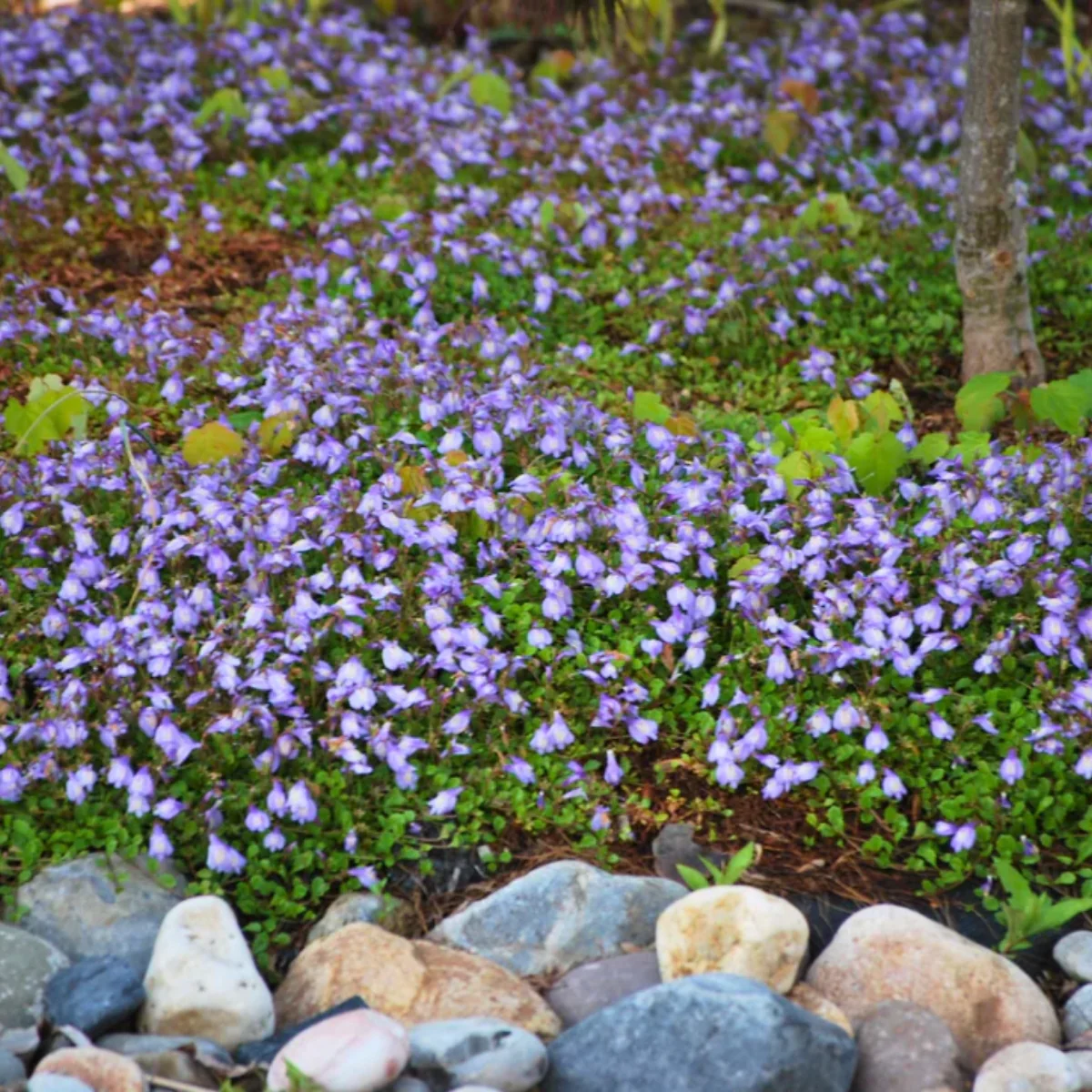
Blue Creeping Mazus earns its spot by blooming low and generously, creating a soft carpet of lilac-blue, snapdragon-like flowers in spring. The blooms sit just above the tiny green leaves, so the whole planting looks like it’s been lightly painted with color, especially when used in drifts. It’s a perfect choice for the front edge of beds, around small shrubs, or anywhere you want spring interest without adding height.
The flower show is charming up close, which is why it’s so popular near paths and patios. Those small blooms feel delicate, but the plant itself is surprisingly tough once it’s rooted in. If you want a groundcover that feels refined, not aggressive, and still gives you a real bloom moment in spring, Blue Creeping Mazus is a smart, satisfying pick.
A tidy mat for stepping stones and light foot traffic
This is one of the best “filler” groundcovers for spaces between stepping stones, pavers, and edging stones because it stays very low and knits into a dense mat. It tolerates gentle foot traffic, especially once established, and it bounces back well when planted in the right conditions. The foliage makes a clean green base that softens hardscape lines and replaces bare mulch gaps with living texture.
Design-wise, it’s a problem-solver: it fills awkward, narrow strips, smooths transitions between stone and soil, and keeps planting areas looking finished. Use it along walkways, at the edge of a rock garden, or as a small-scale lawn alternative in tiny pockets where mowing is annoying. The key is spacing it correctly so it can knit together without leaving open patches.
Moisture-friendly performance for shade borders and rain-garden edges
Blue Creeping Mazus prefers consistently moist soil and performs beautifully in bright shade to part shade, especially where other groundcovers struggle to look lush. It’s a strong choice for woodland edges, under open-canopy trees, and the cooler parts of the yard that stay evenly damp. It can also handle medium-to-wet conditions as long as water doesn’t pool around the roots for long periods.
This is not a “plant it dry and forget it” groundcover. If your site dries out hard in summer, Mazus will sulk and thin. But if you can offer steady moisture (and decent drainage), it rewards you with thicker coverage, better bloom, and a more polished, weed-suppressing mat.
Easy finishing touches that keep it dense and crisp
Blue Creeping Mazus looks its best with one simple habit: a light trim after flowering. Snipping or shearing the patch gently removes spent blooms, encourages fresh foliage, and keeps the mat tighter and more uniform. It’s a quick, low-effort move that makes the planting look intentionally maintained, especially between stones or along a border edge.
Spacing and edging do the rest. Plant it at a sufficient density to knit together, then let it creep and root at the nodes to fill gaps naturally. If it wanders into places you don’t want it, it’s easy to pull back or edge cleanly. With moisture, a little post-bloom cleanup, and smart spacing, Blue Creeping Mazus becomes the kind of groundcover you use again and again.
A spring carpet of lilac-blue flowers that hugs the ground
Blue Creeping Mazus earns its spot by blooming low and generously, creating a soft carpet of lilac-blue, snapdragon-like flowers in spring. The blooms sit just above the tiny green leaves, so the whole planting looks like it’s been lightly painted with color, especially when used in drifts. It’s a perfect choice for the front edge of beds, around small shrubs, or anywhere you want spring interest without adding height.
The flower show is charming up close, which is why it’s so popular near paths and patios. Those small blooms feel delicate, but the plant itself is surprisingly tough once it’s rooted in. If you want a groundcover that feels refined, not aggressive, and still gives you a real bloom moment in spring, Blue Creeping Mazus is a smart, satisfying pick.
A tidy mat for stepping stones and light foot traffic
This is one of the best “filler” groundcovers for spaces between stepping stones, pavers, and edging stones because it stays very low and knits into a dense mat. It tolerates gentle foot traffic, especially once established, and it bounces back well when planted in the right conditions. The foliage makes a clean green base that softens hardscape lines and replaces bare mulch gaps with living texture.
Design-wise, it’s a problem-solver: it fills awkward, narrow strips, smooths transitions between stone and soil, and keeps planting areas looking finished. Use it along walkways, at the edge of a rock garden, or as a small-scale lawn alternative in tiny pockets where mowing is annoying. The key is spacing it correctly so it can knit together without leaving open patches.
Moisture-friendly performance for shade borders and rain-garden edges
Blue Creeping Mazus prefers consistently moist soil and performs beautifully in bright shade to part shade, especially where other groundcovers struggle to look lush. It’s a strong choice for woodland edges, under open-canopy trees, and the cooler parts of the yard that stay evenly damp. It can also handle medium-to-wet conditions as long as water doesn’t pool around the roots for long periods.
This is not a “plant it dry and forget it” groundcover. If your site dries out hard in summer, Mazus will sulk and thin. But if you can offer steady moisture (and decent drainage), it rewards you with thicker coverage, better bloom, and a more polished, weed-suppressing mat.
Easy finishing touches that keep it dense and crisp
Blue Creeping Mazus looks its best with one simple habit: a light trim after flowering. Snipping or shearing the patch gently removes spent blooms, encourages fresh foliage, and keeps the mat tighter and more uniform. It’s a quick, low-effort move that makes the planting look intentionally maintained, especially between stones or along a border edge.
Spacing and edging do the rest. Plant it at a sufficient density to knit together, then let it creep and root at the nodes to fill gaps naturally. If it wanders into places you don’t want it, it’s easy to pull back or edge cleanly. With moisture, a little post-bloom cleanup, and smart spacing, Blue Creeping Mazus becomes the kind of groundcover you use again and again.
Description
A spring carpet of lilac-blue flowers that hugs the ground
Blue Creeping Mazus earns its spot by blooming low and generously, creating a soft carpet of lilac-blue, snapdragon-like flowers in spring. The blooms sit just above the tiny green leaves, so the whole planting looks like it’s been lightly painted with color, especially when used in drifts. It’s a perfect choice for the front edge of beds, around small shrubs, or anywhere you want spring interest without adding height.
The flower show is charming up close, which is why it’s so popular near paths and patios. Those small blooms feel delicate, but the plant itself is surprisingly tough once it’s rooted in. If you want a groundcover that feels refined, not aggressive, and still gives you a real bloom moment in spring, Blue Creeping Mazus is a smart, satisfying pick.
A tidy mat for stepping stones and light foot traffic
This is one of the best “filler” groundcovers for spaces between stepping stones, pavers, and edging stones because it stays very low and knits into a dense mat. It tolerates gentle foot traffic, especially once established, and it bounces back well when planted in the right conditions. The foliage makes a clean green base that softens hardscape lines and replaces bare mulch gaps with living texture.
Design-wise, it’s a problem-solver: it fills awkward, narrow strips, smooths transitions between stone and soil, and keeps planting areas looking finished. Use it along walkways, at the edge of a rock garden, or as a small-scale lawn alternative in tiny pockets where mowing is annoying. The key is spacing it correctly so it can knit together without leaving open patches.
Moisture-friendly performance for shade borders and rain-garden edges
Blue Creeping Mazus prefers consistently moist soil and performs beautifully in bright shade to part shade, especially where other groundcovers struggle to look lush. It’s a strong choice for woodland edges, under open-canopy trees, and the cooler parts of the yard that stay evenly damp. It can also handle medium-to-wet conditions as long as water doesn’t pool around the roots for long periods.
This is not a “plant it dry and forget it” groundcover. If your site dries out hard in summer, Mazus will sulk and thin. But if you can offer steady moisture (and decent drainage), it rewards you with thicker coverage, better bloom, and a more polished, weed-suppressing mat.
Easy finishing touches that keep it dense and crisp
Blue Creeping Mazus looks its best with one simple habit: a light trim after flowering. Snipping or shearing the patch gently removes spent blooms, encourages fresh foliage, and keeps the mat tighter and more uniform. It’s a quick, low-effort move that makes the planting look intentionally maintained, especially between stones or along a border edge.
Spacing and edging do the rest. Plant it at a sufficient density to knit together, then let it creep and root at the nodes to fill gaps naturally. If it wanders into places you don’t want it, it’s easy to pull back or edge cleanly. With moisture, a little post-bloom cleanup, and smart spacing, Blue Creeping Mazus becomes the kind of groundcover you use again and again.