Husker Red Penstemon
Burgundy Foliage and White Blooms in One Easy Perennial
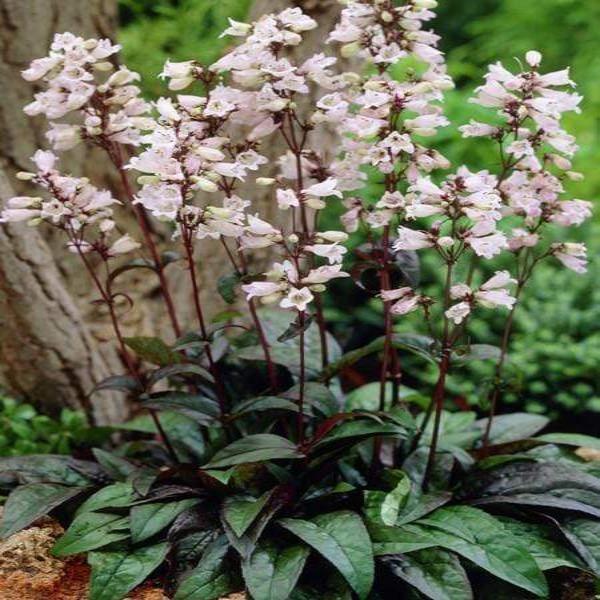
Husker Red Penstemon is a standout perennial grown for its burgundy-red spring foliage, red stems, and tall spikes of white tubular flowers. Also known as Husker Red Beardtongue, this cultivar brings strong foliage contrast before bloom and a clean white flower display in late spring to early summer.
Unlike many perennials that rely only on flowers for impact, Husker Red earns its place with both leaf color and bloom. The maroon-toned foliage is especially attractive in spring and in sunny exposures, while the white flowers create a bright contrast above the darker stems. It is a strong choice for gardeners who want a native-style perennial with more color depth than plain green foliage.
White Tubular Flowers That Stand Above Red Stems
In late spring to early summer, Husker Red Penstemon produces upright flower stems topped with clusters of white, tubular, foxglove-like blooms. The flowers rise above the foliage and create vertical texture without overwhelming nearby plants.
These blooms are especially valuable in pollinator-friendly plantings. Their tubular shape attracts hummingbirds, bees, butterflies, and other beneficial pollinators, while the upright form works well with rounded perennials, mounding foliage plants, and ornamental grasses. After bloom, the foliage continues to provide texture and color contrast in the garden.
Perfect for Native Borders, Pollinator Gardens, and Sunny Beds
Husker Red Penstemon fits beautifully into sunny perennial borders, native plant gardens, pollinator beds, cottage gardens, meadow-style plantings, and foundation borders. Its moderate size makes it easy to use in the middle of a bed, where the flower spikes can rise above lower perennials while the red foliage adds color near the base.
Plant it with coneflowers, Black Eyed Susan, salvia, catmint, yarrow, coreopsis, bee balm, liatris, asters, and ornamental grasses for a long-season pollinator planting. The white flowers and burgundy foliage make it especially useful for tying together purple, pink, blue, yellow, and silver foliage combinations.
Deer Resistant, Pollinator Friendly, and Drought Tolerant Once Established
Husker Red Penstemon is generally considered deer resistant, making it a useful option for sunny gardens where browsing pressure can be an issue. Deer resistance can vary by location and season, but this plant is usually a lower-risk choice than many softer-flowering perennials.
Once established, it can tolerate periods of dry weather and performs well in average, well-drained soil. It also handles heat and humidity better than many ornamental penstemons. For homeowners looking for a low-maintenance perennial with wildlife value, foliage color, and clean white flowers, Husker Red is a dependable choice.
Easy Care with Sun, Drainage, and Light Seasonal Cleanup
Plant Husker Red Penstemon in full sun to part shade with well-drained soil. Full sun encourages the best foliage color and strongest flowering, while part shade is tolerated, especially in warmer climates. Avoid wet, heavy soil that stays soggy, particularly in winter.
Water regularly after planting until roots establish, then water during extended dry periods as needed. Remove spent flower stems after bloom if you prefer a tidier look, or leave some seed heads for natural texture. Cut back old stems in late winter or early spring before new growth appears.
Burgundy Foliage and White Blooms in One Easy Perennial
Husker Red Penstemon is a standout perennial grown for its burgundy-red spring foliage, red stems, and tall spikes of white tubular flowers. Also known as Husker Red Beardtongue, this cultivar brings strong foliage contrast before bloom and a clean white flower display in late spring to early summer.
Unlike many perennials that rely only on flowers for impact, Husker Red earns its place with both leaf color and bloom. The maroon-toned foliage is especially attractive in spring and in sunny exposures, while the white flowers create a bright contrast above the darker stems. It is a strong choice for gardeners who want a native-style perennial with more color depth than plain green foliage.
White Tubular Flowers That Stand Above Red Stems
In late spring to early summer, Husker Red Penstemon produces upright flower stems topped with clusters of white, tubular, foxglove-like blooms. The flowers rise above the foliage and create vertical texture without overwhelming nearby plants.
These blooms are especially valuable in pollinator-friendly plantings. Their tubular shape attracts hummingbirds, bees, butterflies, and other beneficial pollinators, while the upright form works well with rounded perennials, mounding foliage plants, and ornamental grasses. After bloom, the foliage continues to provide texture and color contrast in the garden.
Perfect for Native Borders, Pollinator Gardens, and Sunny Beds
Husker Red Penstemon fits beautifully into sunny perennial borders, native plant gardens, pollinator beds, cottage gardens, meadow-style plantings, and foundation borders. Its moderate size makes it easy to use in the middle of a bed, where the flower spikes can rise above lower perennials while the red foliage adds color near the base.
Plant it with coneflowers, Black Eyed Susan, salvia, catmint, yarrow, coreopsis, bee balm, liatris, asters, and ornamental grasses for a long-season pollinator planting. The white flowers and burgundy foliage make it especially useful for tying together purple, pink, blue, yellow, and silver foliage combinations.
Deer Resistant, Pollinator Friendly, and Drought Tolerant Once Established
Husker Red Penstemon is generally considered deer resistant, making it a useful option for sunny gardens where browsing pressure can be an issue. Deer resistance can vary by location and season, but this plant is usually a lower-risk choice than many softer-flowering perennials.
Once established, it can tolerate periods of dry weather and performs well in average, well-drained soil. It also handles heat and humidity better than many ornamental penstemons. For homeowners looking for a low-maintenance perennial with wildlife value, foliage color, and clean white flowers, Husker Red is a dependable choice.
Easy Care with Sun, Drainage, and Light Seasonal Cleanup
Plant Husker Red Penstemon in full sun to part shade with well-drained soil. Full sun encourages the best foliage color and strongest flowering, while part shade is tolerated, especially in warmer climates. Avoid wet, heavy soil that stays soggy, particularly in winter.
Water regularly after planting until roots establish, then water during extended dry periods as needed. Remove spent flower stems after bloom if you prefer a tidier look, or leave some seed heads for natural texture. Cut back old stems in late winter or early spring before new growth appears.
Original: $26.95
-70%$26.95
$8.08Description
Burgundy Foliage and White Blooms in One Easy Perennial
Husker Red Penstemon is a standout perennial grown for its burgundy-red spring foliage, red stems, and tall spikes of white tubular flowers. Also known as Husker Red Beardtongue, this cultivar brings strong foliage contrast before bloom and a clean white flower display in late spring to early summer.
Unlike many perennials that rely only on flowers for impact, Husker Red earns its place with both leaf color and bloom. The maroon-toned foliage is especially attractive in spring and in sunny exposures, while the white flowers create a bright contrast above the darker stems. It is a strong choice for gardeners who want a native-style perennial with more color depth than plain green foliage.
White Tubular Flowers That Stand Above Red Stems
In late spring to early summer, Husker Red Penstemon produces upright flower stems topped with clusters of white, tubular, foxglove-like blooms. The flowers rise above the foliage and create vertical texture without overwhelming nearby plants.
These blooms are especially valuable in pollinator-friendly plantings. Their tubular shape attracts hummingbirds, bees, butterflies, and other beneficial pollinators, while the upright form works well with rounded perennials, mounding foliage plants, and ornamental grasses. After bloom, the foliage continues to provide texture and color contrast in the garden.
Perfect for Native Borders, Pollinator Gardens, and Sunny Beds
Husker Red Penstemon fits beautifully into sunny perennial borders, native plant gardens, pollinator beds, cottage gardens, meadow-style plantings, and foundation borders. Its moderate size makes it easy to use in the middle of a bed, where the flower spikes can rise above lower perennials while the red foliage adds color near the base.
Plant it with coneflowers, Black Eyed Susan, salvia, catmint, yarrow, coreopsis, bee balm, liatris, asters, and ornamental grasses for a long-season pollinator planting. The white flowers and burgundy foliage make it especially useful for tying together purple, pink, blue, yellow, and silver foliage combinations.
Deer Resistant, Pollinator Friendly, and Drought Tolerant Once Established
Husker Red Penstemon is generally considered deer resistant, making it a useful option for sunny gardens where browsing pressure can be an issue. Deer resistance can vary by location and season, but this plant is usually a lower-risk choice than many softer-flowering perennials.
Once established, it can tolerate periods of dry weather and performs well in average, well-drained soil. It also handles heat and humidity better than many ornamental penstemons. For homeowners looking for a low-maintenance perennial with wildlife value, foliage color, and clean white flowers, Husker Red is a dependable choice.
Easy Care with Sun, Drainage, and Light Seasonal Cleanup
Plant Husker Red Penstemon in full sun to part shade with well-drained soil. Full sun encourages the best foliage color and strongest flowering, while part shade is tolerated, especially in warmer climates. Avoid wet, heavy soil that stays soggy, particularly in winter.
Water regularly after planting until roots establish, then water during extended dry periods as needed. Remove spent flower stems after bloom if you prefer a tidier look, or leave some seed heads for natural texture. Cut back old stems in late winter or early spring before new growth appears.