Limelight Hydrangea
Show-Stopping Lime Blooms That Evolve Into A Fall Pink Finish
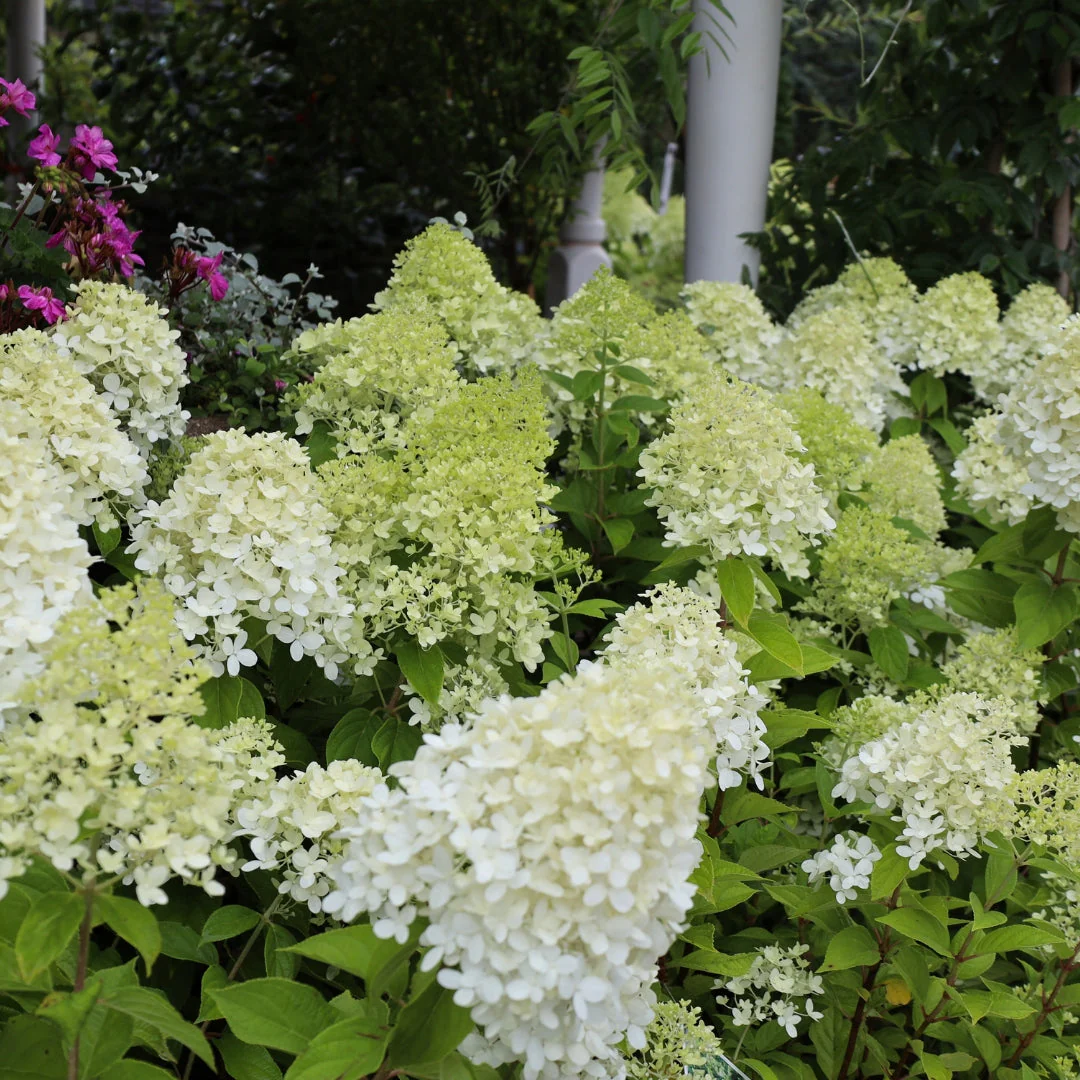
Limelight Hydrangea is famous for one reason: it puts on a long, dramatic show when most landscapes need it most. Huge cone-shaped flower clusters open in that signature lime-green tone, brighten to creamy white as summer settles in, then pick up rosy pink to deeper blush as nights cool toward fall. The result is a shrub that looks “in bloom” for months, not weeks—an instant upgrade for anyone who wants reliable color without constant replanting.
Those big blooms also deliver real design flexibility. Limelight looks equally at home in a crisp foundation bed, a cottage-style border, or a modern landscape with clean lines and evergreen backdrops. It’s also one of the best hydrangeas for fresh-cut arrangements and dried flowers, because the blooms are plentiful, substantial, and hold their shape beautifully through the season.
Big, Bold Growth That Creates Privacy, Structure, And Seasonal Drama
This is not a tiny hydrangea—and that’s the point. Limelight typically matures around 6–8 feet tall and 6–8 feet wide, forming a full, upright shrub that reads like a “flowering screen” when planted in a row. If you’ve ever wanted a hedge that blooms, this is one of the best candidates: it fills space quickly, looks lush from top to bottom, and delivers a seasonal color shift that makes the whole property feel more alive.
Because it grows with presence, Limelight is also excellent as a specimen shrub. One plant can anchor a bed the way an evergreen might—only with a summer-to-fall bloom performance that becomes the centerpiece. Give it room to reach its natural width, and you’ll get a cleaner shape, better airflow, and a more impressive, balanced bloom canopy.
Sun-Tough Performance With Simple, Confidence-Boosting Care
Limelight is a panicle hydrangea, which means it’s generally more sun-tolerant than bigleaf types. Full sun to part shade works well, with the “best” spot depending on your climate: cooler regions can lean toward sunnier spots for maximum blooms, while hotter regions benefit from morning sun and a little afternoon shade to keep foliage looking fresh through the heat. Either way, it’s a shrub that performs in real-life yards—not just perfect garden beds—when you keep the basics consistent.
Moisture is the secret to those biggest, prettiest flower cones. Aim for evenly moist (not soggy) soil, especially in the first season and during summer heat. A mulch ring helps stabilize moisture and temperature, and deep watering during dry spells prevents stress that can reduce bloom size. Once established, Limelight is sturdy and forgiving—but it always looks best when you keep the root zone from drying out too much.
Easy Pruning Because It Blooms On New Wood
Limelight blooms on new wood, which makes pruning refreshingly straightforward. You’re not tiptoeing around last year’s buds—this shrub sets flowers on the season’s fresh growth. That means you can prune in late winter to early spring and still get a full bloom show the same year. It’s one of the biggest reasons Limelight stays so popular: the care routine is simple, repeatable, and beginner-friendly.
For a tidy shrub with strong stems, think “shape and support,” not “chop it down.” Remove dead or damaged wood first, then reduce overall height by about one-third if you want to control size and encourage sturdy branching. Light annual pruning also improves airflow and keeps the plant from getting leggy over time—so you get a cleaner silhouette and better flowering with less fuss.
Show-Stopping Lime Blooms That Evolve Into A Fall Pink Finish
Limelight Hydrangea is famous for one reason: it puts on a long, dramatic show when most landscapes need it most. Huge cone-shaped flower clusters open in that signature lime-green tone, brighten to creamy white as summer settles in, then pick up rosy pink to deeper blush as nights cool toward fall. The result is a shrub that looks “in bloom” for months, not weeks—an instant upgrade for anyone who wants reliable color without constant replanting.
Those big blooms also deliver real design flexibility. Limelight looks equally at home in a crisp foundation bed, a cottage-style border, or a modern landscape with clean lines and evergreen backdrops. It’s also one of the best hydrangeas for fresh-cut arrangements and dried flowers, because the blooms are plentiful, substantial, and hold their shape beautifully through the season.
Big, Bold Growth That Creates Privacy, Structure, And Seasonal Drama
This is not a tiny hydrangea—and that’s the point. Limelight typically matures around 6–8 feet tall and 6–8 feet wide, forming a full, upright shrub that reads like a “flowering screen” when planted in a row. If you’ve ever wanted a hedge that blooms, this is one of the best candidates: it fills space quickly, looks lush from top to bottom, and delivers a seasonal color shift that makes the whole property feel more alive.
Because it grows with presence, Limelight is also excellent as a specimen shrub. One plant can anchor a bed the way an evergreen might—only with a summer-to-fall bloom performance that becomes the centerpiece. Give it room to reach its natural width, and you’ll get a cleaner shape, better airflow, and a more impressive, balanced bloom canopy.
Sun-Tough Performance With Simple, Confidence-Boosting Care
Limelight is a panicle hydrangea, which means it’s generally more sun-tolerant than bigleaf types. Full sun to part shade works well, with the “best” spot depending on your climate: cooler regions can lean toward sunnier spots for maximum blooms, while hotter regions benefit from morning sun and a little afternoon shade to keep foliage looking fresh through the heat. Either way, it’s a shrub that performs in real-life yards—not just perfect garden beds—when you keep the basics consistent.
Moisture is the secret to those biggest, prettiest flower cones. Aim for evenly moist (not soggy) soil, especially in the first season and during summer heat. A mulch ring helps stabilize moisture and temperature, and deep watering during dry spells prevents stress that can reduce bloom size. Once established, Limelight is sturdy and forgiving—but it always looks best when you keep the root zone from drying out too much.
Easy Pruning Because It Blooms On New Wood
Limelight blooms on new wood, which makes pruning refreshingly straightforward. You’re not tiptoeing around last year’s buds—this shrub sets flowers on the season’s fresh growth. That means you can prune in late winter to early spring and still get a full bloom show the same year. It’s one of the biggest reasons Limelight stays so popular: the care routine is simple, repeatable, and beginner-friendly.
For a tidy shrub with strong stems, think “shape and support,” not “chop it down.” Remove dead or damaged wood first, then reduce overall height by about one-third if you want to control size and encourage sturdy branching. Light annual pruning also improves airflow and keeps the plant from getting leggy over time—so you get a cleaner silhouette and better flowering with less fuss.
Original: $38.95
-70%$38.95
$11.69Description
Show-Stopping Lime Blooms That Evolve Into A Fall Pink Finish
Limelight Hydrangea is famous for one reason: it puts on a long, dramatic show when most landscapes need it most. Huge cone-shaped flower clusters open in that signature lime-green tone, brighten to creamy white as summer settles in, then pick up rosy pink to deeper blush as nights cool toward fall. The result is a shrub that looks “in bloom” for months, not weeks—an instant upgrade for anyone who wants reliable color without constant replanting.
Those big blooms also deliver real design flexibility. Limelight looks equally at home in a crisp foundation bed, a cottage-style border, or a modern landscape with clean lines and evergreen backdrops. It’s also one of the best hydrangeas for fresh-cut arrangements and dried flowers, because the blooms are plentiful, substantial, and hold their shape beautifully through the season.
Big, Bold Growth That Creates Privacy, Structure, And Seasonal Drama
This is not a tiny hydrangea—and that’s the point. Limelight typically matures around 6–8 feet tall and 6–8 feet wide, forming a full, upright shrub that reads like a “flowering screen” when planted in a row. If you’ve ever wanted a hedge that blooms, this is one of the best candidates: it fills space quickly, looks lush from top to bottom, and delivers a seasonal color shift that makes the whole property feel more alive.
Because it grows with presence, Limelight is also excellent as a specimen shrub. One plant can anchor a bed the way an evergreen might—only with a summer-to-fall bloom performance that becomes the centerpiece. Give it room to reach its natural width, and you’ll get a cleaner shape, better airflow, and a more impressive, balanced bloom canopy.
Sun-Tough Performance With Simple, Confidence-Boosting Care
Limelight is a panicle hydrangea, which means it’s generally more sun-tolerant than bigleaf types. Full sun to part shade works well, with the “best” spot depending on your climate: cooler regions can lean toward sunnier spots for maximum blooms, while hotter regions benefit from morning sun and a little afternoon shade to keep foliage looking fresh through the heat. Either way, it’s a shrub that performs in real-life yards—not just perfect garden beds—when you keep the basics consistent.
Moisture is the secret to those biggest, prettiest flower cones. Aim for evenly moist (not soggy) soil, especially in the first season and during summer heat. A mulch ring helps stabilize moisture and temperature, and deep watering during dry spells prevents stress that can reduce bloom size. Once established, Limelight is sturdy and forgiving—but it always looks best when you keep the root zone from drying out too much.
Easy Pruning Because It Blooms On New Wood
Limelight blooms on new wood, which makes pruning refreshingly straightforward. You’re not tiptoeing around last year’s buds—this shrub sets flowers on the season’s fresh growth. That means you can prune in late winter to early spring and still get a full bloom show the same year. It’s one of the biggest reasons Limelight stays so popular: the care routine is simple, repeatable, and beginner-friendly.
For a tidy shrub with strong stems, think “shape and support,” not “chop it down.” Remove dead or damaged wood first, then reduce overall height by about one-third if you want to control size and encourage sturdy branching. Light annual pruning also improves airflow and keeps the plant from getting leggy over time—so you get a cleaner silhouette and better flowering with less fuss.