Pennisetum Little Bunny
Tiny Size, Big Texture For Edges And Small Gardens
Little Bunny Fountain Grass is the go-to choice when you want ornamental-grass texture, but you don’t have the space (or patience) for something that outgrows its welcome. This ultra-compact fountain grass forms a tidy, rounded mound that stays low and neat, making it ideal for edging a walkway, tucking into a tight border, or filling the front of a perennial bed without hiding everything behind it. It’s also a smart gap-filler around stepping stones, patio edges, and mailbox beds where you want soft texture without blocking views or spilling into paths.
Because it stays small, it’s incredibly easy to design with. Use it in repeated clusters to create a clean rhythm, or weave a few through a rock garden for gentle motion between stones. Little Bunny pairs beautifully with groundcovers like creeping phlox, sedums, and thyme, and it also complements compact shrubs by adding a fine-textured skirt at the base. It’s a clump-forming grass, so it stays where you plant it, keeps a crisp outline, and can be divided in spring if you ever want to expand the planting with divisions. It’s a low-maintenance way to add movement and a soft, fountain-like shape without committing to a tall grass that needs constant editing.
Fluffy Late-Summer Plumes That Add Movement And Soft “Bunny Tail” Charm
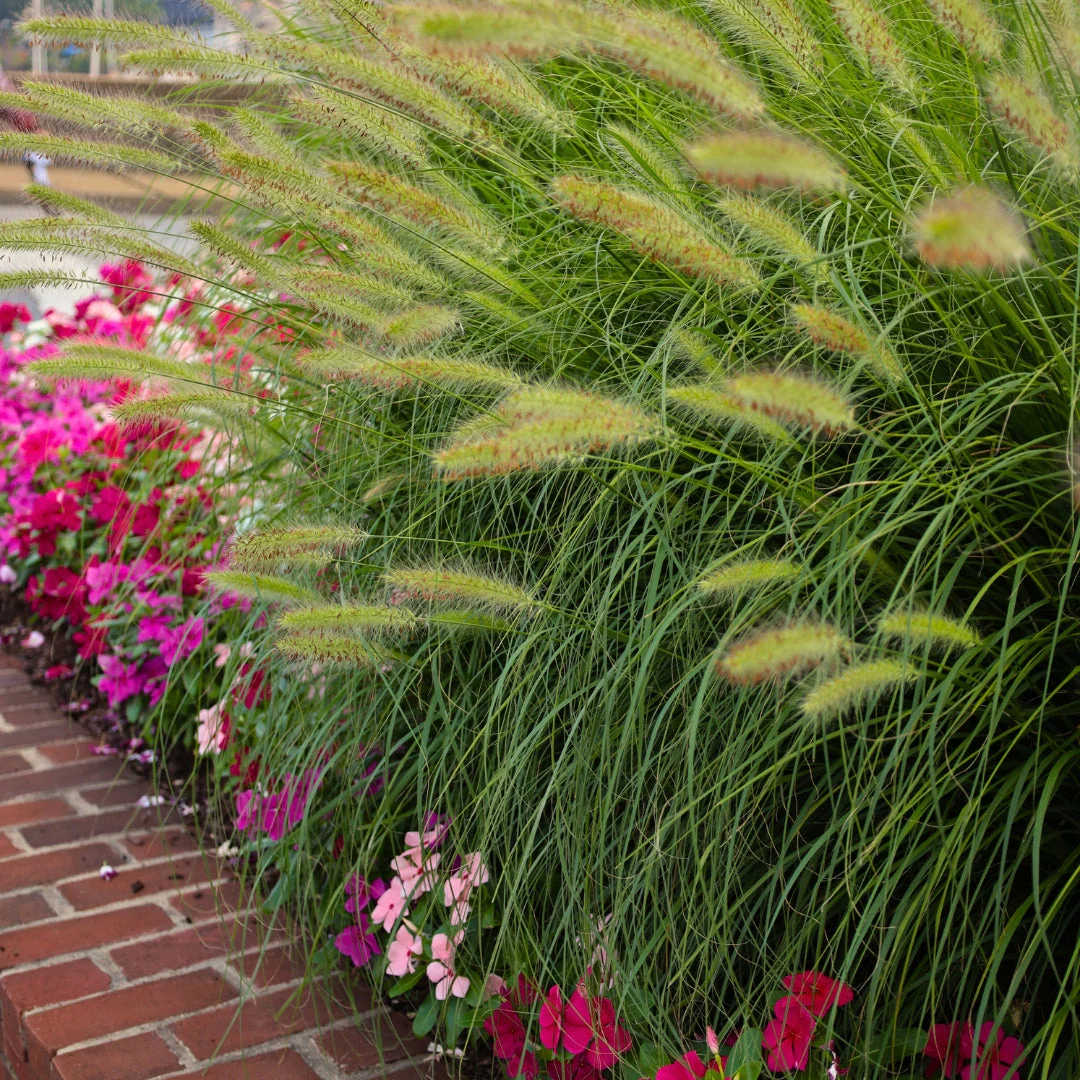
Little Bunny’s signature look shows up in late summer into early fall, when soft, bottlebrush plumes rise just above the foliage like tiny bunny tails. The plumes typically start creamy white to buff and age to a warm tan, giving you that late-season glow that makes ornamental grasses so addictive. Because the plant stays short, the flowers look extra charming and are perfectly scaled for small beds, miniature borders, and container arrangements. Full sun helps produce the fullest mounds and the best flower production, while light afternoon shade can help in very hot climates.
Those plumes also bring movement. Even a light breeze makes the flower spikes sway, adding life to rock gardens, sunny slopes, and mixed perennial beds. After bloom, the seedheads often hold their shape into fall, extending the show well beyond the first flush and pairing beautifully with mums, asters, sedums, and fall color shrubs. If you love cutting stems for small vases or dried arrangements, you can snip a few plumes at peak color, then let the rest stay on the plant for texture and winter interest, especially when backlit by low autumn sun.
Container-Friendly Mounds With Low-Maintenance, Waterwise Performance
If you’ve ever wanted an ornamental grass in a pot without the “whoa, this got huge” surprise, Little Bunny is your answer. Its compact mound fits naturally into patio containers, porch planters, and small courtyard beds, giving you fine texture that complements bold-leaf plants and flowering annuals. Use it as a soft filler around a thriller plant, or let it be the main feature in a minimalist container where movement is the whole point. Choose a pot with strong drainage holes and a quality potting mix that drains well so roots stay airy and avoid saucers that keep water sitting under the pot.
In the garden, Little Bunny is dependable in well-drained soil with moderate water while it establishes, then it becomes more forgiving once rooted in. It’s often described as drought-tolerant when established, especially when mulched, making it a smart choice for sunny beds that dry out between waterings. Keep the care simple: water deeply, let the top soil dry slightly between soakings, and avoid constantly wet sites so the crown stays healthy. A light spring feeding (or a compost top-dress) is usually plenty to keep it looking fresh without pushing floppy growth. In colder zones, containers can be protected in an unheated garage or clustered near a sheltered wall for easier overwintering.
Four-Season Interest With A Simple Cutback Routine
Little Bunny doesn’t just bloom and quit—it delivers a full season of changing texture. In spring and early summer, you get a fresh, neat mound of narrow green blades that reads clean and modern. As the weather warms, the foliage arches slightly, creating that classic fountain shape on a miniature scale. Then, when the plumes arrive in late summer, the plant shifts from “nice edging” to “look at that,” adding soft highlights that catch evening light and pair beautifully with late-season flowers and warm-toned mulch.
In fall, the foliage often takes on golden tones, and the seedheads can persist for added structure. That means your border doesn’t collapse into nothing when perennials start to fade; it keeps a little lift and movement. Maintenance is refreshingly simple: leave the foliage standing through winter if you like the texture, then cut it back to a few inches tall in late winter or early spring before new growth starts. As a clump-former, it stays contained and can be divided every few years if you want more plants for edging, containers, or mass plantings. As a warm-season grass, it typically greens up as temperatures rise, then hits its stride in summer and fall, right when many gardens need a texture boost. Leave the plumes standing for birds and winter silhouette, or cut earlier for a cleaner look.
Tiny Size, Big Texture For Edges And Small Gardens
Little Bunny Fountain Grass is the go-to choice when you want ornamental-grass texture, but you don’t have the space (or patience) for something that outgrows its welcome. This ultra-compact fountain grass forms a tidy, rounded mound that stays low and neat, making it ideal for edging a walkway, tucking into a tight border, or filling the front of a perennial bed without hiding everything behind it. It’s also a smart gap-filler around stepping stones, patio edges, and mailbox beds where you want soft texture without blocking views or spilling into paths.
Because it stays small, it’s incredibly easy to design with. Use it in repeated clusters to create a clean rhythm, or weave a few through a rock garden for gentle motion between stones. Little Bunny pairs beautifully with groundcovers like creeping phlox, sedums, and thyme, and it also complements compact shrubs by adding a fine-textured skirt at the base. It’s a clump-forming grass, so it stays where you plant it, keeps a crisp outline, and can be divided in spring if you ever want to expand the planting with divisions. It’s a low-maintenance way to add movement and a soft, fountain-like shape without committing to a tall grass that needs constant editing.
Fluffy Late-Summer Plumes That Add Movement And Soft “Bunny Tail” Charm
Little Bunny’s signature look shows up in late summer into early fall, when soft, bottlebrush plumes rise just above the foliage like tiny bunny tails. The plumes typically start creamy white to buff and age to a warm tan, giving you that late-season glow that makes ornamental grasses so addictive. Because the plant stays short, the flowers look extra charming and are perfectly scaled for small beds, miniature borders, and container arrangements. Full sun helps produce the fullest mounds and the best flower production, while light afternoon shade can help in very hot climates.
Those plumes also bring movement. Even a light breeze makes the flower spikes sway, adding life to rock gardens, sunny slopes, and mixed perennial beds. After bloom, the seedheads often hold their shape into fall, extending the show well beyond the first flush and pairing beautifully with mums, asters, sedums, and fall color shrubs. If you love cutting stems for small vases or dried arrangements, you can snip a few plumes at peak color, then let the rest stay on the plant for texture and winter interest, especially when backlit by low autumn sun.
Container-Friendly Mounds With Low-Maintenance, Waterwise Performance
If you’ve ever wanted an ornamental grass in a pot without the “whoa, this got huge” surprise, Little Bunny is your answer. Its compact mound fits naturally into patio containers, porch planters, and small courtyard beds, giving you fine texture that complements bold-leaf plants and flowering annuals. Use it as a soft filler around a thriller plant, or let it be the main feature in a minimalist container where movement is the whole point. Choose a pot with strong drainage holes and a quality potting mix that drains well so roots stay airy and avoid saucers that keep water sitting under the pot.
In the garden, Little Bunny is dependable in well-drained soil with moderate water while it establishes, then it becomes more forgiving once rooted in. It’s often described as drought-tolerant when established, especially when mulched, making it a smart choice for sunny beds that dry out between waterings. Keep the care simple: water deeply, let the top soil dry slightly between soakings, and avoid constantly wet sites so the crown stays healthy. A light spring feeding (or a compost top-dress) is usually plenty to keep it looking fresh without pushing floppy growth. In colder zones, containers can be protected in an unheated garage or clustered near a sheltered wall for easier overwintering.
Four-Season Interest With A Simple Cutback Routine
Little Bunny doesn’t just bloom and quit—it delivers a full season of changing texture. In spring and early summer, you get a fresh, neat mound of narrow green blades that reads clean and modern. As the weather warms, the foliage arches slightly, creating that classic fountain shape on a miniature scale. Then, when the plumes arrive in late summer, the plant shifts from “nice edging” to “look at that,” adding soft highlights that catch evening light and pair beautifully with late-season flowers and warm-toned mulch.
In fall, the foliage often takes on golden tones, and the seedheads can persist for added structure. That means your border doesn’t collapse into nothing when perennials start to fade; it keeps a little lift and movement. Maintenance is refreshingly simple: leave the foliage standing through winter if you like the texture, then cut it back to a few inches tall in late winter or early spring before new growth starts. As a clump-former, it stays contained and can be divided every few years if you want more plants for edging, containers, or mass plantings. As a warm-season grass, it typically greens up as temperatures rise, then hits its stride in summer and fall, right when many gardens need a texture boost. Leave the plumes standing for birds and winter silhouette, or cut earlier for a cleaner look.
Original: $29.95
-70%$29.95
$8.98Description
Tiny Size, Big Texture For Edges And Small Gardens
Little Bunny Fountain Grass is the go-to choice when you want ornamental-grass texture, but you don’t have the space (or patience) for something that outgrows its welcome. This ultra-compact fountain grass forms a tidy, rounded mound that stays low and neat, making it ideal for edging a walkway, tucking into a tight border, or filling the front of a perennial bed without hiding everything behind it. It’s also a smart gap-filler around stepping stones, patio edges, and mailbox beds where you want soft texture without blocking views or spilling into paths.
Because it stays small, it’s incredibly easy to design with. Use it in repeated clusters to create a clean rhythm, or weave a few through a rock garden for gentle motion between stones. Little Bunny pairs beautifully with groundcovers like creeping phlox, sedums, and thyme, and it also complements compact shrubs by adding a fine-textured skirt at the base. It’s a clump-forming grass, so it stays where you plant it, keeps a crisp outline, and can be divided in spring if you ever want to expand the planting with divisions. It’s a low-maintenance way to add movement and a soft, fountain-like shape without committing to a tall grass that needs constant editing.
Fluffy Late-Summer Plumes That Add Movement And Soft “Bunny Tail” Charm
Little Bunny’s signature look shows up in late summer into early fall, when soft, bottlebrush plumes rise just above the foliage like tiny bunny tails. The plumes typically start creamy white to buff and age to a warm tan, giving you that late-season glow that makes ornamental grasses so addictive. Because the plant stays short, the flowers look extra charming and are perfectly scaled for small beds, miniature borders, and container arrangements. Full sun helps produce the fullest mounds and the best flower production, while light afternoon shade can help in very hot climates.
Those plumes also bring movement. Even a light breeze makes the flower spikes sway, adding life to rock gardens, sunny slopes, and mixed perennial beds. After bloom, the seedheads often hold their shape into fall, extending the show well beyond the first flush and pairing beautifully with mums, asters, sedums, and fall color shrubs. If you love cutting stems for small vases or dried arrangements, you can snip a few plumes at peak color, then let the rest stay on the plant for texture and winter interest, especially when backlit by low autumn sun.
Container-Friendly Mounds With Low-Maintenance, Waterwise Performance
If you’ve ever wanted an ornamental grass in a pot without the “whoa, this got huge” surprise, Little Bunny is your answer. Its compact mound fits naturally into patio containers, porch planters, and small courtyard beds, giving you fine texture that complements bold-leaf plants and flowering annuals. Use it as a soft filler around a thriller plant, or let it be the main feature in a minimalist container where movement is the whole point. Choose a pot with strong drainage holes and a quality potting mix that drains well so roots stay airy and avoid saucers that keep water sitting under the pot.
In the garden, Little Bunny is dependable in well-drained soil with moderate water while it establishes, then it becomes more forgiving once rooted in. It’s often described as drought-tolerant when established, especially when mulched, making it a smart choice for sunny beds that dry out between waterings. Keep the care simple: water deeply, let the top soil dry slightly between soakings, and avoid constantly wet sites so the crown stays healthy. A light spring feeding (or a compost top-dress) is usually plenty to keep it looking fresh without pushing floppy growth. In colder zones, containers can be protected in an unheated garage or clustered near a sheltered wall for easier overwintering.
Four-Season Interest With A Simple Cutback Routine
Little Bunny doesn’t just bloom and quit—it delivers a full season of changing texture. In spring and early summer, you get a fresh, neat mound of narrow green blades that reads clean and modern. As the weather warms, the foliage arches slightly, creating that classic fountain shape on a miniature scale. Then, when the plumes arrive in late summer, the plant shifts from “nice edging” to “look at that,” adding soft highlights that catch evening light and pair beautifully with late-season flowers and warm-toned mulch.
In fall, the foliage often takes on golden tones, and the seedheads can persist for added structure. That means your border doesn’t collapse into nothing when perennials start to fade; it keeps a little lift and movement. Maintenance is refreshingly simple: leave the foliage standing through winter if you like the texture, then cut it back to a few inches tall in late winter or early spring before new growth starts. As a clump-former, it stays contained and can be divided every few years if you want more plants for edging, containers, or mass plantings. As a warm-season grass, it typically greens up as temperatures rise, then hits its stride in summer and fall, right when many gardens need a texture boost. Leave the plumes standing for birds and winter silhouette, or cut earlier for a cleaner look.