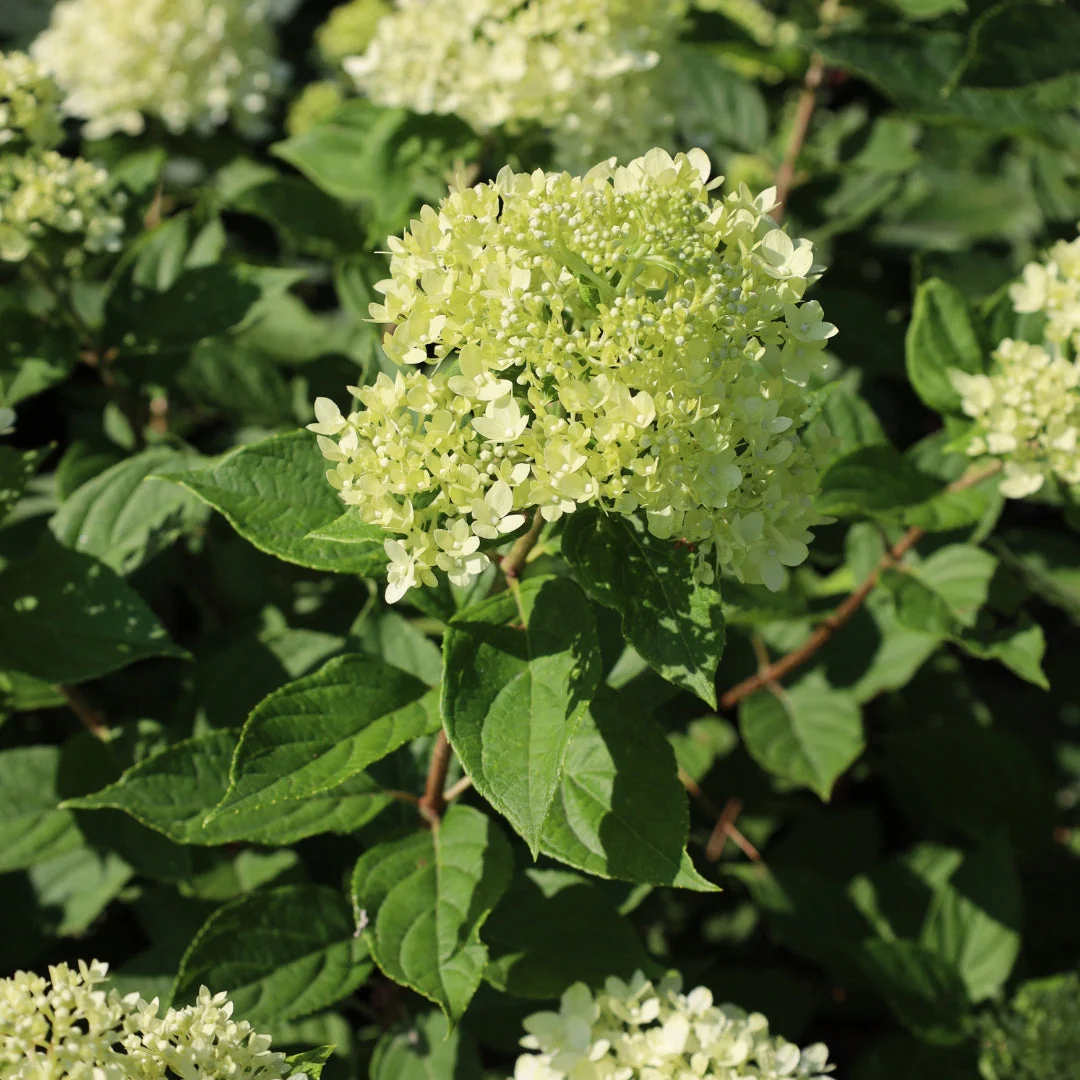
Little Lime® Hydrangea
Big Lime-To-Pink Panicle Blooms In A Compact Shrub
Little Lime® gives you the iconic Limelight look in a smaller, easier-to-place shrub—big panicle blooms without the big footprint. From mid-summer into fall, the cone-shaped flower clusters open a bright lime green, soften to creamy white, then pick up rosy blush tones that can deepen toward pink-burgundy as nights cool. That color progression is the magic: your bed looks like it’s changing with the season, and the plant stays in show long after many summer perennials have faded. Even a single shrub reads as a focal point, but the effect is especially striking against dark evergreens, deep mulch, stone, or brick.
The blooms are also made for real-life enjoyment. Cut them fresh for arrangements, let them dry for long-lasting stems, or leave them on the plant for late-season texture and winter interest. Because the flowers sit on strong, upright stems, the display reads clean and intentional in the landscape—especially when you mass several plants together for a ribbon of lime-to-pink color. Little Lime® also pairs beautifully with ornamental grasses, coneflowers, salvias, and black-leaved or purple-leaved plants that make the green blooms glow. If you love hydrangeas for their abundance but want a tidy, space-smart plant that still delivers a full-sized show, Little Lime® hits that perfect balance of drama and control.
Compact Size That Fits Foundation Beds And Smaller Gardens
Little Lime® is a true dwarf panicle hydrangea, typically maturing around 3–5 feet tall and 3–5 feet wide. That size makes it easy to use in foundation beds, front borders, and smaller landscapes where standard Limelight can feel oversized. It forms a dense, rounded mound, so it looks full from the ground up and doesn’t need constant shaping to stay attractive. The upright panicles sit nicely above the foliage, giving you a layered look that reads “designed” even in simple plantings. If you want hydrangea impact without blocking windows or swallowing neighboring shrubs, this is the go-to choice.
Because it stays compact, you can design with repetition—one of the fastest ways to make a landscape feel polished. Plant it in a drift along a walkway, tuck it into a mixed shrub border as the mid-layer, or use it as a low flowering hedge to define space. It also shines near patios and decks, where the blooms sit at a comfortable viewing height, and the plant’s clean habit keeps the area feeling uncluttered. Want a more formal look? Use consistent spacing and a straight planting line; for a softer look, use a curved line. Stagger plants in a gentle curve. Give it enough room to reach its mature width and you’ll get better airflow, easier maintenance, and a naturally symmetrical shape.
Hardy, Sun-Tough Performance With Simple Care
Little Lime® is hardy, adaptable, and refreshingly forgiving, which is why it’s a favorite for both new and experienced gardeners. As a panicle hydrangea, it handles more sun than many hydrangeas and performs well in full sun to part shade. In cooler climates, more sun usually means more blooms and stronger stems; in hotter climates, morning sun with a bit of afternoon shade helps keep foliage looking crisp. It’s also reliably cold-hardy, so you can count on flowering even after tough winters because blooms form on the season’s new growth.
Start with well-drained soil that holds consistent moisture, then make life easier with a 2–3-inch mulch ring to stabilize temperatures and reduce evaporation. Water deeply during dry spells, especially during the first season and during peak summer heat, when the plant is forming buds and blooms. Once established, Little Lime® becomes more resilient, but the best flower size and color come from steady moisture rather than drought stress. Good airflow and watering at the base (instead of overhead) also help foliage stay cleaner and reduce common leaf issues. If you’re planting a row, consistent watering across the line helps every shrub grow evenly, so the hedge looks uniform and intentional.
Easy Pruning Because It Blooms On New Wood
Little Lime® blooms on new wood, which makes pruning simple and low-risk. Plan to prune in late winter to early spring before new growth starts, then let the plant push fresh stems that will flower the same season. Start by removing any dead, damaged, or crossing branches, then shape the shrub to maintain a rounded form and open the center slightly for airflow. This annual routine keeps the plant vigorous, helps prevent flopping, and encourages a fuller canopy of blooms with cleaner stem structure. Skip late-season pruning, which can stimulate tender growth at the wrong time and reduce the plant’s winter resilience.
For stronger stems and larger flower panicles, you can reduce last year’s growth by about one-third, focusing on clean cuts above healthy buds. If you prefer more blooms that are slightly smaller, prune more lightly and keep more stems—either way, you will still flower because blooms form on new wood. Many gardeners leave the dried panicles standing through winter for texture and then remove them during spring pruning, which also protects stems in harsh weather. Because the plant stays compact, it’s easy to keep tidy as a low hedge—maintain an even top line and let the sides keep their natural curve. With the right timing and steady moisture, you’ll get a neat, repeatable performance year after year, even if you’re not a perfect pruner.
Big Lime-To-Pink Panicle Blooms In A Compact Shrub
Little Lime® gives you the iconic Limelight look in a smaller, easier-to-place shrub—big panicle blooms without the big footprint. From mid-summer into fall, the cone-shaped flower clusters open a bright lime green, soften to creamy white, then pick up rosy blush tones that can deepen toward pink-burgundy as nights cool. That color progression is the magic: your bed looks like it’s changing with the season, and the plant stays in show long after many summer perennials have faded. Even a single shrub reads as a focal point, but the effect is especially striking against dark evergreens, deep mulch, stone, or brick.
The blooms are also made for real-life enjoyment. Cut them fresh for arrangements, let them dry for long-lasting stems, or leave them on the plant for late-season texture and winter interest. Because the flowers sit on strong, upright stems, the display reads clean and intentional in the landscape—especially when you mass several plants together for a ribbon of lime-to-pink color. Little Lime® also pairs beautifully with ornamental grasses, coneflowers, salvias, and black-leaved or purple-leaved plants that make the green blooms glow. If you love hydrangeas for their abundance but want a tidy, space-smart plant that still delivers a full-sized show, Little Lime® hits that perfect balance of drama and control.
Compact Size That Fits Foundation Beds And Smaller Gardens
Little Lime® is a true dwarf panicle hydrangea, typically maturing around 3–5 feet tall and 3–5 feet wide. That size makes it easy to use in foundation beds, front borders, and smaller landscapes where standard Limelight can feel oversized. It forms a dense, rounded mound, so it looks full from the ground up and doesn’t need constant shaping to stay attractive. The upright panicles sit nicely above the foliage, giving you a layered look that reads “designed” even in simple plantings. If you want hydrangea impact without blocking windows or swallowing neighboring shrubs, this is the go-to choice.
Because it stays compact, you can design with repetition—one of the fastest ways to make a landscape feel polished. Plant it in a drift along a walkway, tuck it into a mixed shrub border as the mid-layer, or use it as a low flowering hedge to define space. It also shines near patios and decks, where the blooms sit at a comfortable viewing height, and the plant’s clean habit keeps the area feeling uncluttered. Want a more formal look? Use consistent spacing and a straight planting line; for a softer look, use a curved line. Stagger plants in a gentle curve. Give it enough room to reach its mature width and you’ll get better airflow, easier maintenance, and a naturally symmetrical shape.
Hardy, Sun-Tough Performance With Simple Care
Little Lime® is hardy, adaptable, and refreshingly forgiving, which is why it’s a favorite for both new and experienced gardeners. As a panicle hydrangea, it handles more sun than many hydrangeas and performs well in full sun to part shade. In cooler climates, more sun usually means more blooms and stronger stems; in hotter climates, morning sun with a bit of afternoon shade helps keep foliage looking crisp. It’s also reliably cold-hardy, so you can count on flowering even after tough winters because blooms form on the season’s new growth.
Start with well-drained soil that holds consistent moisture, then make life easier with a 2–3-inch mulch ring to stabilize temperatures and reduce evaporation. Water deeply during dry spells, especially during the first season and during peak summer heat, when the plant is forming buds and blooms. Once established, Little Lime® becomes more resilient, but the best flower size and color come from steady moisture rather than drought stress. Good airflow and watering at the base (instead of overhead) also help foliage stay cleaner and reduce common leaf issues. If you’re planting a row, consistent watering across the line helps every shrub grow evenly, so the hedge looks uniform and intentional.
Easy Pruning Because It Blooms On New Wood
Little Lime® blooms on new wood, which makes pruning simple and low-risk. Plan to prune in late winter to early spring before new growth starts, then let the plant push fresh stems that will flower the same season. Start by removing any dead, damaged, or crossing branches, then shape the shrub to maintain a rounded form and open the center slightly for airflow. This annual routine keeps the plant vigorous, helps prevent flopping, and encourages a fuller canopy of blooms with cleaner stem structure. Skip late-season pruning, which can stimulate tender growth at the wrong time and reduce the plant’s winter resilience.
For stronger stems and larger flower panicles, you can reduce last year’s growth by about one-third, focusing on clean cuts above healthy buds. If you prefer more blooms that are slightly smaller, prune more lightly and keep more stems—either way, you will still flower because blooms form on new wood. Many gardeners leave the dried panicles standing through winter for texture and then remove them during spring pruning, which also protects stems in harsh weather. Because the plant stays compact, it’s easy to keep tidy as a low hedge—maintain an even top line and let the sides keep their natural curve. With the right timing and steady moisture, you’ll get a neat, repeatable performance year after year, even if you’re not a perfect pruner.
Original: $64.95
-70%$64.95
$19.48Description
Big Lime-To-Pink Panicle Blooms In A Compact Shrub
Little Lime® gives you the iconic Limelight look in a smaller, easier-to-place shrub—big panicle blooms without the big footprint. From mid-summer into fall, the cone-shaped flower clusters open a bright lime green, soften to creamy white, then pick up rosy blush tones that can deepen toward pink-burgundy as nights cool. That color progression is the magic: your bed looks like it’s changing with the season, and the plant stays in show long after many summer perennials have faded. Even a single shrub reads as a focal point, but the effect is especially striking against dark evergreens, deep mulch, stone, or brick.
The blooms are also made for real-life enjoyment. Cut them fresh for arrangements, let them dry for long-lasting stems, or leave them on the plant for late-season texture and winter interest. Because the flowers sit on strong, upright stems, the display reads clean and intentional in the landscape—especially when you mass several plants together for a ribbon of lime-to-pink color. Little Lime® also pairs beautifully with ornamental grasses, coneflowers, salvias, and black-leaved or purple-leaved plants that make the green blooms glow. If you love hydrangeas for their abundance but want a tidy, space-smart plant that still delivers a full-sized show, Little Lime® hits that perfect balance of drama and control.
Compact Size That Fits Foundation Beds And Smaller Gardens
Little Lime® is a true dwarf panicle hydrangea, typically maturing around 3–5 feet tall and 3–5 feet wide. That size makes it easy to use in foundation beds, front borders, and smaller landscapes where standard Limelight can feel oversized. It forms a dense, rounded mound, so it looks full from the ground up and doesn’t need constant shaping to stay attractive. The upright panicles sit nicely above the foliage, giving you a layered look that reads “designed” even in simple plantings. If you want hydrangea impact without blocking windows or swallowing neighboring shrubs, this is the go-to choice.
Because it stays compact, you can design with repetition—one of the fastest ways to make a landscape feel polished. Plant it in a drift along a walkway, tuck it into a mixed shrub border as the mid-layer, or use it as a low flowering hedge to define space. It also shines near patios and decks, where the blooms sit at a comfortable viewing height, and the plant’s clean habit keeps the area feeling uncluttered. Want a more formal look? Use consistent spacing and a straight planting line; for a softer look, use a curved line. Stagger plants in a gentle curve. Give it enough room to reach its mature width and you’ll get better airflow, easier maintenance, and a naturally symmetrical shape.
Hardy, Sun-Tough Performance With Simple Care
Little Lime® is hardy, adaptable, and refreshingly forgiving, which is why it’s a favorite for both new and experienced gardeners. As a panicle hydrangea, it handles more sun than many hydrangeas and performs well in full sun to part shade. In cooler climates, more sun usually means more blooms and stronger stems; in hotter climates, morning sun with a bit of afternoon shade helps keep foliage looking crisp. It’s also reliably cold-hardy, so you can count on flowering even after tough winters because blooms form on the season’s new growth.
Start with well-drained soil that holds consistent moisture, then make life easier with a 2–3-inch mulch ring to stabilize temperatures and reduce evaporation. Water deeply during dry spells, especially during the first season and during peak summer heat, when the plant is forming buds and blooms. Once established, Little Lime® becomes more resilient, but the best flower size and color come from steady moisture rather than drought stress. Good airflow and watering at the base (instead of overhead) also help foliage stay cleaner and reduce common leaf issues. If you’re planting a row, consistent watering across the line helps every shrub grow evenly, so the hedge looks uniform and intentional.
Easy Pruning Because It Blooms On New Wood
Little Lime® blooms on new wood, which makes pruning simple and low-risk. Plan to prune in late winter to early spring before new growth starts, then let the plant push fresh stems that will flower the same season. Start by removing any dead, damaged, or crossing branches, then shape the shrub to maintain a rounded form and open the center slightly for airflow. This annual routine keeps the plant vigorous, helps prevent flopping, and encourages a fuller canopy of blooms with cleaner stem structure. Skip late-season pruning, which can stimulate tender growth at the wrong time and reduce the plant’s winter resilience.
For stronger stems and larger flower panicles, you can reduce last year’s growth by about one-third, focusing on clean cuts above healthy buds. If you prefer more blooms that are slightly smaller, prune more lightly and keep more stems—either way, you will still flower because blooms form on new wood. Many gardeners leave the dried panicles standing through winter for texture and then remove them during spring pruning, which also protects stems in harsh weather. Because the plant stays compact, it’s easy to keep tidy as a low hedge—maintain an even top line and let the sides keep their natural curve. With the right timing and steady moisture, you’ll get a neat, repeatable performance year after year, even if you’re not a perfect pruner.