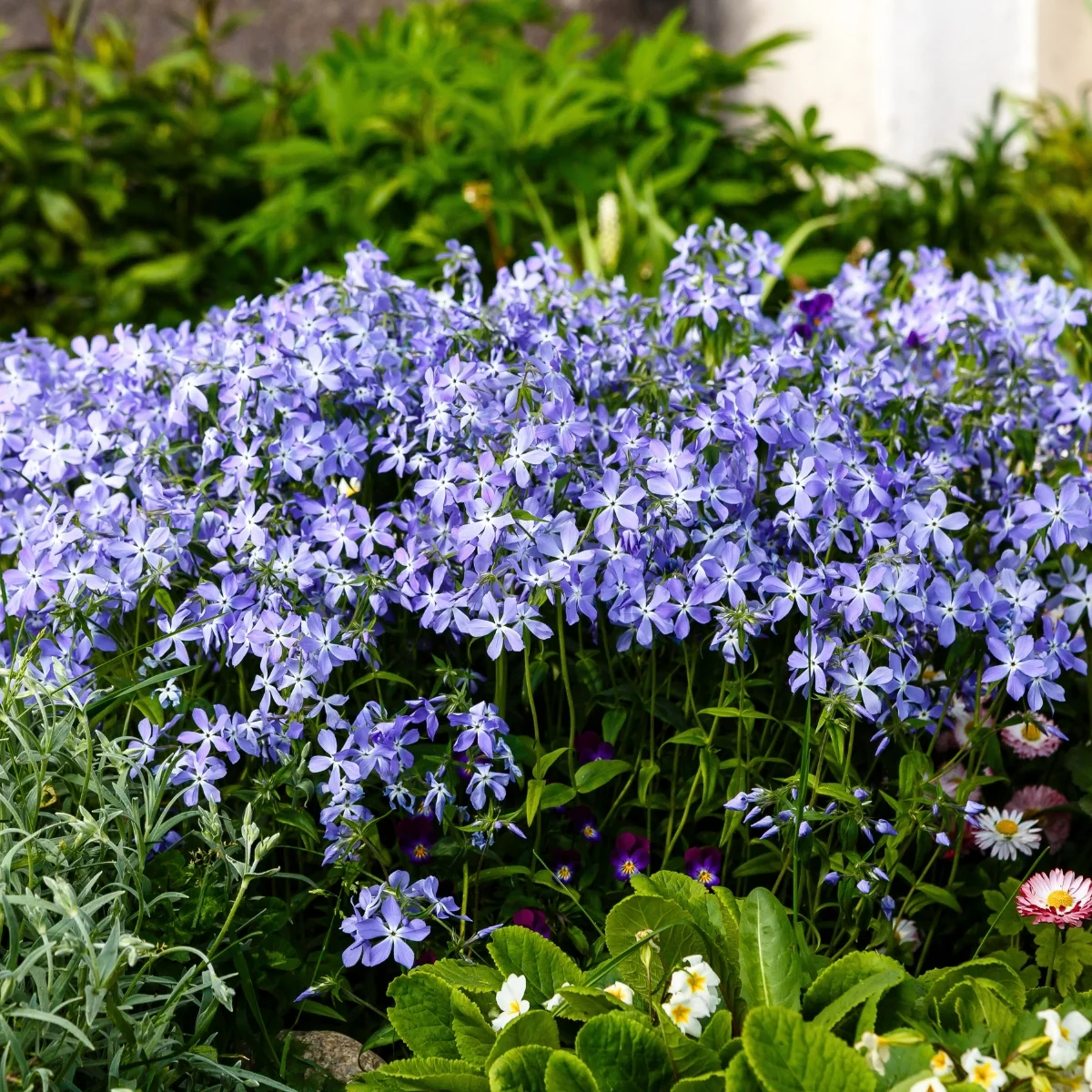
Blue Moon Phlox
Fragrant lilac-blue spring blooms that light up the shade
Blue Moon Phlox is what people mean when they say, “I want something blue for shade.” In early to mid-spring, it produces clouds of lilac-blue blooms with a sweet fragrance that’s noticeable as you walk past. The flowers hover above the foliage in soft clusters, giving you that dreamy woodland look that feels natural, but still looks intentionally planted.
It’s a perfect spring partner for daffodils, tulips, and other bulbs, because it fills in around them and gently disguises fading bulb foliage as the season progresses. Plant it where you’ll enjoy the scent and color: along a shaded path, at the front of a woodland border, or near a porch or patio that gets morning sun and afternoon shade.
A low, spreading groundcover that looks tidy and “finished.”
Blue Moon Woodland Phlox forms a low, leafy mat that spreads gradually, knitting into a soft groundcover over time. It’s ideal for those in-between spaces where mulch feels flat and bare, and where taller perennials can look messy in early spring. The foliage creates a calm green base layer that makes your spring blooms feel more abundant, and your shade garden feel more complete.
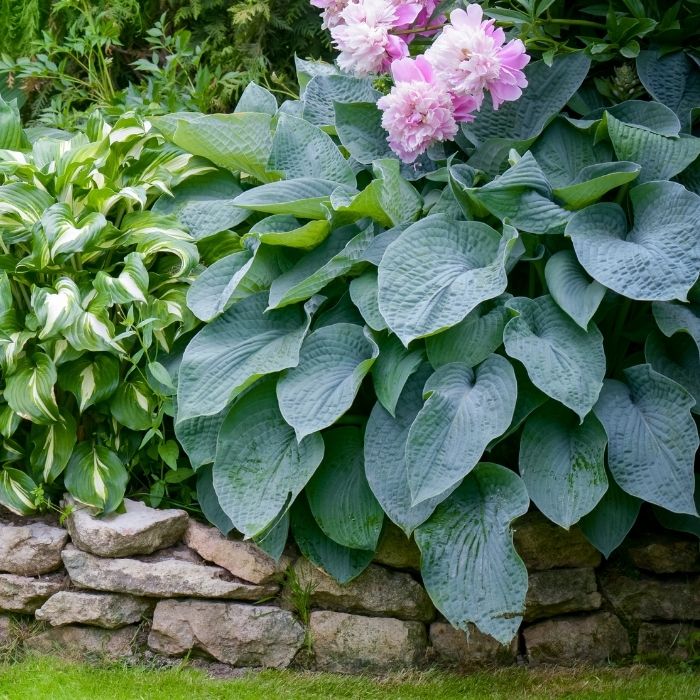
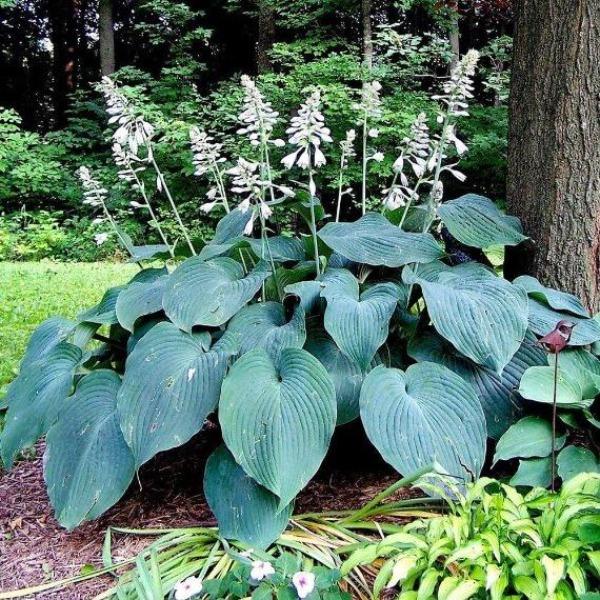
Because it stays low, it’s easy to layer with hostas, ferns, heuchera, and other shade favorites without crowding them. Use it as a repeating edge plant, tuck it beneath open-canopy shrubs, or mass it in drifts for that “woodland floor” effect that looks high-end and effortless.
A native-style pollinator plant that brings early-season life
When Blue Moon Phlox blooms, pollinators show up. Those spring flowers provide early nectar and pollen at a time when many gardens are still waking up. It’s a simple way to make shade gardens more alive, more movement, more activity, more of that “garden hum” you can feel.
It’s also a smart choice for naturalistic landscapes because it looks right at home in native plantings and woodland settings. Give it the conditions it likes—moist, rich soil and bright shade, and it rewards you with a reliable spring show that returns and slowly expands without turning into a maintenance headache.
Easy care with simple cleanup that keeps it looking fresh
Blue Moon Phlox is low-fuss when moisture and drainage are right. The biggest success factor is consistent moisture while it establishes, especially in spring and early summer, followed by a lightly mulched root zone that doesn’t dry out completely. It prefers soil that stays moist but not waterlogged, and it performs best with some shade protection during hot afternoons.
After flowering, a light deadheading or a gentle trim keeps the plant tidy and encourages a fuller mat of foliage. That small bit of care is the difference between “nice” and “beautiful” in a woodland border. Set it up correctly, then let it quietly do what it does best: bring blue fragrance to spring shade.
Fragrant lilac-blue spring blooms that light up the shade
Blue Moon Phlox is what people mean when they say, “I want something blue for shade.” In early to mid-spring, it produces clouds of lilac-blue blooms with a sweet fragrance that’s noticeable as you walk past. The flowers hover above the foliage in soft clusters, giving you that dreamy woodland look that feels natural, but still looks intentionally planted.
It’s a perfect spring partner for daffodils, tulips, and other bulbs, because it fills in around them and gently disguises fading bulb foliage as the season progresses. Plant it where you’ll enjoy the scent and color: along a shaded path, at the front of a woodland border, or near a porch or patio that gets morning sun and afternoon shade.
A low, spreading groundcover that looks tidy and “finished.”
Blue Moon Woodland Phlox forms a low, leafy mat that spreads gradually, knitting into a soft groundcover over time. It’s ideal for those in-between spaces where mulch feels flat and bare, and where taller perennials can look messy in early spring. The foliage creates a calm green base layer that makes your spring blooms feel more abundant, and your shade garden feel more complete.
Because it stays low, it’s easy to layer with hostas, ferns, heuchera, and other shade favorites without crowding them. Use it as a repeating edge plant, tuck it beneath open-canopy shrubs, or mass it in drifts for that “woodland floor” effect that looks high-end and effortless.
A native-style pollinator plant that brings early-season life
When Blue Moon Phlox blooms, pollinators show up. Those spring flowers provide early nectar and pollen at a time when many gardens are still waking up. It’s a simple way to make shade gardens more alive, more movement, more activity, more of that “garden hum” you can feel.
It’s also a smart choice for naturalistic landscapes because it looks right at home in native plantings and woodland settings. Give it the conditions it likes—moist, rich soil and bright shade, and it rewards you with a reliable spring show that returns and slowly expands without turning into a maintenance headache.
Easy care with simple cleanup that keeps it looking fresh
Blue Moon Phlox is low-fuss when moisture and drainage are right. The biggest success factor is consistent moisture while it establishes, especially in spring and early summer, followed by a lightly mulched root zone that doesn’t dry out completely. It prefers soil that stays moist but not waterlogged, and it performs best with some shade protection during hot afternoons.
After flowering, a light deadheading or a gentle trim keeps the plant tidy and encourages a fuller mat of foliage. That small bit of care is the difference between “nice” and “beautiful” in a woodland border. Set it up correctly, then let it quietly do what it does best: bring blue fragrance to spring shade.
Description
Fragrant lilac-blue spring blooms that light up the shade
Blue Moon Phlox is what people mean when they say, “I want something blue for shade.” In early to mid-spring, it produces clouds of lilac-blue blooms with a sweet fragrance that’s noticeable as you walk past. The flowers hover above the foliage in soft clusters, giving you that dreamy woodland look that feels natural, but still looks intentionally planted.
It’s a perfect spring partner for daffodils, tulips, and other bulbs, because it fills in around them and gently disguises fading bulb foliage as the season progresses. Plant it where you’ll enjoy the scent and color: along a shaded path, at the front of a woodland border, or near a porch or patio that gets morning sun and afternoon shade.
A low, spreading groundcover that looks tidy and “finished.”
Blue Moon Woodland Phlox forms a low, leafy mat that spreads gradually, knitting into a soft groundcover over time. It’s ideal for those in-between spaces where mulch feels flat and bare, and where taller perennials can look messy in early spring. The foliage creates a calm green base layer that makes your spring blooms feel more abundant, and your shade garden feel more complete.
Because it stays low, it’s easy to layer with hostas, ferns, heuchera, and other shade favorites without crowding them. Use it as a repeating edge plant, tuck it beneath open-canopy shrubs, or mass it in drifts for that “woodland floor” effect that looks high-end and effortless.
A native-style pollinator plant that brings early-season life
When Blue Moon Phlox blooms, pollinators show up. Those spring flowers provide early nectar and pollen at a time when many gardens are still waking up. It’s a simple way to make shade gardens more alive, more movement, more activity, more of that “garden hum” you can feel.
It’s also a smart choice for naturalistic landscapes because it looks right at home in native plantings and woodland settings. Give it the conditions it likes—moist, rich soil and bright shade, and it rewards you with a reliable spring show that returns and slowly expands without turning into a maintenance headache.
Easy care with simple cleanup that keeps it looking fresh
Blue Moon Phlox is low-fuss when moisture and drainage are right. The biggest success factor is consistent moisture while it establishes, especially in spring and early summer, followed by a lightly mulched root zone that doesn’t dry out completely. It prefers soil that stays moist but not waterlogged, and it performs best with some shade protection during hot afternoons.
After flowering, a light deadheading or a gentle trim keeps the plant tidy and encourages a fuller mat of foliage. That small bit of care is the difference between “nice” and “beautiful” in a woodland border. Set it up correctly, then let it quietly do what it does best: bring blue fragrance to spring shade.