Pistachio Hydrangea
Color-Shift Mophead Blooms That Look Like A Living Arrangement
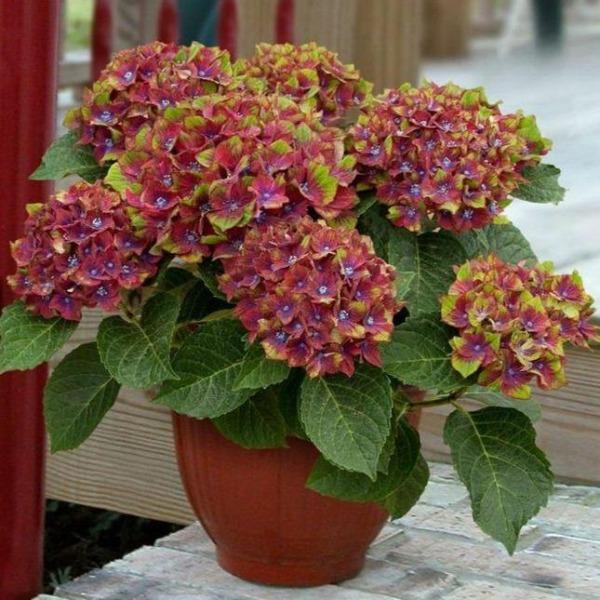
Next Generation Pistachio Hydrangea is the hydrangea you plant when you want people to do a double-take. Flower clusters open in a pistachio-chartreuse tone, then pick up raspberry edging and rich, jewel-like notes that can read red, purple, and bronze across the same bloom head. The effect is not a single flat color—it’s a layered, painterly mix that looks like a florist designed it, then decided to keep changing it week after week. If your landscape needs a “signature plant,” this one earns the title.
Because the color varies naturally from bloom to bloom, the shrub never looks static. It’s gorgeous near an entry, along a walkway, or beside a patio where you can enjoy the close-up detail. It also plays surprisingly well with other plants: chartreuse accents brighten dark evergreens, the raspberry tones echo coral and magenta perennials, and the deeper purples tie into blue-green foliage and silver-leaf companions.
Compact, Broad-Mounded Habit That Fits Small Beds And Stays Full
This is a compact bigleaf hydrangea, but it’s not a tiny ball. Expect a low, broad mound that typically reaches 2.5–3 feet tall while spreading to 3–5 feet wide, filling space beautifully without getting leggy. That low height makes it ideal for foundation beds and front borders where you want blooms at eye level, not towering over windows. The wider spread is a gift for design, too: it creates a “finished” look faster and gives you that lush, layered feel with fewer plants.
In mixed shrub borders, Pistachio works as a mid-layer anchor—tall enough to hold presence, short enough to keep sightlines open. It’s also a strong candidate for rhythmic planting: two or three, evenly spaced along a path, can look intentional and high-end. If you’re building a garden that feels curated rather than crowded, this hydrangea gives you structure plus color in one tidy package.
Repeat-Flowering Performance That Keeps Summer Looking Fresh
Next Generation Pistachio is prized for a long bloom window, often starting in late spring or early summer and continuing in waves through the warm season when conditions are good. That extended show matters in real landscapes: it keeps the bed looking “alive” through the exact months when most homeowners want the yard to feel its best. Instead of a short burst of color followed by a green shrub, you get ongoing color and changing tones that keep the plant interesting even as the season evolves.
To support repeat flowering, focus on consistency. Even moisture, mulch, and a comfortable light balance (especially protection from harsh afternoon sun in hotter regions) help the plant keep producing. Light deadheading can keep the shrub looking neat and may encourage continued blooming, but the biggest driver is stress reduction—steady watering during heat and avoiding big swings from drought to saturation.
Easy-To-Own Care With Smarter Pruning And Stronger Results
Pistachio is an approachable hydrangea when you follow two simple rules: keep the root zone evenly moist and prune with intention. Because this type can flower on both older and newer growth, it tends to be more forgiving than old-wood-only hydrangeas, but “forgiving” does not mean “hack it back.” The best approach is tidy, not severe: remove spent blooms, clean out dead wood, and shape lightly so the plant keeps a strong, blooming framework.
Give it well-drained, organic-rich soil and a mulch ring to stabilize moisture and temperature. In cooler climates, you can often give it more sun; in warm climates, morning sun with afternoon shade helps foliage stay clean and prevents scorched edges. Do that, and you get a compact shrub that looks intentionally planted, blooms in a long season, and brings a rare color story that no standard hydrangea can match.
Color-Shift Mophead Blooms That Look Like A Living Arrangement
Next Generation Pistachio Hydrangea is the hydrangea you plant when you want people to do a double-take. Flower clusters open in a pistachio-chartreuse tone, then pick up raspberry edging and rich, jewel-like notes that can read red, purple, and bronze across the same bloom head. The effect is not a single flat color—it’s a layered, painterly mix that looks like a florist designed it, then decided to keep changing it week after week. If your landscape needs a “signature plant,” this one earns the title.
Because the color varies naturally from bloom to bloom, the shrub never looks static. It’s gorgeous near an entry, along a walkway, or beside a patio where you can enjoy the close-up detail. It also plays surprisingly well with other plants: chartreuse accents brighten dark evergreens, the raspberry tones echo coral and magenta perennials, and the deeper purples tie into blue-green foliage and silver-leaf companions.
Compact, Broad-Mounded Habit That Fits Small Beds And Stays Full
This is a compact bigleaf hydrangea, but it’s not a tiny ball. Expect a low, broad mound that typically reaches 2.5–3 feet tall while spreading to 3–5 feet wide, filling space beautifully without getting leggy. That low height makes it ideal for foundation beds and front borders where you want blooms at eye level, not towering over windows. The wider spread is a gift for design, too: it creates a “finished” look faster and gives you that lush, layered feel with fewer plants.
In mixed shrub borders, Pistachio works as a mid-layer anchor—tall enough to hold presence, short enough to keep sightlines open. It’s also a strong candidate for rhythmic planting: two or three, evenly spaced along a path, can look intentional and high-end. If you’re building a garden that feels curated rather than crowded, this hydrangea gives you structure plus color in one tidy package.
Repeat-Flowering Performance That Keeps Summer Looking Fresh
Next Generation Pistachio is prized for a long bloom window, often starting in late spring or early summer and continuing in waves through the warm season when conditions are good. That extended show matters in real landscapes: it keeps the bed looking “alive” through the exact months when most homeowners want the yard to feel its best. Instead of a short burst of color followed by a green shrub, you get ongoing color and changing tones that keep the plant interesting even as the season evolves.
To support repeat flowering, focus on consistency. Even moisture, mulch, and a comfortable light balance (especially protection from harsh afternoon sun in hotter regions) help the plant keep producing. Light deadheading can keep the shrub looking neat and may encourage continued blooming, but the biggest driver is stress reduction—steady watering during heat and avoiding big swings from drought to saturation.
Easy-To-Own Care With Smarter Pruning And Stronger Results
Pistachio is an approachable hydrangea when you follow two simple rules: keep the root zone evenly moist and prune with intention. Because this type can flower on both older and newer growth, it tends to be more forgiving than old-wood-only hydrangeas, but “forgiving” does not mean “hack it back.” The best approach is tidy, not severe: remove spent blooms, clean out dead wood, and shape lightly so the plant keeps a strong, blooming framework.
Give it well-drained, organic-rich soil and a mulch ring to stabilize moisture and temperature. In cooler climates, you can often give it more sun; in warm climates, morning sun with afternoon shade helps foliage stay clean and prevents scorched edges. Do that, and you get a compact shrub that looks intentionally planted, blooms in a long season, and brings a rare color story that no standard hydrangea can match.
Original: $119.95
-70%$119.95
$35.98Description
Color-Shift Mophead Blooms That Look Like A Living Arrangement
Next Generation Pistachio Hydrangea is the hydrangea you plant when you want people to do a double-take. Flower clusters open in a pistachio-chartreuse tone, then pick up raspberry edging and rich, jewel-like notes that can read red, purple, and bronze across the same bloom head. The effect is not a single flat color—it’s a layered, painterly mix that looks like a florist designed it, then decided to keep changing it week after week. If your landscape needs a “signature plant,” this one earns the title.
Because the color varies naturally from bloom to bloom, the shrub never looks static. It’s gorgeous near an entry, along a walkway, or beside a patio where you can enjoy the close-up detail. It also plays surprisingly well with other plants: chartreuse accents brighten dark evergreens, the raspberry tones echo coral and magenta perennials, and the deeper purples tie into blue-green foliage and silver-leaf companions.
Compact, Broad-Mounded Habit That Fits Small Beds And Stays Full
This is a compact bigleaf hydrangea, but it’s not a tiny ball. Expect a low, broad mound that typically reaches 2.5–3 feet tall while spreading to 3–5 feet wide, filling space beautifully without getting leggy. That low height makes it ideal for foundation beds and front borders where you want blooms at eye level, not towering over windows. The wider spread is a gift for design, too: it creates a “finished” look faster and gives you that lush, layered feel with fewer plants.
In mixed shrub borders, Pistachio works as a mid-layer anchor—tall enough to hold presence, short enough to keep sightlines open. It’s also a strong candidate for rhythmic planting: two or three, evenly spaced along a path, can look intentional and high-end. If you’re building a garden that feels curated rather than crowded, this hydrangea gives you structure plus color in one tidy package.
Repeat-Flowering Performance That Keeps Summer Looking Fresh
Next Generation Pistachio is prized for a long bloom window, often starting in late spring or early summer and continuing in waves through the warm season when conditions are good. That extended show matters in real landscapes: it keeps the bed looking “alive” through the exact months when most homeowners want the yard to feel its best. Instead of a short burst of color followed by a green shrub, you get ongoing color and changing tones that keep the plant interesting even as the season evolves.
To support repeat flowering, focus on consistency. Even moisture, mulch, and a comfortable light balance (especially protection from harsh afternoon sun in hotter regions) help the plant keep producing. Light deadheading can keep the shrub looking neat and may encourage continued blooming, but the biggest driver is stress reduction—steady watering during heat and avoiding big swings from drought to saturation.
Easy-To-Own Care With Smarter Pruning And Stronger Results
Pistachio is an approachable hydrangea when you follow two simple rules: keep the root zone evenly moist and prune with intention. Because this type can flower on both older and newer growth, it tends to be more forgiving than old-wood-only hydrangeas, but “forgiving” does not mean “hack it back.” The best approach is tidy, not severe: remove spent blooms, clean out dead wood, and shape lightly so the plant keeps a strong, blooming framework.
Give it well-drained, organic-rich soil and a mulch ring to stabilize moisture and temperature. In cooler climates, you can often give it more sun; in warm climates, morning sun with afternoon shade helps foliage stay clean and prevents scorched edges. Do that, and you get a compact shrub that looks intentionally planted, blooms in a long season, and brings a rare color story that no standard hydrangea can match.