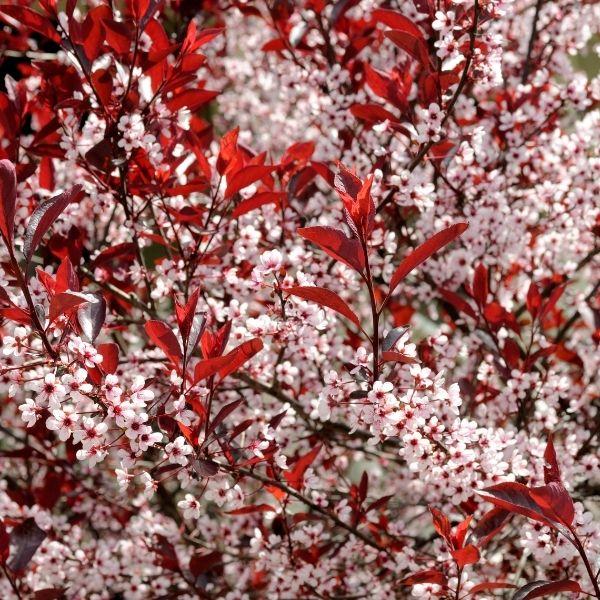
Purple Leaf Sand Cherry
Rich Purple Foliage That Brings Season-Long Contrast
Purple Leaf Sand Cherry is one of those shrubs that can completely change the feel of a planting bed just by being there. Its foliage emerges in rich shades of red, maroon, and purple, giving the plant a bold ornamental presence from the start of the growing season. That dark leaf color creates beautiful contrast against green evergreens, gold foliage plants, flowering perennials, and lighter-colored mulch or stone.
Unlike many flowering shrubs that only peak for a short moment, this one keeps delivering through the season because the foliage remains the main attraction long after spring bloom has passed. For homeowners looking for a shrub that adds dependable color and structure without needing flowers to carry the whole show, Purple Leaf Sand Cherry is a strong choice.
Fragrant White Spring Flowers That Brighten The Dark Foliage
In spring, Purple Leaf Sand Cherry adds another layer of appeal when pinkish-white buds open into fragrant white flowers. Because the blooms appear against the deep reddish-purple foliage, the contrast is especially eye-catching, giving the shrub a softer, more refined look during its bloom season. The flowers are not overly flashy, but they add just enough brightness to make the plant feel fresh and lively.
That spring bloom period also gives the shrub pollinator value, which makes it useful in more habitat-friendly planting plans. For gardeners who want a flowering shrub that does not lose relevance after bloom time, this is an excellent fit. It balances flower interest with strong foliage color in a way that feels very easy to use in the landscape.
A Useful Shrub For Borders, Focal Points, And Mass Planting
Purple Leaf Sand Cherry grows in an upright, densely branched habit that makes it versatile in home landscapes. It works beautifully as a single accent shrub in a mixed border, where the foliage color can stand out against greener companions. It is also very effective in grouped or mass plantings, where repeated plants can create a bold ribbon of color through a foundation bed, property edge, or sunny island planting.
Because it stays in a manageable shrub size range, it is easier to place than many larger ornamental shrubs or small trees. It can even be trained as a small tree in some settings, which gives gardeners another design option when they want height and foliage color from a single plant. Whether used as a specimen or repeated for a stronger impact, it adds structure and visual depth to the landscape.
A Pollinator-Friendly Ornamental Shrub With Multi-Season Value
Purple Leaf Sand Cherry brings more than foliage and flowers to the garden. Small blackish-purple fruits can follow the bloom period in summer, and birds are known to enjoy them. In fall, the foliage shifts toward yellow, adding another season of color before the shrub goes dormant. That progression gives the plant more depth and usefulness than homeowners might expect from a foliage-driven shrub.
It is especially rewarding when planted in a sunny location with well-drained soil and enough moisture to stay healthy through summer. Because it is not especially drought-tolerant, it benefits from thoughtful placement and occasional supplemental watering during hot, dry periods. Give it the right spot, and it rewards you with color, fragrance, pollinator appeal, and strong landscape presence from spring through fall.
Rich Purple Foliage That Brings Season-Long Contrast
Purple Leaf Sand Cherry is one of those shrubs that can completely change the feel of a planting bed just by being there. Its foliage emerges in rich shades of red, maroon, and purple, giving the plant a bold ornamental presence from the start of the growing season. That dark leaf color creates beautiful contrast against green evergreens, gold foliage plants, flowering perennials, and lighter-colored mulch or stone.
Unlike many flowering shrubs that only peak for a short moment, this one keeps delivering through the season because the foliage remains the main attraction long after spring bloom has passed. For homeowners looking for a shrub that adds dependable color and structure without needing flowers to carry the whole show, Purple Leaf Sand Cherry is a strong choice.
Fragrant White Spring Flowers That Brighten The Dark Foliage
In spring, Purple Leaf Sand Cherry adds another layer of appeal when pinkish-white buds open into fragrant white flowers. Because the blooms appear against the deep reddish-purple foliage, the contrast is especially eye-catching, giving the shrub a softer, more refined look during its bloom season. The flowers are not overly flashy, but they add just enough brightness to make the plant feel fresh and lively.
That spring bloom period also gives the shrub pollinator value, which makes it useful in more habitat-friendly planting plans. For gardeners who want a flowering shrub that does not lose relevance after bloom time, this is an excellent fit. It balances flower interest with strong foliage color in a way that feels very easy to use in the landscape.
A Useful Shrub For Borders, Focal Points, And Mass Planting
Purple Leaf Sand Cherry grows in an upright, densely branched habit that makes it versatile in home landscapes. It works beautifully as a single accent shrub in a mixed border, where the foliage color can stand out against greener companions. It is also very effective in grouped or mass plantings, where repeated plants can create a bold ribbon of color through a foundation bed, property edge, or sunny island planting.
Because it stays in a manageable shrub size range, it is easier to place than many larger ornamental shrubs or small trees. It can even be trained as a small tree in some settings, which gives gardeners another design option when they want height and foliage color from a single plant. Whether used as a specimen or repeated for a stronger impact, it adds structure and visual depth to the landscape.
A Pollinator-Friendly Ornamental Shrub With Multi-Season Value
Purple Leaf Sand Cherry brings more than foliage and flowers to the garden. Small blackish-purple fruits can follow the bloom period in summer, and birds are known to enjoy them. In fall, the foliage shifts toward yellow, adding another season of color before the shrub goes dormant. That progression gives the plant more depth and usefulness than homeowners might expect from a foliage-driven shrub.
It is especially rewarding when planted in a sunny location with well-drained soil and enough moisture to stay healthy through summer. Because it is not especially drought-tolerant, it benefits from thoughtful placement and occasional supplemental watering during hot, dry periods. Give it the right spot, and it rewards you with color, fragrance, pollinator appeal, and strong landscape presence from spring through fall.
Description
Rich Purple Foliage That Brings Season-Long Contrast
Purple Leaf Sand Cherry is one of those shrubs that can completely change the feel of a planting bed just by being there. Its foliage emerges in rich shades of red, maroon, and purple, giving the plant a bold ornamental presence from the start of the growing season. That dark leaf color creates beautiful contrast against green evergreens, gold foliage plants, flowering perennials, and lighter-colored mulch or stone.
Unlike many flowering shrubs that only peak for a short moment, this one keeps delivering through the season because the foliage remains the main attraction long after spring bloom has passed. For homeowners looking for a shrub that adds dependable color and structure without needing flowers to carry the whole show, Purple Leaf Sand Cherry is a strong choice.
Fragrant White Spring Flowers That Brighten The Dark Foliage
In spring, Purple Leaf Sand Cherry adds another layer of appeal when pinkish-white buds open into fragrant white flowers. Because the blooms appear against the deep reddish-purple foliage, the contrast is especially eye-catching, giving the shrub a softer, more refined look during its bloom season. The flowers are not overly flashy, but they add just enough brightness to make the plant feel fresh and lively.
That spring bloom period also gives the shrub pollinator value, which makes it useful in more habitat-friendly planting plans. For gardeners who want a flowering shrub that does not lose relevance after bloom time, this is an excellent fit. It balances flower interest with strong foliage color in a way that feels very easy to use in the landscape.
A Useful Shrub For Borders, Focal Points, And Mass Planting
Purple Leaf Sand Cherry grows in an upright, densely branched habit that makes it versatile in home landscapes. It works beautifully as a single accent shrub in a mixed border, where the foliage color can stand out against greener companions. It is also very effective in grouped or mass plantings, where repeated plants can create a bold ribbon of color through a foundation bed, property edge, or sunny island planting.
Because it stays in a manageable shrub size range, it is easier to place than many larger ornamental shrubs or small trees. It can even be trained as a small tree in some settings, which gives gardeners another design option when they want height and foliage color from a single plant. Whether used as a specimen or repeated for a stronger impact, it adds structure and visual depth to the landscape.
A Pollinator-Friendly Ornamental Shrub With Multi-Season Value
Purple Leaf Sand Cherry brings more than foliage and flowers to the garden. Small blackish-purple fruits can follow the bloom period in summer, and birds are known to enjoy them. In fall, the foliage shifts toward yellow, adding another season of color before the shrub goes dormant. That progression gives the plant more depth and usefulness than homeowners might expect from a foliage-driven shrub.
It is especially rewarding when planted in a sunny location with well-drained soil and enough moisture to stay healthy through summer. Because it is not especially drought-tolerant, it benefits from thoughtful placement and occasional supplemental watering during hot, dry periods. Give it the right spot, and it rewards you with color, fragrance, pollinator appeal, and strong landscape presence from spring through fall.