Purple Love Grass
Soft Purple Color for Sunny Native Plantings
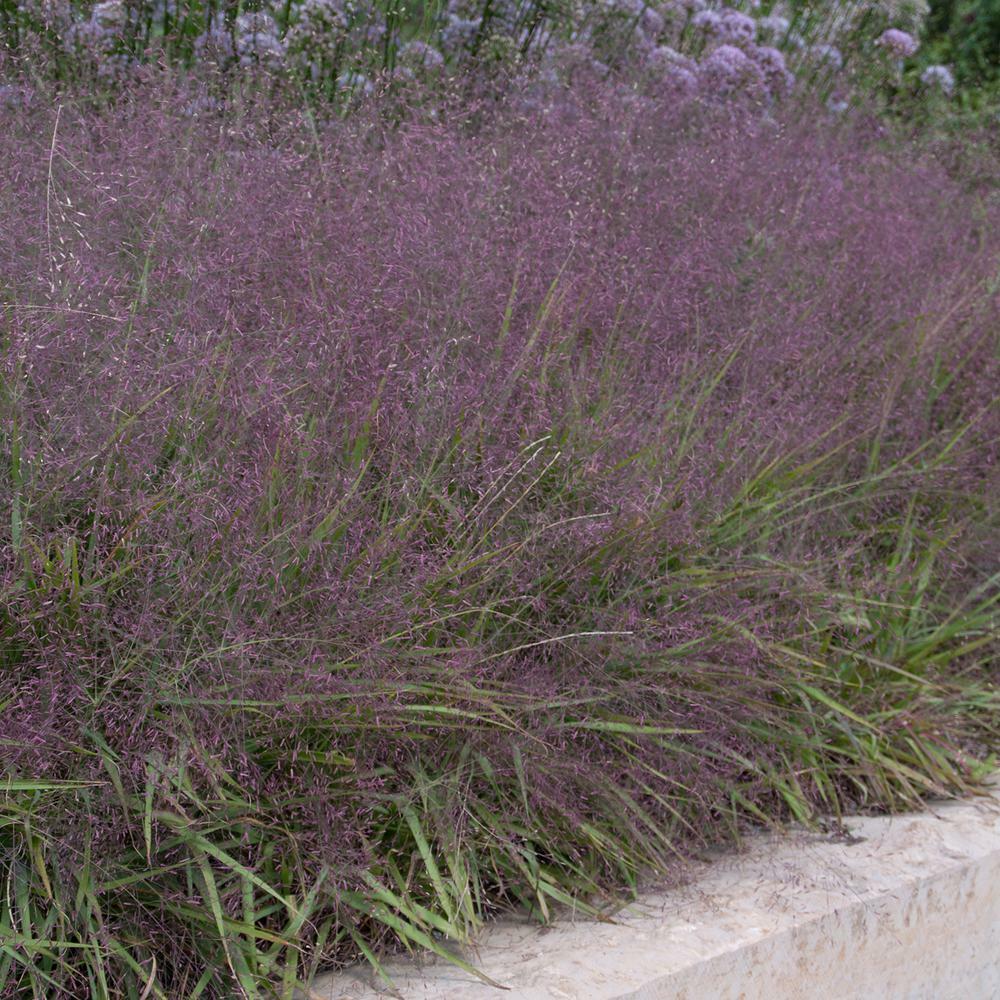
Purple Love Grass is a low-growing native ornamental grass known for its airy reddish-purple flower clouds in late summer. Botanically known as Eragrostis spectabilis, this warm-season bunchgrass forms short, green foliage clumps that suddenly transform when fine purple seed heads rise above the leaves, creating a soft, smoky haze.
The effect is best in groups or masses, where the purple bloom layer appears to float above the planting. Use Purple Love Grass in sunny borders, native meadows, dry slopes, pollinator-friendly plantings, curbside strips, and low-maintenance naturalized areas.
Excellent for Dry, Sandy, and Poor Soils
Purple Love Grass is a tough native grass for tough sites. It thrives in full sun and performs especially well in sandy, gravelly, dry, or low-fertility soils where many more refined ornamentals struggle.
This makes it a strong choice for hot roadside-style plantings, dry banks, sunny slopes, hellstrips, meadow edges, and lean soils where you want color without high water or fertilizer demands. Once established, it is drought-tolerant and low-input.
A Lower, Softer Alternative to Larger Ornamental Grasses
Unlike tall Miscanthus, Switchgrass, or Pampas-style grasses, Purple Love Grass stays relatively low. The foliage is usually 8–14 inches tall, with airy flowers and seed heads that lift the overall height to about 1–2 feet.
Its smaller size makes it useful at the front of borders, along paths, in mass plantings, or as a meadow-like ground layer. The plant has a relaxed, natural look rather than a formal clipped appearance.
Late-Season Seed Heads, Movement, and Wildlife Value
The purple flowers appear in late summer and gradually mature to tan or brown as the seed develops. As the seed heads dry, they can detach and roll or move with the wind, adding to the plant’s natural meadow character.
The seeds can provide food for birds and small mammals, and the open clumps add seasonal cover and texture. Purple Love Grass also fits well into native plantings where grasses, perennials, and seed-producing plants support a more complete habitat.
Low Maintenance and Deer Resistant
Plant Purple Love Grass in full sun with well-drained soil. Avoid rich, heavily fertilized, constantly wet sites, which can reduce the tidy low habit and are not where this grass performs best.
Maintenance is simple. Cut or rake back old growth in late winter or early spring before new warm-season growth begins. Purple Love Grass is generally considered deer resistant, drought-tolerant once established, and useful in mass plantings, meadow gardens, and dry sunny landscapes.
Purple Love grass is widely used by internationally renowned garden designer Piet Oudolf and was listed as one of the "100 Must-Have Plants" in Gardens Illustrated magazine. The species was extensively used in Oudolf's designs for New York City's High Line and Chicago's Lurie Garden.
Soft Purple Color for Sunny Native Plantings
Purple Love Grass is a low-growing native ornamental grass known for its airy reddish-purple flower clouds in late summer. Botanically known as Eragrostis spectabilis, this warm-season bunchgrass forms short, green foliage clumps that suddenly transform when fine purple seed heads rise above the leaves, creating a soft, smoky haze.
The effect is best in groups or masses, where the purple bloom layer appears to float above the planting. Use Purple Love Grass in sunny borders, native meadows, dry slopes, pollinator-friendly plantings, curbside strips, and low-maintenance naturalized areas.
Excellent for Dry, Sandy, and Poor Soils
Purple Love Grass is a tough native grass for tough sites. It thrives in full sun and performs especially well in sandy, gravelly, dry, or low-fertility soils where many more refined ornamentals struggle.
This makes it a strong choice for hot roadside-style plantings, dry banks, sunny slopes, hellstrips, meadow edges, and lean soils where you want color without high water or fertilizer demands. Once established, it is drought-tolerant and low-input.
A Lower, Softer Alternative to Larger Ornamental Grasses
Unlike tall Miscanthus, Switchgrass, or Pampas-style grasses, Purple Love Grass stays relatively low. The foliage is usually 8–14 inches tall, with airy flowers and seed heads that lift the overall height to about 1–2 feet.
Its smaller size makes it useful at the front of borders, along paths, in mass plantings, or as a meadow-like ground layer. The plant has a relaxed, natural look rather than a formal clipped appearance.
Late-Season Seed Heads, Movement, and Wildlife Value
The purple flowers appear in late summer and gradually mature to tan or brown as the seed develops. As the seed heads dry, they can detach and roll or move with the wind, adding to the plant’s natural meadow character.
The seeds can provide food for birds and small mammals, and the open clumps add seasonal cover and texture. Purple Love Grass also fits well into native plantings where grasses, perennials, and seed-producing plants support a more complete habitat.
Low Maintenance and Deer Resistant
Plant Purple Love Grass in full sun with well-drained soil. Avoid rich, heavily fertilized, constantly wet sites, which can reduce the tidy low habit and are not where this grass performs best.
Maintenance is simple. Cut or rake back old growth in late winter or early spring before new warm-season growth begins. Purple Love Grass is generally considered deer resistant, drought-tolerant once established, and useful in mass plantings, meadow gardens, and dry sunny landscapes.
Purple Love grass is widely used by internationally renowned garden designer Piet Oudolf and was listed as one of the "100 Must-Have Plants" in Gardens Illustrated magazine. The species was extensively used in Oudolf's designs for New York City's High Line and Chicago's Lurie Garden.
Description
Soft Purple Color for Sunny Native Plantings
Purple Love Grass is a low-growing native ornamental grass known for its airy reddish-purple flower clouds in late summer. Botanically known as Eragrostis spectabilis, this warm-season bunchgrass forms short, green foliage clumps that suddenly transform when fine purple seed heads rise above the leaves, creating a soft, smoky haze.
The effect is best in groups or masses, where the purple bloom layer appears to float above the planting. Use Purple Love Grass in sunny borders, native meadows, dry slopes, pollinator-friendly plantings, curbside strips, and low-maintenance naturalized areas.
Excellent for Dry, Sandy, and Poor Soils
Purple Love Grass is a tough native grass for tough sites. It thrives in full sun and performs especially well in sandy, gravelly, dry, or low-fertility soils where many more refined ornamentals struggle.
This makes it a strong choice for hot roadside-style plantings, dry banks, sunny slopes, hellstrips, meadow edges, and lean soils where you want color without high water or fertilizer demands. Once established, it is drought-tolerant and low-input.
A Lower, Softer Alternative to Larger Ornamental Grasses
Unlike tall Miscanthus, Switchgrass, or Pampas-style grasses, Purple Love Grass stays relatively low. The foliage is usually 8–14 inches tall, with airy flowers and seed heads that lift the overall height to about 1–2 feet.
Its smaller size makes it useful at the front of borders, along paths, in mass plantings, or as a meadow-like ground layer. The plant has a relaxed, natural look rather than a formal clipped appearance.
Late-Season Seed Heads, Movement, and Wildlife Value
The purple flowers appear in late summer and gradually mature to tan or brown as the seed develops. As the seed heads dry, they can detach and roll or move with the wind, adding to the plant’s natural meadow character.
The seeds can provide food for birds and small mammals, and the open clumps add seasonal cover and texture. Purple Love Grass also fits well into native plantings where grasses, perennials, and seed-producing plants support a more complete habitat.
Low Maintenance and Deer Resistant
Plant Purple Love Grass in full sun with well-drained soil. Avoid rich, heavily fertilized, constantly wet sites, which can reduce the tidy low habit and are not where this grass performs best.
Maintenance is simple. Cut or rake back old growth in late winter or early spring before new warm-season growth begins. Purple Love Grass is generally considered deer resistant, drought-tolerant once established, and useful in mass plantings, meadow gardens, and dry sunny landscapes.
Purple Love grass is widely used by internationally renowned garden designer Piet Oudolf and was listed as one of the "100 Must-Have Plants" in Gardens Illustrated magazine. The species was extensively used in Oudolf's designs for New York City's High Line and Chicago's Lurie Garden.