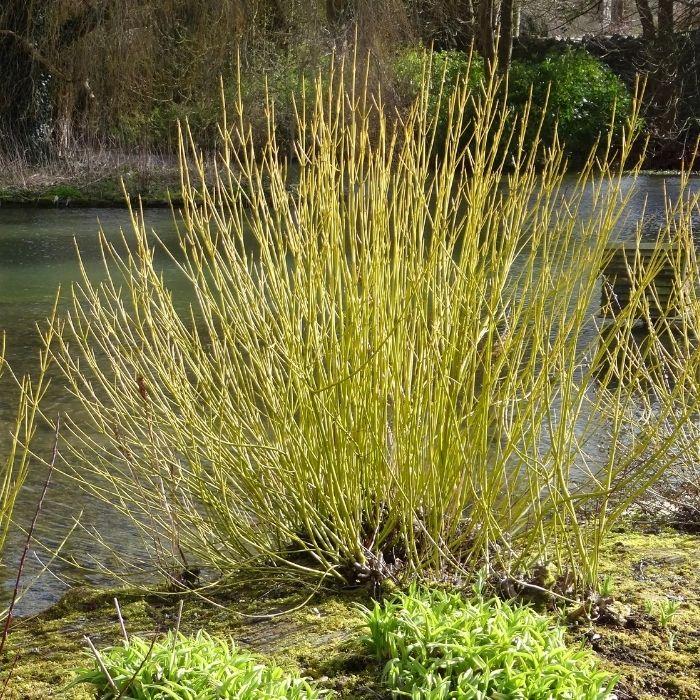
Yellow Twig Dogwood
Golden winter stems that make the landscape glow
Yellow Twig Dogwood ‘Bud’s Yellow’ is the shrub you plant for January. Once leaves drop, the bare stems light up in golden yellow, creating instant contrast against evergreens, stone, and snow. It’s one of the easiest ways to add true winter interest to a landscape—color that doesn’t rely on blooms, and structure that reads from the street. If you’ve ever looked out at a winter yard and wished for something brighter, this dogwood is the fix.
Use it where winter color matters most: near an entry, along a driveway, at the edge of a patio, or planted in front of dark evergreens for maximum pop. It also works beautifully as a repeat planting; several shrubs together create a “block of gold” effect that looks intentional and designer-level without being fussy.
A tough, adaptable shrub that handles real-world soils
Bud’s Yellow is built for practical landscapes. It tolerates a wide range of soils and is especially valuable in areas that stay consistently moist, such as low spots that don’t drain well, rain garden edges, or irrigation-heavy borders. Full sun gives the densest growth and typically the strongest stem color, but it will also grow in part shade, especially where summers are hot.
Once established, it becomes more forgiving of short dry spells, though it looks best with consistent moisture during peak heat. The goal is simple: keep it hydrated while it’s getting rooted in, then let it settle into its naturally resilient rhythm. It’s a “plant it with good basics” shrub, sun, decent drainage, and steady establishment care.
Spring flowers, berries, and fall color for four-season value
In spring, Yellow Twig Dogwood produces clusters of small white flowers, followed by berries that can add extra seasonal interest and support birds. Summer foliage stays fresh green, acting as a reliable backdrop for perennials and flowering shrubs, and fall color often shifts toward yellow with warm undertones before leaf drop reveals the winter stems again.
That four-season cycle is what makes this shrub such a smart buy. You’re not just purchasing winter color, you’re adding a dependable framework plant that helps borders look “finished” from spring through winter. It’s especially strong in mixed shrub beds where you want structure without a high-maintenance evergreen wall.
Simple pruning that keeps stems bright and growth controlled
The brightest yellow stems are always the youngest stems, which means pruning isn’t a chore; it’s the secret to peak color. You can renew the shrub by removing about one-third of the oldest stems at ground level each late winter, keeping the plant full while constantly refreshing young, vibrant growth. If you want maximum color and a tighter footprint, you can coppice (cut the shrub back hard) in late winter to push a flush of fresh, brightly colored stems.
Spacing and pruning work together. Give the shrub room to breathe, then renew it yearly so stems stay colorful and the plant stays vigorous. With a simple routine, Bud’s Yellow remains a long-lived, easy winter-interest shrub that looks better—brighter, denser, cleaner, over time.
Golden winter stems that make the landscape glow
Yellow Twig Dogwood ‘Bud’s Yellow’ is the shrub you plant for January. Once leaves drop, the bare stems light up in golden yellow, creating instant contrast against evergreens, stone, and snow. It’s one of the easiest ways to add true winter interest to a landscape—color that doesn’t rely on blooms, and structure that reads from the street. If you’ve ever looked out at a winter yard and wished for something brighter, this dogwood is the fix.
Use it where winter color matters most: near an entry, along a driveway, at the edge of a patio, or planted in front of dark evergreens for maximum pop. It also works beautifully as a repeat planting; several shrubs together create a “block of gold” effect that looks intentional and designer-level without being fussy.
A tough, adaptable shrub that handles real-world soils
Bud’s Yellow is built for practical landscapes. It tolerates a wide range of soils and is especially valuable in areas that stay consistently moist, such as low spots that don’t drain well, rain garden edges, or irrigation-heavy borders. Full sun gives the densest growth and typically the strongest stem color, but it will also grow in part shade, especially where summers are hot.
Once established, it becomes more forgiving of short dry spells, though it looks best with consistent moisture during peak heat. The goal is simple: keep it hydrated while it’s getting rooted in, then let it settle into its naturally resilient rhythm. It’s a “plant it with good basics” shrub, sun, decent drainage, and steady establishment care.
Spring flowers, berries, and fall color for four-season value
In spring, Yellow Twig Dogwood produces clusters of small white flowers, followed by berries that can add extra seasonal interest and support birds. Summer foliage stays fresh green, acting as a reliable backdrop for perennials and flowering shrubs, and fall color often shifts toward yellow with warm undertones before leaf drop reveals the winter stems again.
That four-season cycle is what makes this shrub such a smart buy. You’re not just purchasing winter color, you’re adding a dependable framework plant that helps borders look “finished” from spring through winter. It’s especially strong in mixed shrub beds where you want structure without a high-maintenance evergreen wall.
Simple pruning that keeps stems bright and growth controlled
The brightest yellow stems are always the youngest stems, which means pruning isn’t a chore; it’s the secret to peak color. You can renew the shrub by removing about one-third of the oldest stems at ground level each late winter, keeping the plant full while constantly refreshing young, vibrant growth. If you want maximum color and a tighter footprint, you can coppice (cut the shrub back hard) in late winter to push a flush of fresh, brightly colored stems.
Spacing and pruning work together. Give the shrub room to breathe, then renew it yearly so stems stay colorful and the plant stays vigorous. With a simple routine, Bud’s Yellow remains a long-lived, easy winter-interest shrub that looks better—brighter, denser, cleaner, over time.
Description
Golden winter stems that make the landscape glow
Yellow Twig Dogwood ‘Bud’s Yellow’ is the shrub you plant for January. Once leaves drop, the bare stems light up in golden yellow, creating instant contrast against evergreens, stone, and snow. It’s one of the easiest ways to add true winter interest to a landscape—color that doesn’t rely on blooms, and structure that reads from the street. If you’ve ever looked out at a winter yard and wished for something brighter, this dogwood is the fix.
Use it where winter color matters most: near an entry, along a driveway, at the edge of a patio, or planted in front of dark evergreens for maximum pop. It also works beautifully as a repeat planting; several shrubs together create a “block of gold” effect that looks intentional and designer-level without being fussy.
A tough, adaptable shrub that handles real-world soils
Bud’s Yellow is built for practical landscapes. It tolerates a wide range of soils and is especially valuable in areas that stay consistently moist, such as low spots that don’t drain well, rain garden edges, or irrigation-heavy borders. Full sun gives the densest growth and typically the strongest stem color, but it will also grow in part shade, especially where summers are hot.
Once established, it becomes more forgiving of short dry spells, though it looks best with consistent moisture during peak heat. The goal is simple: keep it hydrated while it’s getting rooted in, then let it settle into its naturally resilient rhythm. It’s a “plant it with good basics” shrub, sun, decent drainage, and steady establishment care.
Spring flowers, berries, and fall color for four-season value
In spring, Yellow Twig Dogwood produces clusters of small white flowers, followed by berries that can add extra seasonal interest and support birds. Summer foliage stays fresh green, acting as a reliable backdrop for perennials and flowering shrubs, and fall color often shifts toward yellow with warm undertones before leaf drop reveals the winter stems again.
That four-season cycle is what makes this shrub such a smart buy. You’re not just purchasing winter color, you’re adding a dependable framework plant that helps borders look “finished” from spring through winter. It’s especially strong in mixed shrub beds where you want structure without a high-maintenance evergreen wall.
Simple pruning that keeps stems bright and growth controlled
The brightest yellow stems are always the youngest stems, which means pruning isn’t a chore; it’s the secret to peak color. You can renew the shrub by removing about one-third of the oldest stems at ground level each late winter, keeping the plant full while constantly refreshing young, vibrant growth. If you want maximum color and a tighter footprint, you can coppice (cut the shrub back hard) in late winter to push a flush of fresh, brightly colored stems.
Spacing and pruning work together. Give the shrub room to breathe, then renew it yearly so stems stay colorful and the plant stays vigorous. With a simple routine, Bud’s Yellow remains a long-lived, easy winter-interest shrub that looks better—brighter, denser, cleaner, over time.