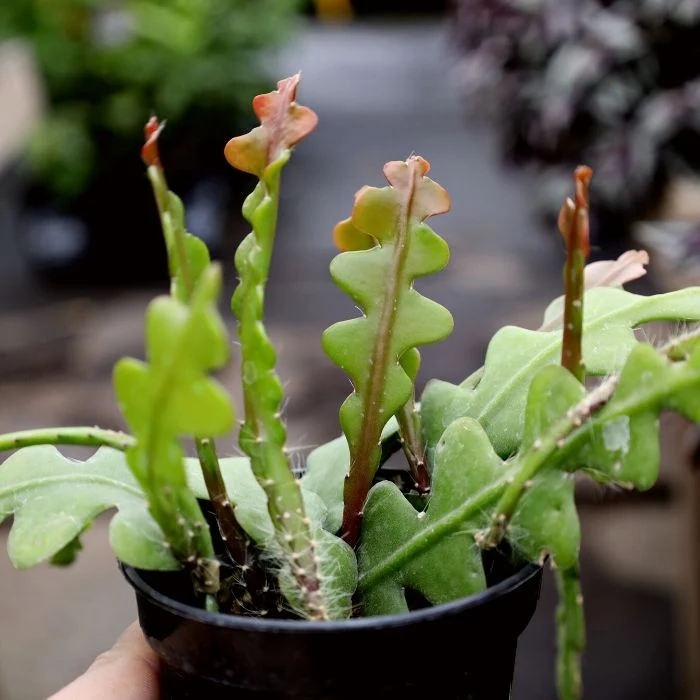
Epiphyllum anguliger (Fishbone Cactus)
A Zig-Zag Statement from the Tropics
The Fishbone Cactus (Epiphyllum anguliger) is one of those plants that looks like it came straight out of a design magazine. Instead of spines and desert sand, this jungle cactus grows flattened stems that zig and zag like cartoon fishbones—hence the name. The bright green, deeply notched foliage cascades gracefully over pot edges, turning simple shelves, hanging baskets, and plant stands into living art installations. When mature and well cared for, Fishbone Cactus can reward you with large, fragrant, night-blooming flowers, making it a true conversation starter in any plant collection.
Trailing, Cascading, and Perfect for Hanging Pots
In its native habitat, the Fishbone Cactus grows as an epiphyte, clinging to tree branches in warm, forested areas. Indoors, it exhibits the same trailing habit. Stems emerge upright at first, then arch and cascade as they lengthen, often reaching 1–3 feet long in a hanging basket or on the edge of a high shelf. The growth rate is moderate, so you’ll see steady progress without the plant taking over overnight. Over time, those zig-zagging stems layer over one another to create a complete, lush, waterfall effect that softens hard edges and adds a playful, sculptural element to any room.
Bright Indirect Light and a Chunky, Well-Drained Potting Mix are all you need
Unlike desert cacti, Fishbone Cactus is a jungle dweller. It prefers bright, indirect light or filtered sunlight—think near an east-facing window, a few feet back from a south- or west-facing window, or on a shaded porch with dappled light. Too much harsh, direct sun can scorch the stems; too little light leads to stretched, pale growth and fewer flowers. Plant it in a chunky, well-drained mix—something between an indoor potting soil and an orchid/cactus blend—with added bark, perlite, or pumice so the roots get plenty of air. Water when the top 1–2 inches of the mix feel dry, then let the excess drain away. Allow it to dry slightly between waterings, but don’t keep it bone-dry for long periods.
Hanging Baskets, Shelves, and Modern Décor
Fishbone Cactus is best used as an indoor hanging or shelf plant, where its trailing, zig-zag stems can be seen and appreciated. It’s ideal for macramé hangers, floating shelves, and plant walls that need something bold, graphic, and a little wild. In warm, frost-free climates, it can also be grown outdoors in shaded patios or under trees as a seasonal accent, as long as it’s protected from cold and heavy rain. Pair it with other tropical plants—such as philodendrons, pothos, and ferns—to create a layered jungle look, or style it solo in a clean, modern pot to let the unique fishbone shape take center stage.
A Zig-Zag Statement from the Tropics
The Fishbone Cactus (Epiphyllum anguliger) is one of those plants that looks like it came straight out of a design magazine. Instead of spines and desert sand, this jungle cactus grows flattened stems that zig and zag like cartoon fishbones—hence the name. The bright green, deeply notched foliage cascades gracefully over pot edges, turning simple shelves, hanging baskets, and plant stands into living art installations. When mature and well cared for, Fishbone Cactus can reward you with large, fragrant, night-blooming flowers, making it a true conversation starter in any plant collection.
Trailing, Cascading, and Perfect for Hanging Pots
In its native habitat, the Fishbone Cactus grows as an epiphyte, clinging to tree branches in warm, forested areas. Indoors, it exhibits the same trailing habit. Stems emerge upright at first, then arch and cascade as they lengthen, often reaching 1–3 feet long in a hanging basket or on the edge of a high shelf. The growth rate is moderate, so you’ll see steady progress without the plant taking over overnight. Over time, those zig-zagging stems layer over one another to create a complete, lush, waterfall effect that softens hard edges and adds a playful, sculptural element to any room.
Bright Indirect Light and a Chunky, Well-Drained Potting Mix are all you need
Unlike desert cacti, Fishbone Cactus is a jungle dweller. It prefers bright, indirect light or filtered sunlight—think near an east-facing window, a few feet back from a south- or west-facing window, or on a shaded porch with dappled light. Too much harsh, direct sun can scorch the stems; too little light leads to stretched, pale growth and fewer flowers. Plant it in a chunky, well-drained mix—something between an indoor potting soil and an orchid/cactus blend—with added bark, perlite, or pumice so the roots get plenty of air. Water when the top 1–2 inches of the mix feel dry, then let the excess drain away. Allow it to dry slightly between waterings, but don’t keep it bone-dry for long periods.
Hanging Baskets, Shelves, and Modern Décor
Fishbone Cactus is best used as an indoor hanging or shelf plant, where its trailing, zig-zag stems can be seen and appreciated. It’s ideal for macramé hangers, floating shelves, and plant walls that need something bold, graphic, and a little wild. In warm, frost-free climates, it can also be grown outdoors in shaded patios or under trees as a seasonal accent, as long as it’s protected from cold and heavy rain. Pair it with other tropical plants—such as philodendrons, pothos, and ferns—to create a layered jungle look, or style it solo in a clean, modern pot to let the unique fishbone shape take center stage.
Original: $89.95
-70%$89.95
$26.98Description
A Zig-Zag Statement from the Tropics
The Fishbone Cactus (Epiphyllum anguliger) is one of those plants that looks like it came straight out of a design magazine. Instead of spines and desert sand, this jungle cactus grows flattened stems that zig and zag like cartoon fishbones—hence the name. The bright green, deeply notched foliage cascades gracefully over pot edges, turning simple shelves, hanging baskets, and plant stands into living art installations. When mature and well cared for, Fishbone Cactus can reward you with large, fragrant, night-blooming flowers, making it a true conversation starter in any plant collection.
Trailing, Cascading, and Perfect for Hanging Pots
In its native habitat, the Fishbone Cactus grows as an epiphyte, clinging to tree branches in warm, forested areas. Indoors, it exhibits the same trailing habit. Stems emerge upright at first, then arch and cascade as they lengthen, often reaching 1–3 feet long in a hanging basket or on the edge of a high shelf. The growth rate is moderate, so you’ll see steady progress without the plant taking over overnight. Over time, those zig-zagging stems layer over one another to create a complete, lush, waterfall effect that softens hard edges and adds a playful, sculptural element to any room.
Bright Indirect Light and a Chunky, Well-Drained Potting Mix are all you need
Unlike desert cacti, Fishbone Cactus is a jungle dweller. It prefers bright, indirect light or filtered sunlight—think near an east-facing window, a few feet back from a south- or west-facing window, or on a shaded porch with dappled light. Too much harsh, direct sun can scorch the stems; too little light leads to stretched, pale growth and fewer flowers. Plant it in a chunky, well-drained mix—something between an indoor potting soil and an orchid/cactus blend—with added bark, perlite, or pumice so the roots get plenty of air. Water when the top 1–2 inches of the mix feel dry, then let the excess drain away. Allow it to dry slightly between waterings, but don’t keep it bone-dry for long periods.
Hanging Baskets, Shelves, and Modern Décor
Fishbone Cactus is best used as an indoor hanging or shelf plant, where its trailing, zig-zag stems can be seen and appreciated. It’s ideal for macramé hangers, floating shelves, and plant walls that need something bold, graphic, and a little wild. In warm, frost-free climates, it can also be grown outdoors in shaded patios or under trees as a seasonal accent, as long as it’s protected from cold and heavy rain. Pair it with other tropical plants—such as philodendrons, pothos, and ferns—to create a layered jungle look, or style it solo in a clean, modern pot to let the unique fishbone shape take center stage.