Andorra Juniper
Evergreen Ground Cover That Looks Finished Year-Round
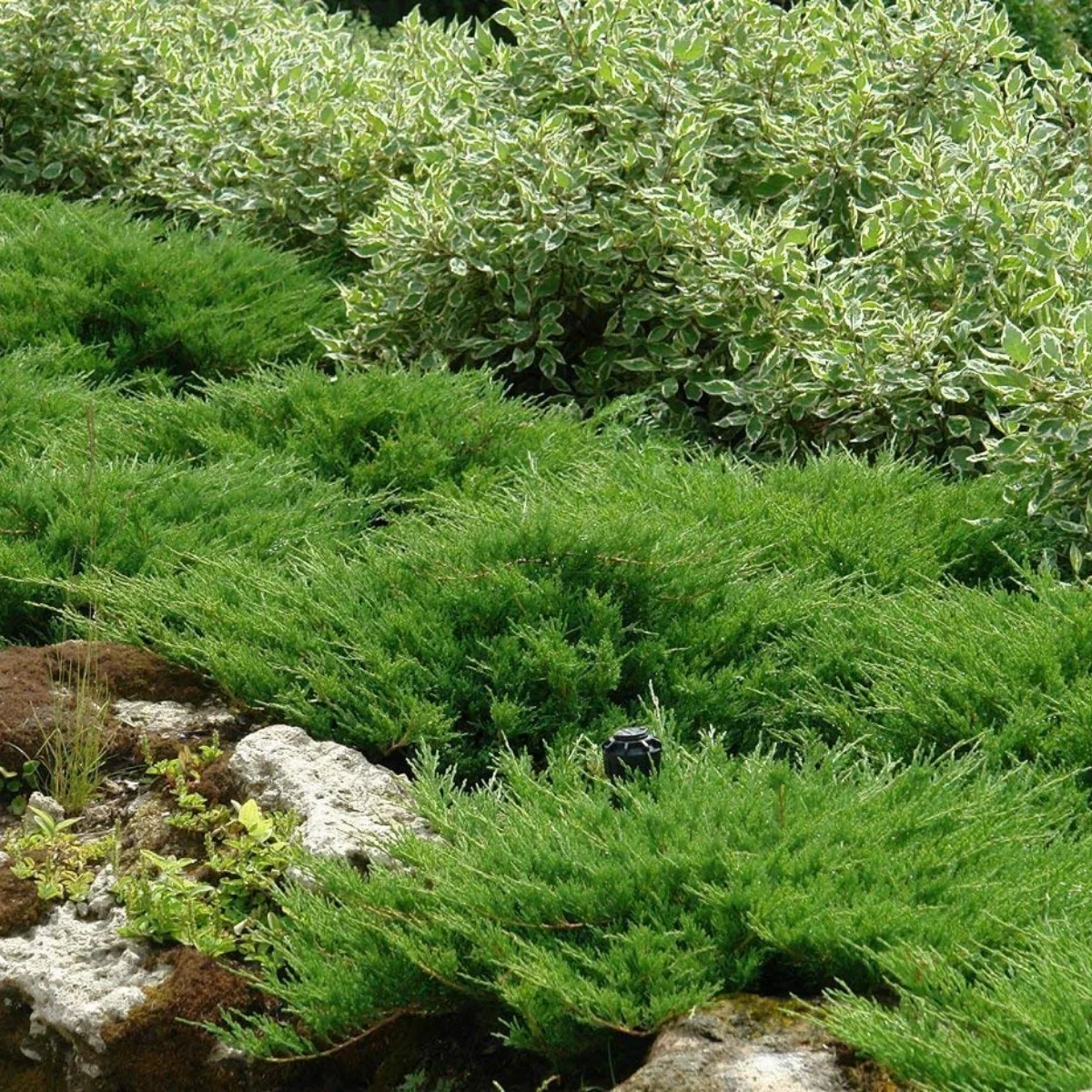
Andorra Juniper is the kind of plant that makes a bed look clean and “done” without asking for constant attention. It stays low, spreads wide, and creates a dense, textured carpet of evergreen foliage that works like living mulch—covering soil, reducing weeds, and giving you a tidy edge along walkways and foundations. If you’ve got a spot where grass struggles, mulch washes, or you just want a permanent, polished ground layer, this juniper is a dependable solution.
The foliage has a soft, feathery look from a distance, but it’s tough as nails up close. In winter, many plantings develop a richer bronze-to-purple cast that adds seasonal interest when most landscapes go quiet. That color shift is a big part of the charm: you get a ground cover that doesn’t disappear into “flat green,” and it keeps your landscape looking intentional in every month of the year.
A Tough Choice For Hot Sun, Dry Soil, And Hard-to-Plant Spots
This is a sun-lover that performs best where other plants tap out. Andorra Juniper thrives in full sun and well-drained soil, and once it’s established, it’s impressively drought-tolerant. That makes it ideal for sunny slopes, roadside edges, hell strips, and any spot that bakes in summer. It’s also a strong pick for busy homeowners because it doesn’t need frequent feeding, fussing, or pampering to stay attractive.
The key to success is drainage. Junipers hate wet feet, so think “dry to average” rather than constantly moist. If you’re planting into heavier soil, a slightly raised planting and a smart mulch ring can make a big difference. Give it sun, give it airflow, avoid soggy soil, and you’ll have a durable evergreen ground cover that holds its shape and color through real-world conditions.
Spreading Coverage That Controls Erosion And Softens Edges
Andorra Juniper spreads outward into a broad, low mat—typically staying around 12–18 inches tall while reaching several feet across at maturity. That growth habit is exactly why it shines on slopes: the branching network helps hold soil, slow runoff, and reduce erosion while looking natural and layered. It also looks great spilling gently over retaining walls, curbs, or bed edges, giving hard lines a softer, more landscaped finish.
It’s also a strong “repeat plant.” Use it in multiples to create a unified ground layer under taller shrubs or along long sunny runs where you want consistent texture. Once it starts to knit together, it’s remarkably effective at shading out weeds and reducing the need for re-mulching every season. If your goal is low-maintenance coverage that actually solves a landscape problem, this is one of the simplest wins you can plant.
Easy Care Pruning And Spacing For A Full, Clean Mat
Spacing is where people either love their creeping juniper—or wonder why it never fills in. For faster coverage, plant Andorra Juniper about 3–4 feet apart (center to center). That spacing gives you room for healthy airflow while still allowing plants to knit together into a continuous mat over time. If you want a looser, more “individual mounds” look, space them farther apart and let each plant show its natural form.
Pruning is minimal and best done lightly in early spring. You’re not shearing this like a hedge—you’re simply trimming stray runners, keeping edges crisp, and shaping for symmetry. Avoid cutting back into old, bare wood, because junipers don’t reliably re-sprout from leafless stems. With smart spacing and a light annual tidy-up, Andorra Juniper stays dense, attractive, and wonderfully low-maintenance.
Evergreen Ground Cover That Looks Finished Year-Round
Andorra Juniper is the kind of plant that makes a bed look clean and “done” without asking for constant attention. It stays low, spreads wide, and creates a dense, textured carpet of evergreen foliage that works like living mulch—covering soil, reducing weeds, and giving you a tidy edge along walkways and foundations. If you’ve got a spot where grass struggles, mulch washes, or you just want a permanent, polished ground layer, this juniper is a dependable solution.
The foliage has a soft, feathery look from a distance, but it’s tough as nails up close. In winter, many plantings develop a richer bronze-to-purple cast that adds seasonal interest when most landscapes go quiet. That color shift is a big part of the charm: you get a ground cover that doesn’t disappear into “flat green,” and it keeps your landscape looking intentional in every month of the year.
A Tough Choice For Hot Sun, Dry Soil, And Hard-to-Plant Spots
This is a sun-lover that performs best where other plants tap out. Andorra Juniper thrives in full sun and well-drained soil, and once it’s established, it’s impressively drought-tolerant. That makes it ideal for sunny slopes, roadside edges, hell strips, and any spot that bakes in summer. It’s also a strong pick for busy homeowners because it doesn’t need frequent feeding, fussing, or pampering to stay attractive.
The key to success is drainage. Junipers hate wet feet, so think “dry to average” rather than constantly moist. If you’re planting into heavier soil, a slightly raised planting and a smart mulch ring can make a big difference. Give it sun, give it airflow, avoid soggy soil, and you’ll have a durable evergreen ground cover that holds its shape and color through real-world conditions.
Spreading Coverage That Controls Erosion And Softens Edges
Andorra Juniper spreads outward into a broad, low mat—typically staying around 12–18 inches tall while reaching several feet across at maturity. That growth habit is exactly why it shines on slopes: the branching network helps hold soil, slow runoff, and reduce erosion while looking natural and layered. It also looks great spilling gently over retaining walls, curbs, or bed edges, giving hard lines a softer, more landscaped finish.
It’s also a strong “repeat plant.” Use it in multiples to create a unified ground layer under taller shrubs or along long sunny runs where you want consistent texture. Once it starts to knit together, it’s remarkably effective at shading out weeds and reducing the need for re-mulching every season. If your goal is low-maintenance coverage that actually solves a landscape problem, this is one of the simplest wins you can plant.
Easy Care Pruning And Spacing For A Full, Clean Mat
Spacing is where people either love their creeping juniper—or wonder why it never fills in. For faster coverage, plant Andorra Juniper about 3–4 feet apart (center to center). That spacing gives you room for healthy airflow while still allowing plants to knit together into a continuous mat over time. If you want a looser, more “individual mounds” look, space them farther apart and let each plant show its natural form.
Pruning is minimal and best done lightly in early spring. You’re not shearing this like a hedge—you’re simply trimming stray runners, keeping edges crisp, and shaping for symmetry. Avoid cutting back into old, bare wood, because junipers don’t reliably re-sprout from leafless stems. With smart spacing and a light annual tidy-up, Andorra Juniper stays dense, attractive, and wonderfully low-maintenance.
Description
Evergreen Ground Cover That Looks Finished Year-Round
Andorra Juniper is the kind of plant that makes a bed look clean and “done” without asking for constant attention. It stays low, spreads wide, and creates a dense, textured carpet of evergreen foliage that works like living mulch—covering soil, reducing weeds, and giving you a tidy edge along walkways and foundations. If you’ve got a spot where grass struggles, mulch washes, or you just want a permanent, polished ground layer, this juniper is a dependable solution.
The foliage has a soft, feathery look from a distance, but it’s tough as nails up close. In winter, many plantings develop a richer bronze-to-purple cast that adds seasonal interest when most landscapes go quiet. That color shift is a big part of the charm: you get a ground cover that doesn’t disappear into “flat green,” and it keeps your landscape looking intentional in every month of the year.
A Tough Choice For Hot Sun, Dry Soil, And Hard-to-Plant Spots
This is a sun-lover that performs best where other plants tap out. Andorra Juniper thrives in full sun and well-drained soil, and once it’s established, it’s impressively drought-tolerant. That makes it ideal for sunny slopes, roadside edges, hell strips, and any spot that bakes in summer. It’s also a strong pick for busy homeowners because it doesn’t need frequent feeding, fussing, or pampering to stay attractive.
The key to success is drainage. Junipers hate wet feet, so think “dry to average” rather than constantly moist. If you’re planting into heavier soil, a slightly raised planting and a smart mulch ring can make a big difference. Give it sun, give it airflow, avoid soggy soil, and you’ll have a durable evergreen ground cover that holds its shape and color through real-world conditions.
Spreading Coverage That Controls Erosion And Softens Edges
Andorra Juniper spreads outward into a broad, low mat—typically staying around 12–18 inches tall while reaching several feet across at maturity. That growth habit is exactly why it shines on slopes: the branching network helps hold soil, slow runoff, and reduce erosion while looking natural and layered. It also looks great spilling gently over retaining walls, curbs, or bed edges, giving hard lines a softer, more landscaped finish.
It’s also a strong “repeat plant.” Use it in multiples to create a unified ground layer under taller shrubs or along long sunny runs where you want consistent texture. Once it starts to knit together, it’s remarkably effective at shading out weeds and reducing the need for re-mulching every season. If your goal is low-maintenance coverage that actually solves a landscape problem, this is one of the simplest wins you can plant.
Easy Care Pruning And Spacing For A Full, Clean Mat
Spacing is where people either love their creeping juniper—or wonder why it never fills in. For faster coverage, plant Andorra Juniper about 3–4 feet apart (center to center). That spacing gives you room for healthy airflow while still allowing plants to knit together into a continuous mat over time. If you want a looser, more “individual mounds” look, space them farther apart and let each plant show its natural form.
Pruning is minimal and best done lightly in early spring. You’re not shearing this like a hedge—you’re simply trimming stray runners, keeping edges crisp, and shaping for symmetry. Avoid cutting back into old, bare wood, because junipers don’t reliably re-sprout from leafless stems. With smart spacing and a light annual tidy-up, Andorra Juniper stays dense, attractive, and wonderfully low-maintenance.