White Wood Aster
White Wood Aster Brings Fall Flowers to the Shade Garden
White Wood Aster is a native woodland perennial that brings soft white flowers to shaded gardens in late summer and early fall. Also known as Eurybia divaricata, Woodland Aster, or White Woodland Aster, this plant is especially valuable because it blooms well in part shade to full shade when many other flowering perennials prefer more sun.
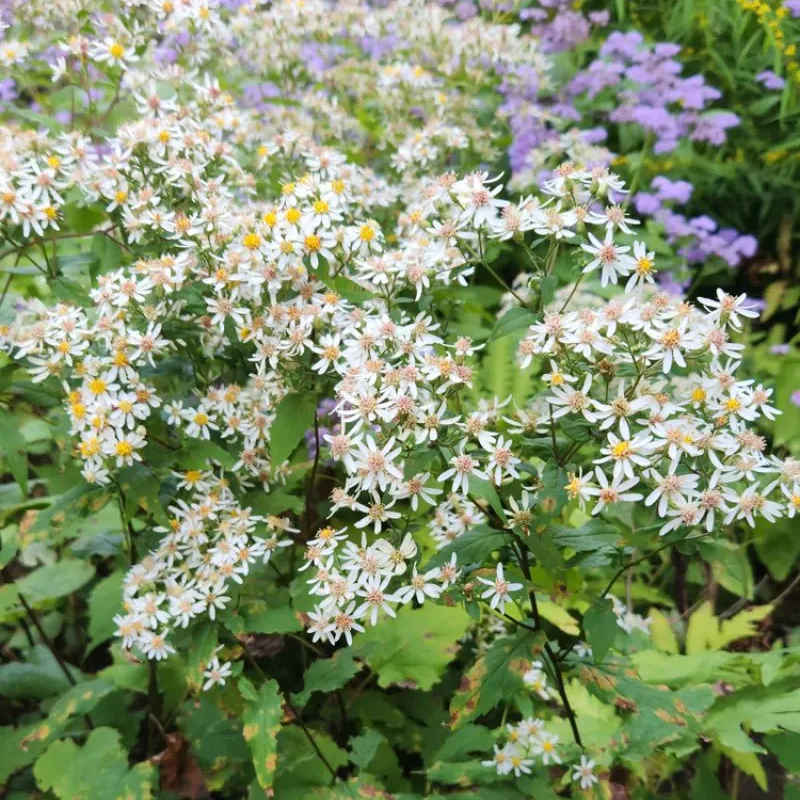
The flowers are small, daisy-like, and bright, with white petals surrounding centers that shift from yellow toward reddish tones as they mature. Held above green foliage on dark, wiry stems, the blooms create a light, airy look that feels natural along woodland edges, shaded paths, and under open-canopy trees.
A Native Aster That Performs in Dry Shade
White Wood Aster is one of the most useful native perennials for dry, shady areas. It thrives in open shade, woodland margins, and areas beneath trees where soil can be drier, and root competition is common. Once established, it tolerates dry conditions better than many shade-blooming perennials.
This makes it a strong choice for homeowners who want more than foliage in shaded areas. Use White Wood Aster where Hostas, Ferns, Hellebores, Brunnera, Epimedium, and Carex provide structure, then let the white aster flowers brighten the bed later in the season.
White Daisy-Like Flowers Support Late-Season Pollinators
White Wood Aster blooms at an important time in the garden. Late summer and early fall are critical feeding windows for bees, butterflies, skippers, flies, and other beneficial insects that rely on late-season nectar and pollen.
The open, daisy-like flowers are easy for pollinators to access. The plant is also useful in native and wildlife-friendly landscapes because asters support many beneficial insects and help extend the garden’s ecological value into fall. Plant in small groups or drifts for the best visual effect and pollinator impact.
A Natural Groundcover for Woodland Beds and Native Gardens
White Wood Aster grows in loose clumps and can spread to form a natural-looking groundcover in woodland settings. Mature plants commonly reach about 1 to 2.5 feet tall and 1.5 to 2.5 feet wide, with flowering stems that rise above the foliage for a relaxed, meadow-meets-woodland look.
Use it beneath deciduous trees, along shaded slopes, at the edge of woodland gardens, in native plant beds, or in cottage-style shade borders. It is especially attractive when allowed to weave among spring ephemerals, ferns, Solomon’s Seal, Goldenrod, Foamflower, Wild Ginger, and other shade-tolerant natives.
Low Maintenance with Good Airflow and Simple Cleanup
White Wood Aster is generally easy to grow in average, dry to medium, well-drained soil. Good air circulation and a little morning sun can help keep foliage cleaner, especially in humid gardens where asters may be prone to powdery mildew.
Maintenance is simple. Shear plants lightly in early summer if you want a shorter, denser habit, or let them grow naturally for a looser woodland look. After flowering, you can leave some stems standing for wildlife value and winter texture, then cut back old growth in late winter or early spring before new growth begins.
White Wood Aster Brings Fall Flowers to the Shade Garden
White Wood Aster is a native woodland perennial that brings soft white flowers to shaded gardens in late summer and early fall. Also known as Eurybia divaricata, Woodland Aster, or White Woodland Aster, this plant is especially valuable because it blooms well in part shade to full shade when many other flowering perennials prefer more sun.
The flowers are small, daisy-like, and bright, with white petals surrounding centers that shift from yellow toward reddish tones as they mature. Held above green foliage on dark, wiry stems, the blooms create a light, airy look that feels natural along woodland edges, shaded paths, and under open-canopy trees.
A Native Aster That Performs in Dry Shade
White Wood Aster is one of the most useful native perennials for dry, shady areas. It thrives in open shade, woodland margins, and areas beneath trees where soil can be drier, and root competition is common. Once established, it tolerates dry conditions better than many shade-blooming perennials.
This makes it a strong choice for homeowners who want more than foliage in shaded areas. Use White Wood Aster where Hostas, Ferns, Hellebores, Brunnera, Epimedium, and Carex provide structure, then let the white aster flowers brighten the bed later in the season.
White Daisy-Like Flowers Support Late-Season Pollinators
White Wood Aster blooms at an important time in the garden. Late summer and early fall are critical feeding windows for bees, butterflies, skippers, flies, and other beneficial insects that rely on late-season nectar and pollen.
The open, daisy-like flowers are easy for pollinators to access. The plant is also useful in native and wildlife-friendly landscapes because asters support many beneficial insects and help extend the garden’s ecological value into fall. Plant in small groups or drifts for the best visual effect and pollinator impact.
A Natural Groundcover for Woodland Beds and Native Gardens
White Wood Aster grows in loose clumps and can spread to form a natural-looking groundcover in woodland settings. Mature plants commonly reach about 1 to 2.5 feet tall and 1.5 to 2.5 feet wide, with flowering stems that rise above the foliage for a relaxed, meadow-meets-woodland look.
Use it beneath deciduous trees, along shaded slopes, at the edge of woodland gardens, in native plant beds, or in cottage-style shade borders. It is especially attractive when allowed to weave among spring ephemerals, ferns, Solomon’s Seal, Goldenrod, Foamflower, Wild Ginger, and other shade-tolerant natives.
Low Maintenance with Good Airflow and Simple Cleanup
White Wood Aster is generally easy to grow in average, dry to medium, well-drained soil. Good air circulation and a little morning sun can help keep foliage cleaner, especially in humid gardens where asters may be prone to powdery mildew.
Maintenance is simple. Shear plants lightly in early summer if you want a shorter, denser habit, or let them grow naturally for a looser woodland look. After flowering, you can leave some stems standing for wildlife value and winter texture, then cut back old growth in late winter or early spring before new growth begins.
Original: $16.95
-70%$16.95
$5.08Description
White Wood Aster Brings Fall Flowers to the Shade Garden
White Wood Aster is a native woodland perennial that brings soft white flowers to shaded gardens in late summer and early fall. Also known as Eurybia divaricata, Woodland Aster, or White Woodland Aster, this plant is especially valuable because it blooms well in part shade to full shade when many other flowering perennials prefer more sun.
The flowers are small, daisy-like, and bright, with white petals surrounding centers that shift from yellow toward reddish tones as they mature. Held above green foliage on dark, wiry stems, the blooms create a light, airy look that feels natural along woodland edges, shaded paths, and under open-canopy trees.
A Native Aster That Performs in Dry Shade
White Wood Aster is one of the most useful native perennials for dry, shady areas. It thrives in open shade, woodland margins, and areas beneath trees where soil can be drier, and root competition is common. Once established, it tolerates dry conditions better than many shade-blooming perennials.
This makes it a strong choice for homeowners who want more than foliage in shaded areas. Use White Wood Aster where Hostas, Ferns, Hellebores, Brunnera, Epimedium, and Carex provide structure, then let the white aster flowers brighten the bed later in the season.
White Daisy-Like Flowers Support Late-Season Pollinators
White Wood Aster blooms at an important time in the garden. Late summer and early fall are critical feeding windows for bees, butterflies, skippers, flies, and other beneficial insects that rely on late-season nectar and pollen.
The open, daisy-like flowers are easy for pollinators to access. The plant is also useful in native and wildlife-friendly landscapes because asters support many beneficial insects and help extend the garden’s ecological value into fall. Plant in small groups or drifts for the best visual effect and pollinator impact.
A Natural Groundcover for Woodland Beds and Native Gardens
White Wood Aster grows in loose clumps and can spread to form a natural-looking groundcover in woodland settings. Mature plants commonly reach about 1 to 2.5 feet tall and 1.5 to 2.5 feet wide, with flowering stems that rise above the foliage for a relaxed, meadow-meets-woodland look.
Use it beneath deciduous trees, along shaded slopes, at the edge of woodland gardens, in native plant beds, or in cottage-style shade borders. It is especially attractive when allowed to weave among spring ephemerals, ferns, Solomon’s Seal, Goldenrod, Foamflower, Wild Ginger, and other shade-tolerant natives.
Low Maintenance with Good Airflow and Simple Cleanup
White Wood Aster is generally easy to grow in average, dry to medium, well-drained soil. Good air circulation and a little morning sun can help keep foliage cleaner, especially in humid gardens where asters may be prone to powdery mildew.
Maintenance is simple. Shear plants lightly in early summer if you want a shorter, denser habit, or let them grow naturally for a looser woodland look. After flowering, you can leave some stems standing for wildlife value and winter texture, then cut back old growth in late winter or early spring before new growth begins.