
Blue Atlas Cedar
An Evergreen That Makes a Statement
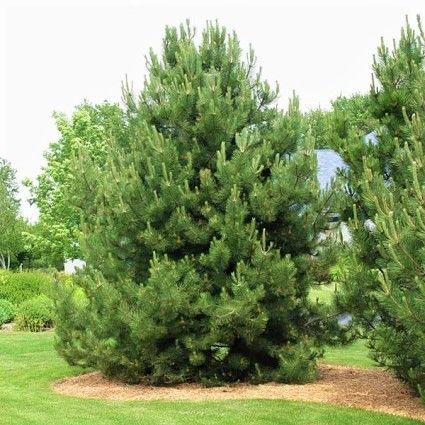
Blue Atlas Cedar is the kind of tree that gives a landscape instant presence. Its sparkling silvery blue foliage, broad branching habit, and strong pyramidal form when young make it one of the most dramatic evergreen specimen trees for larger properties.
This is not a background plant. Blue Atlas Cedar is best used where it can be seen, appreciated, and allowed to develop character over time. For homeowners who want a tree with year-round impact, this one brings color, structure, and a distinctly elevated look.
Silvery Blue Foliage That Stands Out All Year
One of the biggest reasons gardeners choose Blue Atlas Cedar is the foliage color. The needles carry a cool, silvery-blue to blue-green tone that contrasts beautifully with lawns, foundation plantings, stonework, and nearby darker green evergreens.
That year-round color adds depth to the landscape in every season. Even in winter, when much of the garden quiets down, Blue Atlas Cedar continues to hold visual attention and provide a refined evergreen anchor.
A Sculptural Form That Gets Better with Age
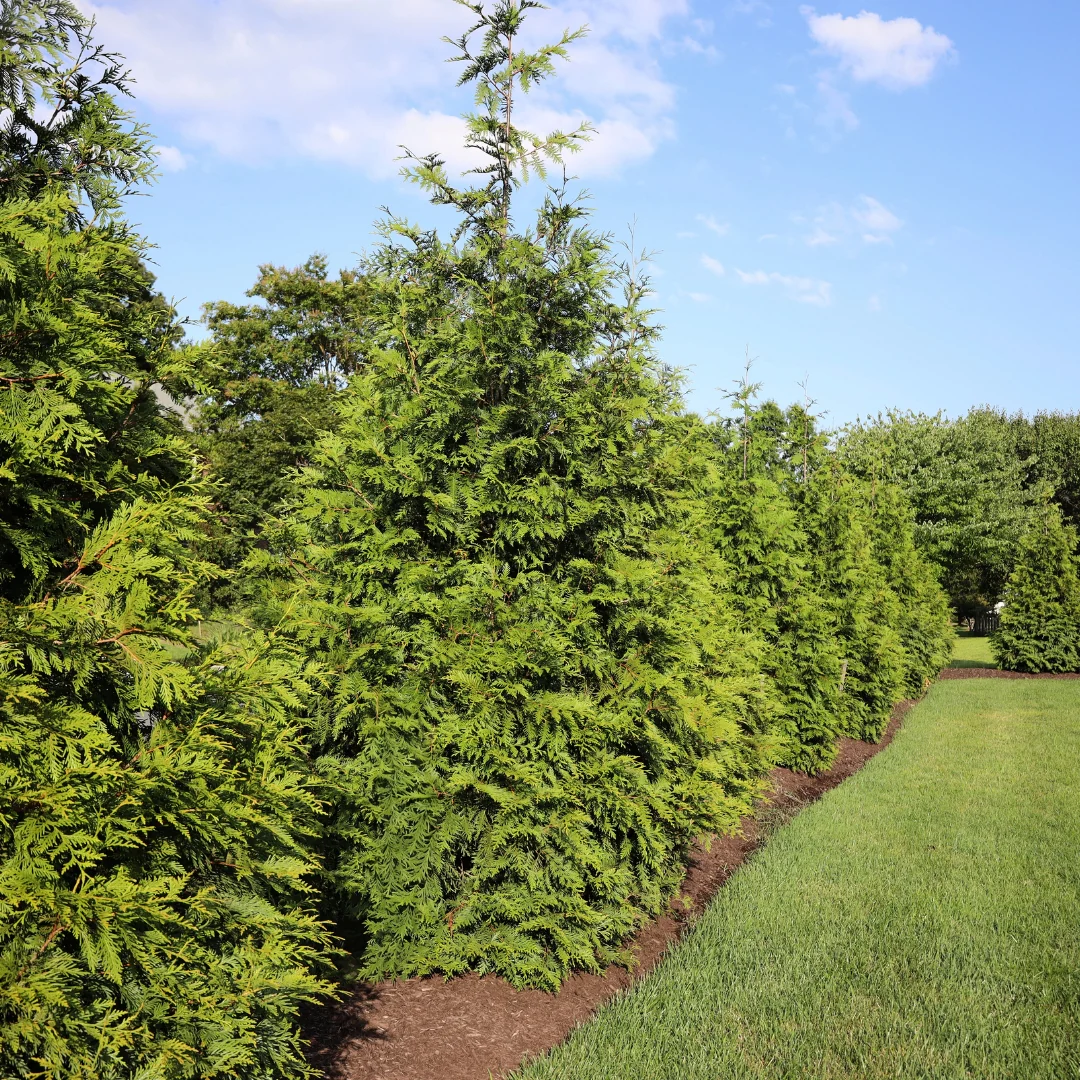
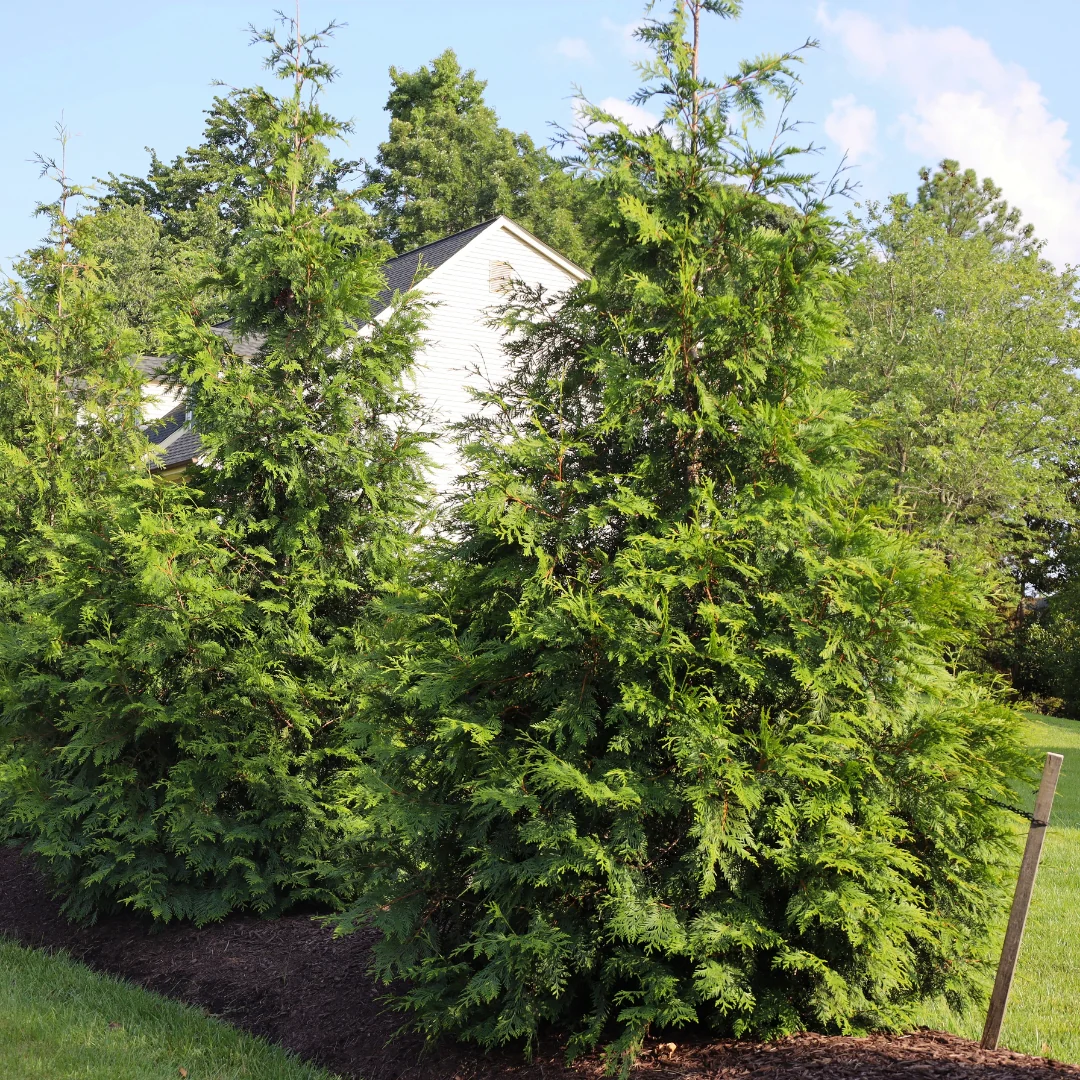
When young, Blue Atlas Cedar has a more upright pyramidal habit, but as it matures, the branching becomes broader and more expansive, creating a layered, sculptural silhouette. That evolving shape is part of what makes it such a desirable long-term landscape investment.
It is especially effective where a single specimen tree needs to carry visual weight in the design. Planted in an open lawn, near a drive, or at the edge of a large garden bed, it develops into a true focal point that feels substantial and enduring.
Ideal for Large Landscapes and Signature Placements
Blue Atlas Cedar is best suited for larger spaces where its mature form can be appreciated without crowding nearby structures or smaller plants. It works beautifully as a lawn specimen, an estate-style accent, or a major evergreen element in layered foundation and border plantings.
For homeowners planning for the future, this tree offers more than immediate beauty. It becomes more character-rich with age, giving the landscape a sense of permanence and maturity that smaller or more common evergreens often cannot match.
Deer Resistant, Drought Tolerant, and Surprisingly Adaptable
Blue Atlas Cedar is also valued for its practical toughness. It is considered deer-resistant, performs best in full sun, and becomes drought-tolerant once established. With good drainage, it adapts to a range of soil conditions and offers strong performance with relatively low intervention once settled in.
That combination of beauty and resilience is what makes it so appealing. Homeowners get an evergreen with showpiece quality, one that can handle real-world landscape conditions and continue to improve over time.
An Evergreen That Makes a Statement
Blue Atlas Cedar is the kind of tree that gives a landscape instant presence. Its sparkling silvery blue foliage, broad branching habit, and strong pyramidal form when young make it one of the most dramatic evergreen specimen trees for larger properties.
This is not a background plant. Blue Atlas Cedar is best used where it can be seen, appreciated, and allowed to develop character over time. For homeowners who want a tree with year-round impact, this one brings color, structure, and a distinctly elevated look.
Silvery Blue Foliage That Stands Out All Year
One of the biggest reasons gardeners choose Blue Atlas Cedar is the foliage color. The needles carry a cool, silvery-blue to blue-green tone that contrasts beautifully with lawns, foundation plantings, stonework, and nearby darker green evergreens.
That year-round color adds depth to the landscape in every season. Even in winter, when much of the garden quiets down, Blue Atlas Cedar continues to hold visual attention and provide a refined evergreen anchor.
A Sculptural Form That Gets Better with Age
When young, Blue Atlas Cedar has a more upright pyramidal habit, but as it matures, the branching becomes broader and more expansive, creating a layered, sculptural silhouette. That evolving shape is part of what makes it such a desirable long-term landscape investment.
It is especially effective where a single specimen tree needs to carry visual weight in the design. Planted in an open lawn, near a drive, or at the edge of a large garden bed, it develops into a true focal point that feels substantial and enduring.
Ideal for Large Landscapes and Signature Placements
Blue Atlas Cedar is best suited for larger spaces where its mature form can be appreciated without crowding nearby structures or smaller plants. It works beautifully as a lawn specimen, an estate-style accent, or a major evergreen element in layered foundation and border plantings.
For homeowners planning for the future, this tree offers more than immediate beauty. It becomes more character-rich with age, giving the landscape a sense of permanence and maturity that smaller or more common evergreens often cannot match.
Deer Resistant, Drought Tolerant, and Surprisingly Adaptable
Blue Atlas Cedar is also valued for its practical toughness. It is considered deer-resistant, performs best in full sun, and becomes drought-tolerant once established. With good drainage, it adapts to a range of soil conditions and offers strong performance with relatively low intervention once settled in.
That combination of beauty and resilience is what makes it so appealing. Homeowners get an evergreen with showpiece quality, one that can handle real-world landscape conditions and continue to improve over time.
Description
An Evergreen That Makes a Statement
Blue Atlas Cedar is the kind of tree that gives a landscape instant presence. Its sparkling silvery blue foliage, broad branching habit, and strong pyramidal form when young make it one of the most dramatic evergreen specimen trees for larger properties.
This is not a background plant. Blue Atlas Cedar is best used where it can be seen, appreciated, and allowed to develop character over time. For homeowners who want a tree with year-round impact, this one brings color, structure, and a distinctly elevated look.
Silvery Blue Foliage That Stands Out All Year
One of the biggest reasons gardeners choose Blue Atlas Cedar is the foliage color. The needles carry a cool, silvery-blue to blue-green tone that contrasts beautifully with lawns, foundation plantings, stonework, and nearby darker green evergreens.
That year-round color adds depth to the landscape in every season. Even in winter, when much of the garden quiets down, Blue Atlas Cedar continues to hold visual attention and provide a refined evergreen anchor.
A Sculptural Form That Gets Better with Age
When young, Blue Atlas Cedar has a more upright pyramidal habit, but as it matures, the branching becomes broader and more expansive, creating a layered, sculptural silhouette. That evolving shape is part of what makes it such a desirable long-term landscape investment.
It is especially effective where a single specimen tree needs to carry visual weight in the design. Planted in an open lawn, near a drive, or at the edge of a large garden bed, it develops into a true focal point that feels substantial and enduring.
Ideal for Large Landscapes and Signature Placements
Blue Atlas Cedar is best suited for larger spaces where its mature form can be appreciated without crowding nearby structures or smaller plants. It works beautifully as a lawn specimen, an estate-style accent, or a major evergreen element in layered foundation and border plantings.
For homeowners planning for the future, this tree offers more than immediate beauty. It becomes more character-rich with age, giving the landscape a sense of permanence and maturity that smaller or more common evergreens often cannot match.
Deer Resistant, Drought Tolerant, and Surprisingly Adaptable
Blue Atlas Cedar is also valued for its practical toughness. It is considered deer-resistant, performs best in full sun, and becomes drought-tolerant once established. With good drainage, it adapts to a range of soil conditions and offers strong performance with relatively low intervention once settled in.
That combination of beauty and resilience is what makes it so appealing. Homeowners get an evergreen with showpiece quality, one that can handle real-world landscape conditions and continue to improve over time.