Compact Japanese Holly
A Clean, Dense Evergreen That Brings Order to the Landscape
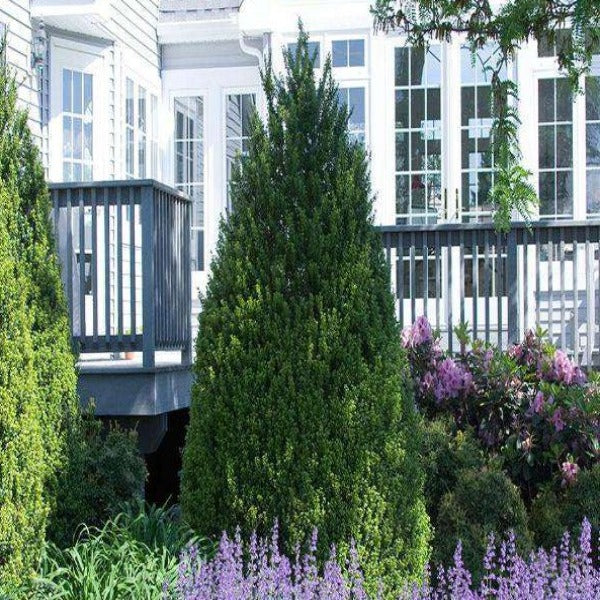
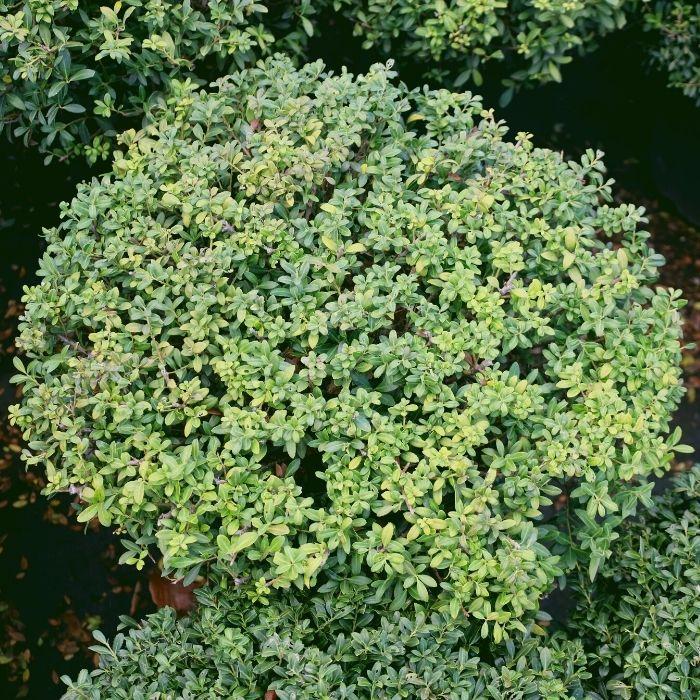
Compact Japanese Holly is one of those shrubs that solves many design problems at once. It gives homeowners a dense evergreen presence, a neat, rounded-to-mounded habit, and a refined, small-leaved texture that fits beautifully into both formal and informal landscapes. For anyone looking to create year-round structure without the coarser look of larger broadleaf evergreens, this plant offers a polished, dependable answer.
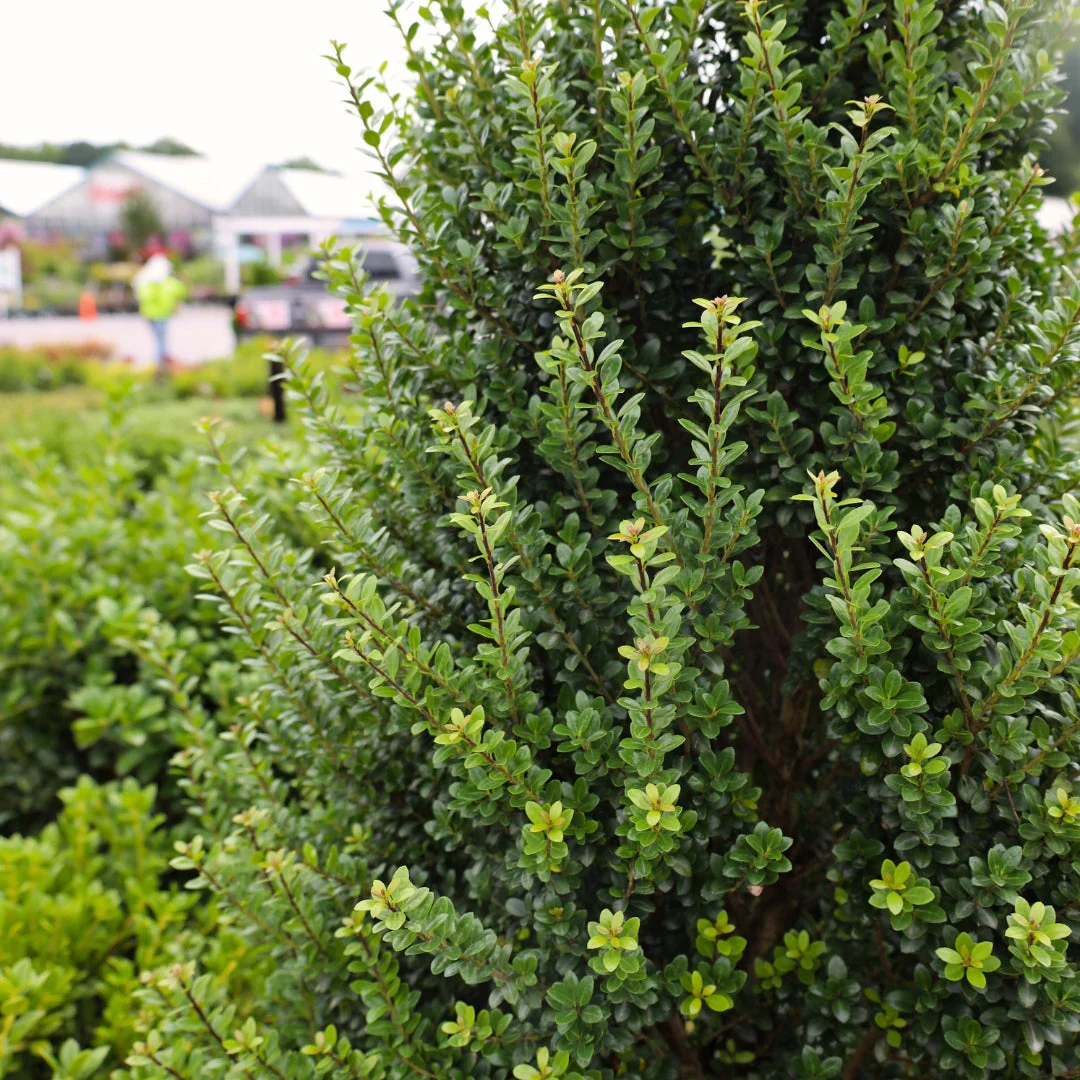
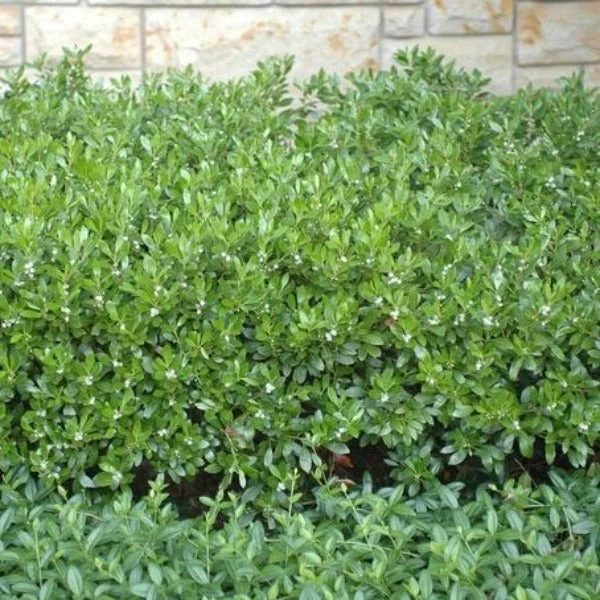
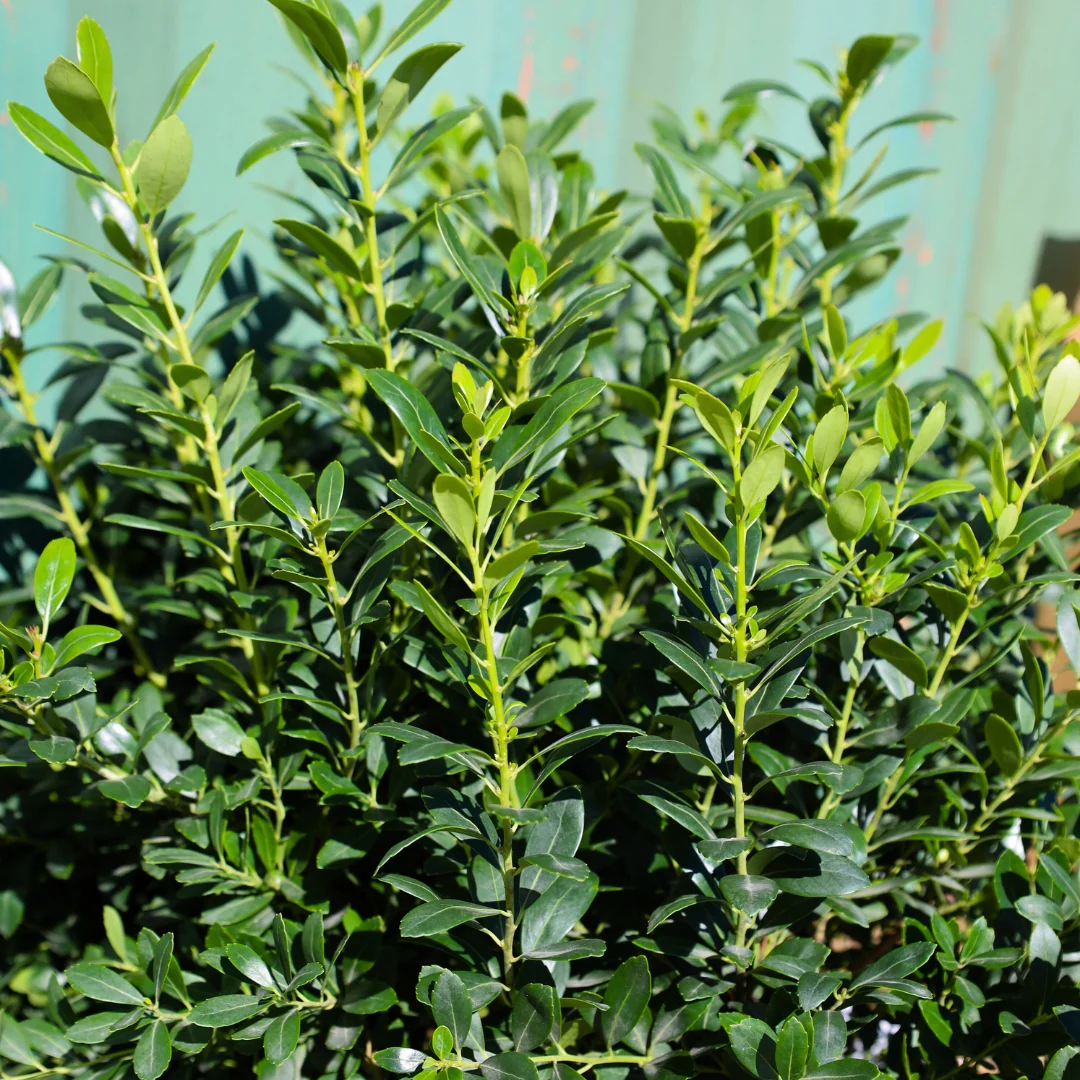
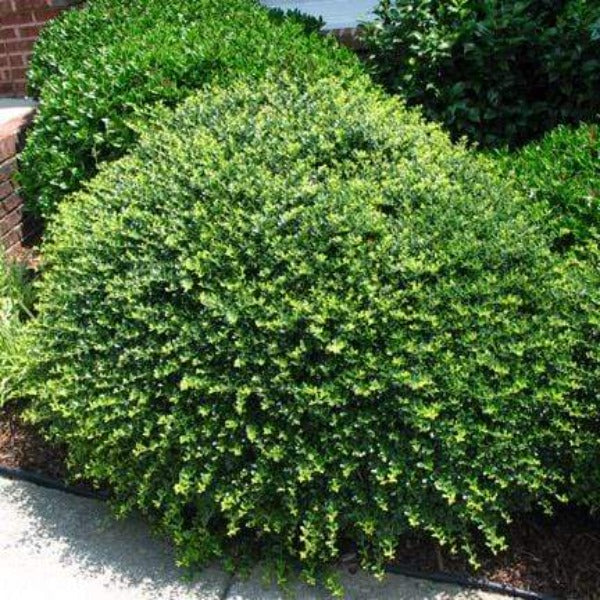
Its foliage is one of its biggest strengths. The small, glossy, dark green leaves resemble boxwood from a distance, which is why Compact Japanese Holly is so often chosen as a boxwood alternative. That fine texture allows it to blend easily into foundation plantings, edge walkways, define garden rooms, or create the clipped-hedge look that makes a landscape feel intentional and finished. Even when left more natural, it keeps a tidy appearance that reads well in almost any setting.
Because it is evergreen, the value extends far beyond the active growing season. Compact Japanese Holly keeps beds and borders from looking empty in fall and winter, and it gives the landscape a stronger year-round backbone. In front-yard beds, around entryways, and in mixed shrub borders, it provides the steady visual weight that helps flowering shrubs and perennials feel anchored.
For homeowners who want a shrub that stays useful year-round and supports a more organized landscape design, this is an easy plant to build around. It does not need flashy flowers to earn its place. Its strength is the way it quietly improves the entire planting scheme.
A Boxwood Alternative That Fits Formal and Everyday Gardens
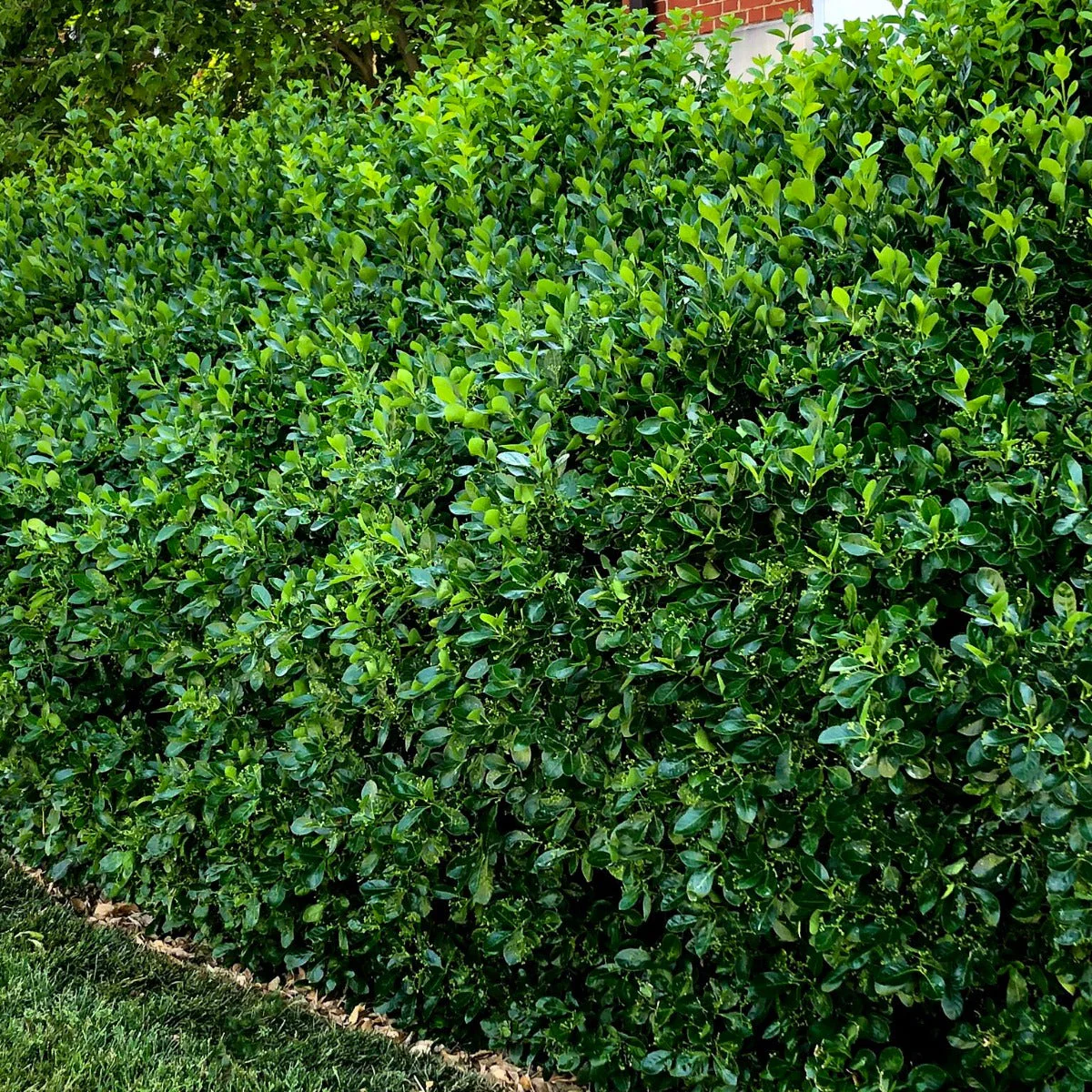
One of the most common reasons homeowners choose Compact Japanese Holly is its versatility as a boxwood-style evergreen. It responds well to pruning, holds a naturally dense habit, and offers the kind of consistent green presence that works beautifully in low hedges, repeating foundation plantings, and formal outlines along walks or beds. If the goal is a crisp, evergreen definition, this shrub is especially effective.
That said, it is not limited to formal gardens. Compact Japanese Holly also works extremely well in more relaxed landscape styles where a dense evergreen mass is needed to support flowering plants, soften a foundation, or give shape to a mixed bed. Its rounded habit and fine foliage make it easy to pair with hydrangeas, roses, ornamental grasses, hollies, conifers, and perennial plantings. It adds structure without calling too much attention to itself, which is often exactly what a design needs.
This is also a smart plant for small-space gardening. It can be used as a single accent in a tighter foundation bed, repeated in short runs for symmetry, or planted in groups where a reliable evergreen framework is needed. Its mature size is substantial enough to matter but still manageable for residential landscapes, where oversized shrubs quickly become maintenance problems.
Because it bridges formal and casual design so easily, Compact Japanese Holly is one of those plants that continues to stay relevant no matter how the rest of the landscape evolves. It is flexible, useful, and visually steady in a way that makes the entire garden feel better composed.
Built for Hedges, Borders, and Foundation Planting Success
Compact Japanese Holly is especially valuable where homeowners want an evergreen shrub that can do real work in the landscape. Along a front foundation, it provides consistent green mass without blocking windows too aggressively. Along a walkway or drive, it can form a low to mid-height evergreen boundary that feels neat and deliberate. In mixed borders, it helps define the planting and gives seasonal bloomers something substantial to play against.
Its mature size makes it especially practical for these roles. Compact Japanese Holly typically grows into a dense shrub roughly 6 feet tall and wide, sometimes a bit more under ideal conditions, giving it enough body to serve as a hedge or anchor shrub without immediately becoming oversized. That scale is one of its biggest advantages. It fills space well, but it still fits within the proportions of most home landscapes.
For hedge planting, it can be spaced close enough to create a fuller wall of green or given a little more room so each plant can keep more of its natural form. Either way, the foliage density helps create a finished look much faster than many loose-growing shrubs. That makes it useful not just for beauty, but for practical screening, bed definition, and visual separation within the yard.
It is also a strong candidate for topiary-inspired shaping and formal evergreen geometry. Because it tolerates pruning well, homeowners can keep it clipped and tailored or let it grow with only occasional refinement. That flexibility makes it one of the more adaptable evergreen shrubs for long-term design success.
Low-Maintenance Evergreen Performance with Year-Round Value
Compact Japanese Holly performs best in full sun to partial shade, where it develops dense branching and attractive evergreen color. It prefers moist, well-drained soil and generally grows best in slightly acidic to neutral conditions. Good drainage is especially important because, like many broadleaf evergreens, it benefits from a root zone that stays evenly moist but not waterlogged.
Once established, it is relatively easy to care for and does not need constant attention to stay attractive. Light shaping or seasonal pruning is usually enough to maintain its form, and in many landscapes, it can go a long time between trims. That low-maintenance nature is part of what makes it so useful for homeowners who want clean structure without constantly managing aggressive growth.
Compact Japanese Holly is also appreciated for its mild deer resistance. No evergreen shrub is completely immune where browsing pressure is intense, but this plant is often less appealing to deer than softer, more tender choices. That can make it a more dependable foundation or hedge plant in areas where deer activity limits plant selection.
Over time, this shrub becomes the kind of quiet landscape asset that homeowners appreciate more each year. It helps the garden look fuller, more settled, and more intentional in every season. Whether used as a formal hedge, a foundational evergreen, or a long-term boxwood alternative, it brings practical value and visual steadiness that never really goes out of style.
A Clean, Dense Evergreen That Brings Order to the Landscape
Compact Japanese Holly is one of those shrubs that solves many design problems at once. It gives homeowners a dense evergreen presence, a neat, rounded-to-mounded habit, and a refined, small-leaved texture that fits beautifully into both formal and informal landscapes. For anyone looking to create year-round structure without the coarser look of larger broadleaf evergreens, this plant offers a polished, dependable answer.
Its foliage is one of its biggest strengths. The small, glossy, dark green leaves resemble boxwood from a distance, which is why Compact Japanese Holly is so often chosen as a boxwood alternative. That fine texture allows it to blend easily into foundation plantings, edge walkways, define garden rooms, or create the clipped-hedge look that makes a landscape feel intentional and finished. Even when left more natural, it keeps a tidy appearance that reads well in almost any setting.
Because it is evergreen, the value extends far beyond the active growing season. Compact Japanese Holly keeps beds and borders from looking empty in fall and winter, and it gives the landscape a stronger year-round backbone. In front-yard beds, around entryways, and in mixed shrub borders, it provides the steady visual weight that helps flowering shrubs and perennials feel anchored.
For homeowners who want a shrub that stays useful year-round and supports a more organized landscape design, this is an easy plant to build around. It does not need flashy flowers to earn its place. Its strength is the way it quietly improves the entire planting scheme.
A Boxwood Alternative That Fits Formal and Everyday Gardens
One of the most common reasons homeowners choose Compact Japanese Holly is its versatility as a boxwood-style evergreen. It responds well to pruning, holds a naturally dense habit, and offers the kind of consistent green presence that works beautifully in low hedges, repeating foundation plantings, and formal outlines along walks or beds. If the goal is a crisp, evergreen definition, this shrub is especially effective.
That said, it is not limited to formal gardens. Compact Japanese Holly also works extremely well in more relaxed landscape styles where a dense evergreen mass is needed to support flowering plants, soften a foundation, or give shape to a mixed bed. Its rounded habit and fine foliage make it easy to pair with hydrangeas, roses, ornamental grasses, hollies, conifers, and perennial plantings. It adds structure without calling too much attention to itself, which is often exactly what a design needs.
This is also a smart plant for small-space gardening. It can be used as a single accent in a tighter foundation bed, repeated in short runs for symmetry, or planted in groups where a reliable evergreen framework is needed. Its mature size is substantial enough to matter but still manageable for residential landscapes, where oversized shrubs quickly become maintenance problems.
Because it bridges formal and casual design so easily, Compact Japanese Holly is one of those plants that continues to stay relevant no matter how the rest of the landscape evolves. It is flexible, useful, and visually steady in a way that makes the entire garden feel better composed.
Built for Hedges, Borders, and Foundation Planting Success
Compact Japanese Holly is especially valuable where homeowners want an evergreen shrub that can do real work in the landscape. Along a front foundation, it provides consistent green mass without blocking windows too aggressively. Along a walkway or drive, it can form a low to mid-height evergreen boundary that feels neat and deliberate. In mixed borders, it helps define the planting and gives seasonal bloomers something substantial to play against.
Its mature size makes it especially practical for these roles. Compact Japanese Holly typically grows into a dense shrub roughly 6 feet tall and wide, sometimes a bit more under ideal conditions, giving it enough body to serve as a hedge or anchor shrub without immediately becoming oversized. That scale is one of its biggest advantages. It fills space well, but it still fits within the proportions of most home landscapes.
For hedge planting, it can be spaced close enough to create a fuller wall of green or given a little more room so each plant can keep more of its natural form. Either way, the foliage density helps create a finished look much faster than many loose-growing shrubs. That makes it useful not just for beauty, but for practical screening, bed definition, and visual separation within the yard.
It is also a strong candidate for topiary-inspired shaping and formal evergreen geometry. Because it tolerates pruning well, homeowners can keep it clipped and tailored or let it grow with only occasional refinement. That flexibility makes it one of the more adaptable evergreen shrubs for long-term design success.
Low-Maintenance Evergreen Performance with Year-Round Value
Compact Japanese Holly performs best in full sun to partial shade, where it develops dense branching and attractive evergreen color. It prefers moist, well-drained soil and generally grows best in slightly acidic to neutral conditions. Good drainage is especially important because, like many broadleaf evergreens, it benefits from a root zone that stays evenly moist but not waterlogged.
Once established, it is relatively easy to care for and does not need constant attention to stay attractive. Light shaping or seasonal pruning is usually enough to maintain its form, and in many landscapes, it can go a long time between trims. That low-maintenance nature is part of what makes it so useful for homeowners who want clean structure without constantly managing aggressive growth.
Compact Japanese Holly is also appreciated for its mild deer resistance. No evergreen shrub is completely immune where browsing pressure is intense, but this plant is often less appealing to deer than softer, more tender choices. That can make it a more dependable foundation or hedge plant in areas where deer activity limits plant selection.
Over time, this shrub becomes the kind of quiet landscape asset that homeowners appreciate more each year. It helps the garden look fuller, more settled, and more intentional in every season. Whether used as a formal hedge, a foundational evergreen, or a long-term boxwood alternative, it brings practical value and visual steadiness that never really goes out of style.
Original: $69.95
-70%$69.95
$20.98Description
A Clean, Dense Evergreen That Brings Order to the Landscape
Compact Japanese Holly is one of those shrubs that solves many design problems at once. It gives homeowners a dense evergreen presence, a neat, rounded-to-mounded habit, and a refined, small-leaved texture that fits beautifully into both formal and informal landscapes. For anyone looking to create year-round structure without the coarser look of larger broadleaf evergreens, this plant offers a polished, dependable answer.
Its foliage is one of its biggest strengths. The small, glossy, dark green leaves resemble boxwood from a distance, which is why Compact Japanese Holly is so often chosen as a boxwood alternative. That fine texture allows it to blend easily into foundation plantings, edge walkways, define garden rooms, or create the clipped-hedge look that makes a landscape feel intentional and finished. Even when left more natural, it keeps a tidy appearance that reads well in almost any setting.
Because it is evergreen, the value extends far beyond the active growing season. Compact Japanese Holly keeps beds and borders from looking empty in fall and winter, and it gives the landscape a stronger year-round backbone. In front-yard beds, around entryways, and in mixed shrub borders, it provides the steady visual weight that helps flowering shrubs and perennials feel anchored.
For homeowners who want a shrub that stays useful year-round and supports a more organized landscape design, this is an easy plant to build around. It does not need flashy flowers to earn its place. Its strength is the way it quietly improves the entire planting scheme.
A Boxwood Alternative That Fits Formal and Everyday Gardens
One of the most common reasons homeowners choose Compact Japanese Holly is its versatility as a boxwood-style evergreen. It responds well to pruning, holds a naturally dense habit, and offers the kind of consistent green presence that works beautifully in low hedges, repeating foundation plantings, and formal outlines along walks or beds. If the goal is a crisp, evergreen definition, this shrub is especially effective.
That said, it is not limited to formal gardens. Compact Japanese Holly also works extremely well in more relaxed landscape styles where a dense evergreen mass is needed to support flowering plants, soften a foundation, or give shape to a mixed bed. Its rounded habit and fine foliage make it easy to pair with hydrangeas, roses, ornamental grasses, hollies, conifers, and perennial plantings. It adds structure without calling too much attention to itself, which is often exactly what a design needs.
This is also a smart plant for small-space gardening. It can be used as a single accent in a tighter foundation bed, repeated in short runs for symmetry, or planted in groups where a reliable evergreen framework is needed. Its mature size is substantial enough to matter but still manageable for residential landscapes, where oversized shrubs quickly become maintenance problems.
Because it bridges formal and casual design so easily, Compact Japanese Holly is one of those plants that continues to stay relevant no matter how the rest of the landscape evolves. It is flexible, useful, and visually steady in a way that makes the entire garden feel better composed.
Built for Hedges, Borders, and Foundation Planting Success
Compact Japanese Holly is especially valuable where homeowners want an evergreen shrub that can do real work in the landscape. Along a front foundation, it provides consistent green mass without blocking windows too aggressively. Along a walkway or drive, it can form a low to mid-height evergreen boundary that feels neat and deliberate. In mixed borders, it helps define the planting and gives seasonal bloomers something substantial to play against.
Its mature size makes it especially practical for these roles. Compact Japanese Holly typically grows into a dense shrub roughly 6 feet tall and wide, sometimes a bit more under ideal conditions, giving it enough body to serve as a hedge or anchor shrub without immediately becoming oversized. That scale is one of its biggest advantages. It fills space well, but it still fits within the proportions of most home landscapes.
For hedge planting, it can be spaced close enough to create a fuller wall of green or given a little more room so each plant can keep more of its natural form. Either way, the foliage density helps create a finished look much faster than many loose-growing shrubs. That makes it useful not just for beauty, but for practical screening, bed definition, and visual separation within the yard.
It is also a strong candidate for topiary-inspired shaping and formal evergreen geometry. Because it tolerates pruning well, homeowners can keep it clipped and tailored or let it grow with only occasional refinement. That flexibility makes it one of the more adaptable evergreen shrubs for long-term design success.
Low-Maintenance Evergreen Performance with Year-Round Value
Compact Japanese Holly performs best in full sun to partial shade, where it develops dense branching and attractive evergreen color. It prefers moist, well-drained soil and generally grows best in slightly acidic to neutral conditions. Good drainage is especially important because, like many broadleaf evergreens, it benefits from a root zone that stays evenly moist but not waterlogged.
Once established, it is relatively easy to care for and does not need constant attention to stay attractive. Light shaping or seasonal pruning is usually enough to maintain its form, and in many landscapes, it can go a long time between trims. That low-maintenance nature is part of what makes it so useful for homeowners who want clean structure without constantly managing aggressive growth.
Compact Japanese Holly is also appreciated for its mild deer resistance. No evergreen shrub is completely immune where browsing pressure is intense, but this plant is often less appealing to deer than softer, more tender choices. That can make it a more dependable foundation or hedge plant in areas where deer activity limits plant selection.
Over time, this shrub becomes the kind of quiet landscape asset that homeowners appreciate more each year. It helps the garden look fuller, more settled, and more intentional in every season. Whether used as a formal hedge, a foundational evergreen, or a long-term boxwood alternative, it brings practical value and visual steadiness that never really goes out of style.