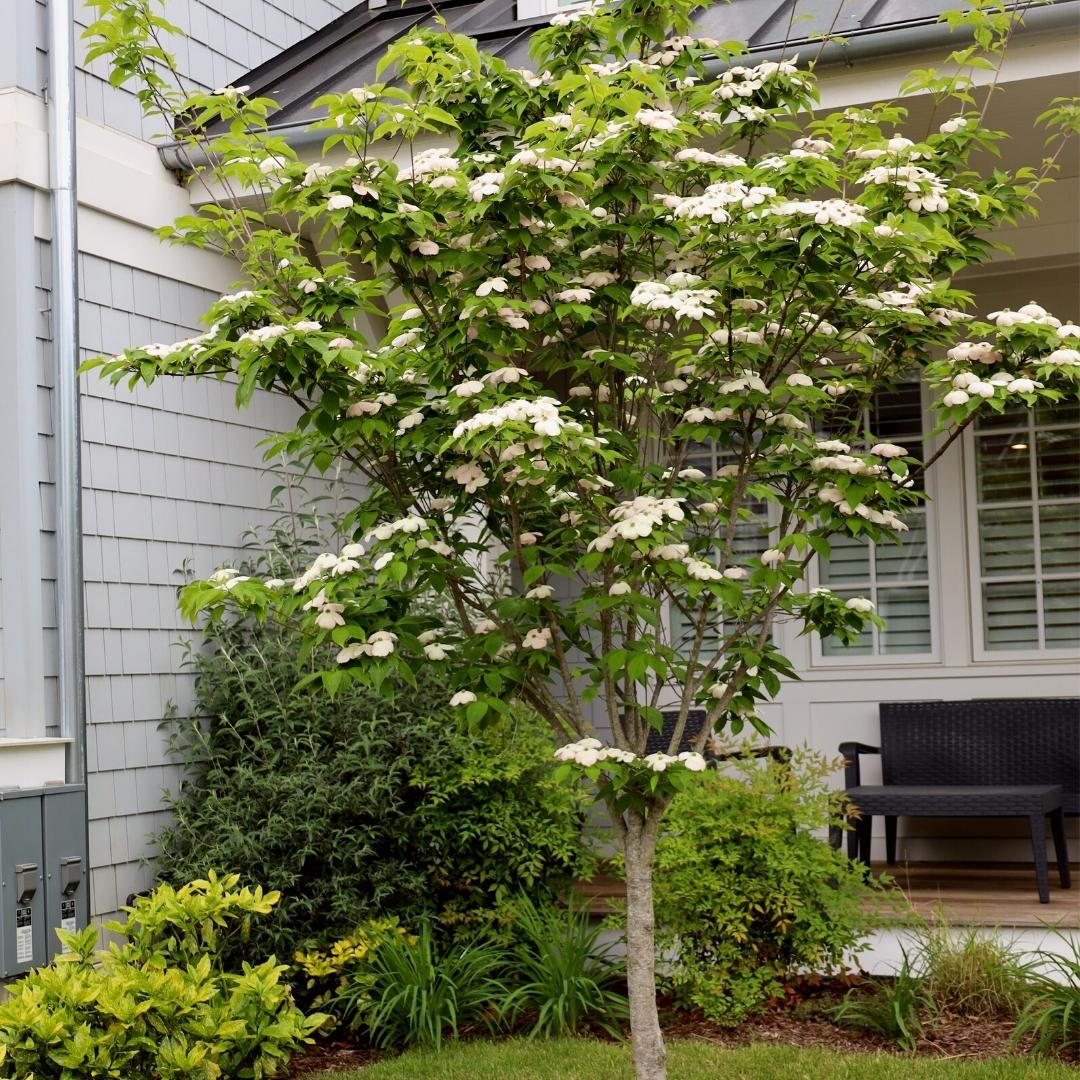
White Kousa Dogwood Tree
A Feature Tree with Flowers, Fruit, Fall Color, and Winter Texture
Kousa Dogwood (Cornus kousa) earns its reputation as a “four-season” ornamental: showy white bracts in late spring, glossy summer foliage, rich fall color, and attractive branching and bark that keep the silhouette interesting in winter. It’s also widely planted because it’s considered more disease-resilient than many native dogwoods—an important confidence point when you’re buying a flowering tree meant to anchor the landscape for decades.
The blooms are technically small flowers surrounded by larger, showy bracts; bracts can remain effective for weeks, creating that long “in bloom” window that makes kousa feel like a premium spring centerpiece.
A Small-to-Medium Tree with a Broad, Layered Canopy
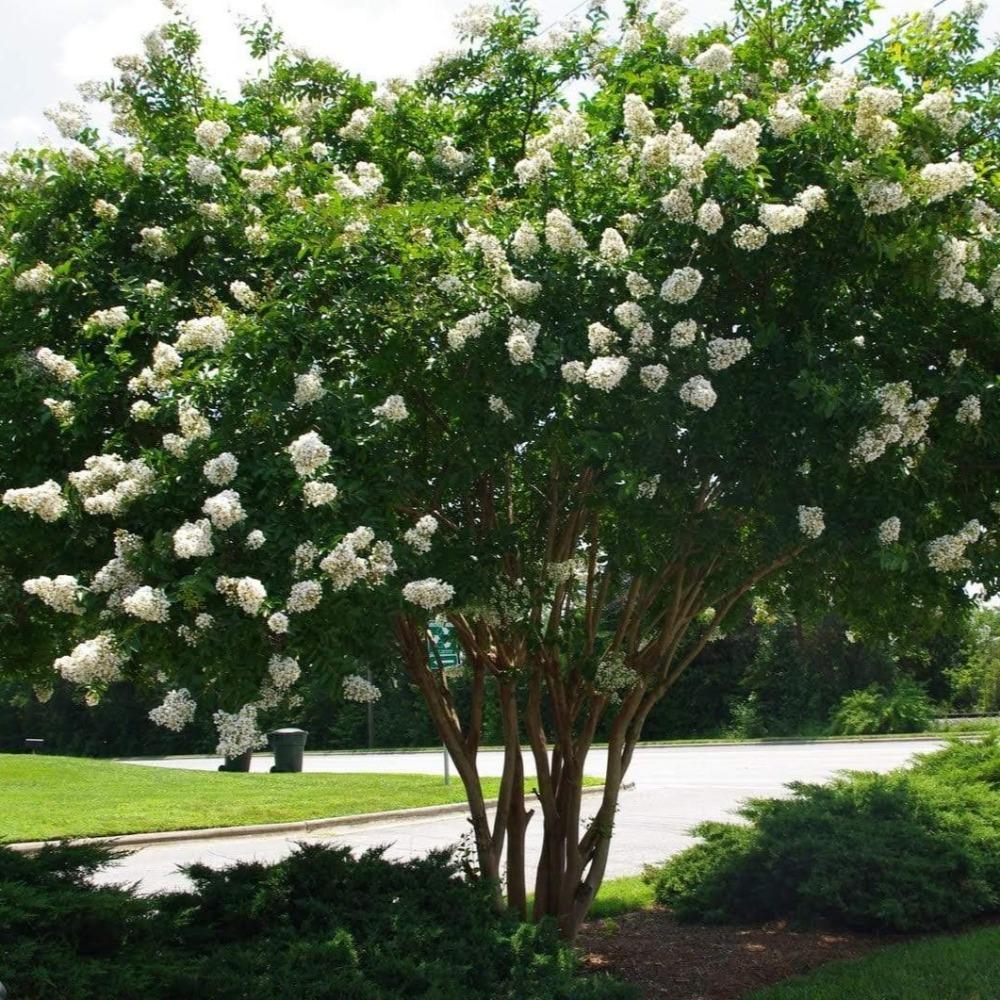
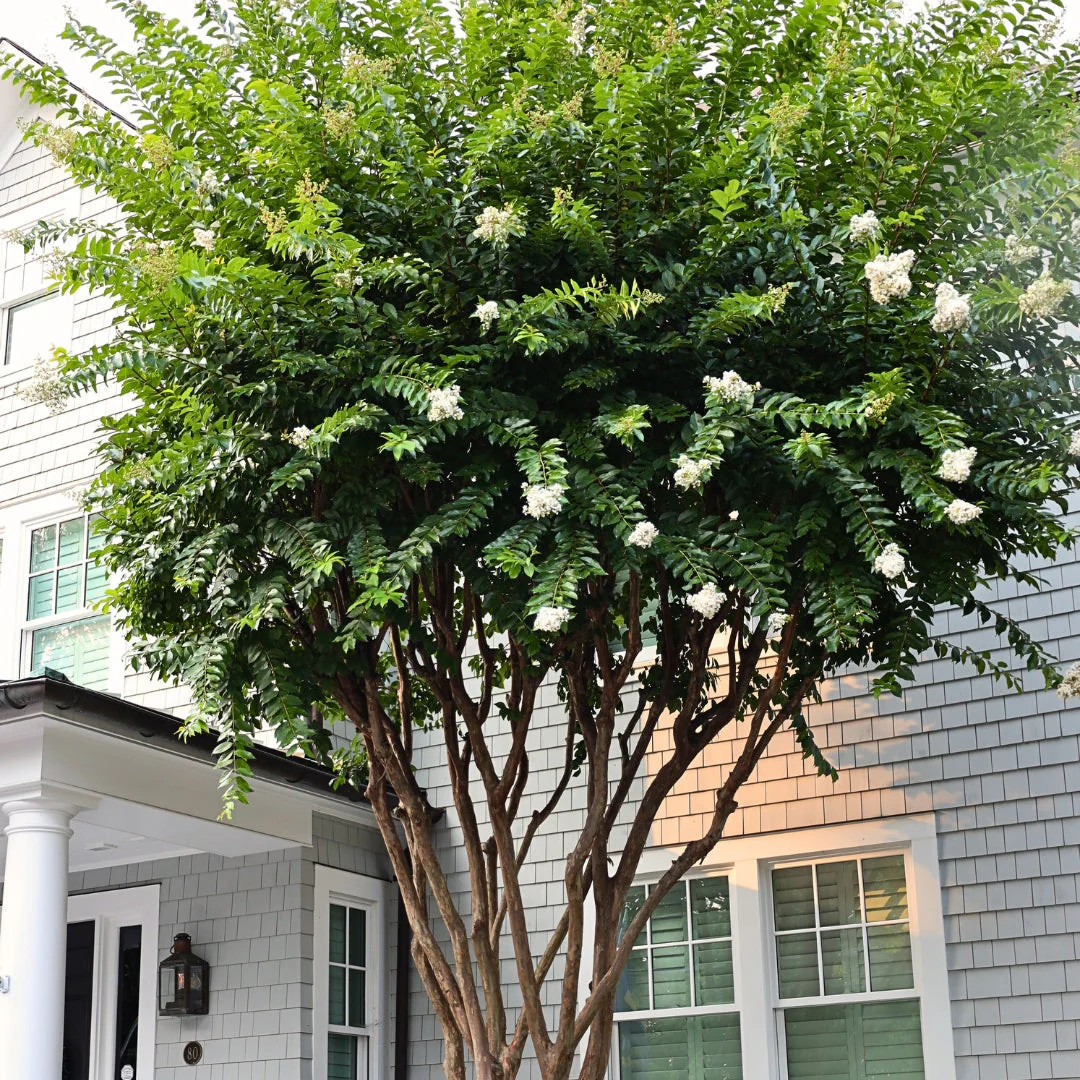
Expect a mature size commonly in the 15–30 ft range, with many references placing it around 20–30 ft tall and 20–30 ft wide—large enough to read as a true tree, but still manageable in residential landscapes. Its form tends to be broad and layered over time, which is exactly what you want when the goal is a shade-dappled patio view, a front-yard specimen, or a graceful anchor near a drive.
Growth is often described as slow to moderate, which helps it maintain strong structure and reduces the “outgrows the space” anxiety that comes with faster ornamentals.
Sun to Part Shade, Moisture Balance, and Drainage that Protects the Roots
Kousa Dogwood grows in full sun to partial shade, and it often performs best with morning sun and afternoon shade in hotter climates to reduce stress and leaf scorch. Well-drained soil is non-negotiable—dogwoods dislike waterlogged conditions—while slightly acidic, organic-rich soil supports steady growth and flowering.
During establishment, consistent watering matters more than fertilizer. A wide mulch ring helps stabilize moisture and protects roots from mower/trimmer damage—two simple moves that dramatically increase “first-year success” for newly planted dogwoods.
Landscape Uses — Specimen Tree, Light Shade Canopy, and Wildlife-Friendly Interest
Plant Kousa Dogwood as a front-yard specimen, a small-canopy shade tree near patios, or a focal point in mixed beds where spring bloom and fall color create a natural “seasonal storyline.” The ornamental fruit adds late-season interest and is widely noted as edible (though humans don’t commonly eat it), and it can be consumed by birds—a bonus value for customers who want beauty with wildlife appeal.
It also pairs beautifully with azaleas, hydrangeas, ferns, and woodland perennials, creating the layered, garden-center-showcase look homeowners try to recreate at home.
A Feature Tree with Flowers, Fruit, Fall Color, and Winter Texture
Kousa Dogwood (Cornus kousa) earns its reputation as a “four-season” ornamental: showy white bracts in late spring, glossy summer foliage, rich fall color, and attractive branching and bark that keep the silhouette interesting in winter. It’s also widely planted because it’s considered more disease-resilient than many native dogwoods—an important confidence point when you’re buying a flowering tree meant to anchor the landscape for decades.
The blooms are technically small flowers surrounded by larger, showy bracts; bracts can remain effective for weeks, creating that long “in bloom” window that makes kousa feel like a premium spring centerpiece.
A Small-to-Medium Tree with a Broad, Layered Canopy
Expect a mature size commonly in the 15–30 ft range, with many references placing it around 20–30 ft tall and 20–30 ft wide—large enough to read as a true tree, but still manageable in residential landscapes. Its form tends to be broad and layered over time, which is exactly what you want when the goal is a shade-dappled patio view, a front-yard specimen, or a graceful anchor near a drive.
Growth is often described as slow to moderate, which helps it maintain strong structure and reduces the “outgrows the space” anxiety that comes with faster ornamentals.
Sun to Part Shade, Moisture Balance, and Drainage that Protects the Roots
Kousa Dogwood grows in full sun to partial shade, and it often performs best with morning sun and afternoon shade in hotter climates to reduce stress and leaf scorch. Well-drained soil is non-negotiable—dogwoods dislike waterlogged conditions—while slightly acidic, organic-rich soil supports steady growth and flowering.
During establishment, consistent watering matters more than fertilizer. A wide mulch ring helps stabilize moisture and protects roots from mower/trimmer damage—two simple moves that dramatically increase “first-year success” for newly planted dogwoods.
Landscape Uses — Specimen Tree, Light Shade Canopy, and Wildlife-Friendly Interest
Plant Kousa Dogwood as a front-yard specimen, a small-canopy shade tree near patios, or a focal point in mixed beds where spring bloom and fall color create a natural “seasonal storyline.” The ornamental fruit adds late-season interest and is widely noted as edible (though humans don’t commonly eat it), and it can be consumed by birds—a bonus value for customers who want beauty with wildlife appeal.
It also pairs beautifully with azaleas, hydrangeas, ferns, and woodland perennials, creating the layered, garden-center-showcase look homeowners try to recreate at home.
Original: $99.95
-70%$99.95
$29.98Description
A Feature Tree with Flowers, Fruit, Fall Color, and Winter Texture
Kousa Dogwood (Cornus kousa) earns its reputation as a “four-season” ornamental: showy white bracts in late spring, glossy summer foliage, rich fall color, and attractive branching and bark that keep the silhouette interesting in winter. It’s also widely planted because it’s considered more disease-resilient than many native dogwoods—an important confidence point when you’re buying a flowering tree meant to anchor the landscape for decades.
The blooms are technically small flowers surrounded by larger, showy bracts; bracts can remain effective for weeks, creating that long “in bloom” window that makes kousa feel like a premium spring centerpiece.
A Small-to-Medium Tree with a Broad, Layered Canopy
Expect a mature size commonly in the 15–30 ft range, with many references placing it around 20–30 ft tall and 20–30 ft wide—large enough to read as a true tree, but still manageable in residential landscapes. Its form tends to be broad and layered over time, which is exactly what you want when the goal is a shade-dappled patio view, a front-yard specimen, or a graceful anchor near a drive.
Growth is often described as slow to moderate, which helps it maintain strong structure and reduces the “outgrows the space” anxiety that comes with faster ornamentals.
Sun to Part Shade, Moisture Balance, and Drainage that Protects the Roots
Kousa Dogwood grows in full sun to partial shade, and it often performs best with morning sun and afternoon shade in hotter climates to reduce stress and leaf scorch. Well-drained soil is non-negotiable—dogwoods dislike waterlogged conditions—while slightly acidic, organic-rich soil supports steady growth and flowering.
During establishment, consistent watering matters more than fertilizer. A wide mulch ring helps stabilize moisture and protects roots from mower/trimmer damage—two simple moves that dramatically increase “first-year success” for newly planted dogwoods.
Landscape Uses — Specimen Tree, Light Shade Canopy, and Wildlife-Friendly Interest
Plant Kousa Dogwood as a front-yard specimen, a small-canopy shade tree near patios, or a focal point in mixed beds where spring bloom and fall color create a natural “seasonal storyline.” The ornamental fruit adds late-season interest and is widely noted as edible (though humans don’t commonly eat it), and it can be consumed by birds—a bonus value for customers who want beauty with wildlife appeal.
It also pairs beautifully with azaleas, hydrangeas, ferns, and woodland perennials, creating the layered, garden-center-showcase look homeowners try to recreate at home.