Butterflies Magnolia
A Yellow Magnolia That Truly Stands Out in Spring
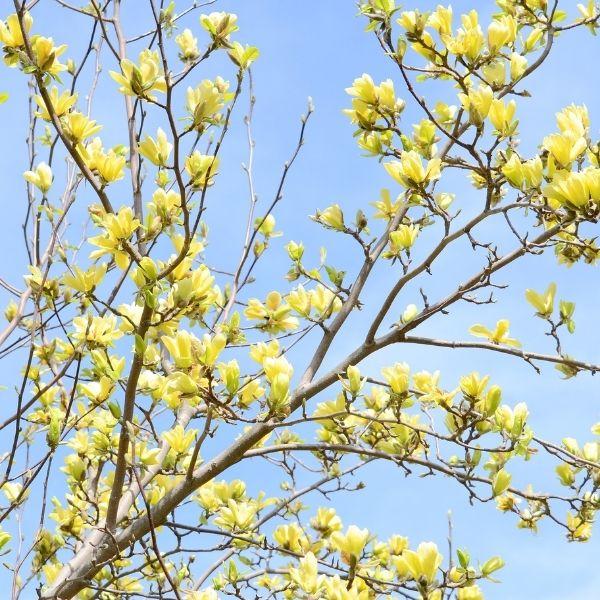
Butterflies Magnolia is one of those flowering trees that feel special from the moment you see it, thanks to its unexpected color. Instead of the more familiar white, pink, or purple magnolia tones, this cultivar opens with upright canary-yellow flowers that bring a fresh, luminous look to the spring garden. For homeowners who want something elegant and unusual without stepping into something overly flashy, this tree offers a beautiful balance of refinement and real visual impact.
The flower form adds to that appeal. The blooms are tulip-shaped and held upright, which gives the whole tree a clean, sculptural presence when it comes into flower. Because the blossoms open before the foliage emerges, the effect is especially dramatic. The branching disappears behind soft yellow flowers, turning the plant into a clear seasonal focal point just as the landscape begins to wake up.
This is also a magnolia that feels more approachable for home landscapes than many larger-growing types. Its upright, somewhat pyramidal habit makes it easier to use in front yards, near patios, or in smaller garden spaces where scale matters. It gives homeowners the romance and spring spectacle of a magnolia without asking for the footprint of a truly large tree.
For anyone looking for a compact yellow flowering tree with real elegance, the Butterflies Magnolia brings something distinct to the landscape. It offers the classic emotional pull of a magnolia, but with a color and form that feel especially memorable.
Fragrant Spring Flowers Bring Fresh Color and Early-Season Energy
One of the most appealing traits of Butterflies Magnolia is that the flowers bring more than just color. They also carry a light, lemony fragrance, which adds another layer of value when planted near entries, walkways, patios, or windows where the blooms can be appreciated up close. That makes it more than a visual focal point. It becomes part of the sensory experience of spring in the garden.
The bloom timing is another reason this cultivar stands out. Butterflies Magnolia flowers in early to mid-spring, and the foliage typically waits until the bloom period is finishing before it fully emerges. That delay helps keep the flower display crisp and uncluttered, allowing the yellow blooms to be the clear headline moment. It also adds a sense of polish that homeowners often appreciate when choosing a specimen tree.
The flowers themselves are substantial enough to command attention without making the tree feel heavy. They read as graceful, upright, and soft rather than oversized and coarse. That makes this magnolia especially useful in landscapes where a homeowner wants spring drama, but still wants the planting to feel elegant and controlled.
For gardens that need an early burst of color and freshness, Butterflies Magnolia delivers beautifully. It announces the season with a lighter, brighter take on magnolia bloom that feels both classic and uncommon at the same time.
A Strong Fit for Front Yards, Entry Gardens, and Specimen Planting
Butterflies Magnolia fits best in landscapes where it can be appreciated as a focal point. Its upright habit and moderate mature size make it especially useful in front yards, near front walks, in island beds, or at the edge of a patio where the spring bloom display can be seen from multiple angles. It is the kind of tree that deserves a little breathing room, so the silhouette and flower show can really be appreciated.
Its size is one of its biggest design advantages. Butterflies Magnolia usually matures as a smaller ornamental tree rather than a massive canopy tree, which makes it much easier to work into residential spaces. Homeowners can use it where they want a true flowering-tree presence without creating shade, crowding, or long-term scale problems too quickly.
It also works beautifully in layered plantings. Evergreen shrubs, spring bulbs, hellebores, and lower perennials all help frame the flowers and extend the overall season of interest. Because the foliage remains attractive after bloom, the tree continues to contribute throughout the growing season, even after the spring bloom has passed.
For homeowners designing around four-season beauty and manageable scale, Butterflies Magnolia is a very smart choice. It gives a landscape a polished focal point in spring and enough structure through the rest of the year to feel like a real long-term investment.
Easy-Care Growth with Better Performance in the Right Site
Butterflies Magnolia performs best in full sun to part shade and in moist, organically rich, well-drained soil. Like many magnolias, it responds well to even moisture and appreciates a site that avoids harsh extremes. Good drainage is especially important because the tree performs much better when the root zone stays evenly moist rather than soggy.
Placement can make a real difference in flower quality and long-term performance. A spot with plenty of light helps support the best bloom, while some shelter from harsh wind helps preserve the flowers and keeps the tree looking its best in spring. Mulch helps retain moisture and moderates soil temperature, especially as the plant is getting established.
Pruning needs are generally light. Butterflies Magnolia is most attractive when its natural shape is allowed to develop, with only minor cleanup or structural refinement as needed. Most of the time, pruning is limited to removing damaged branches or making small selective cuts after flowering rather than trying to force the tree into a heavily managed shape.
For homeowners who want a distinctive flowering tree that offers beauty without constant maintenance, this magnolia is a rewarding choice. Give it the right setting, a little seasonal care, and room to develop naturally, and it will return the favor with one of the most memorable spring bloom displays in the landscape.
A Yellow Magnolia That Truly Stands Out in Spring
Butterflies Magnolia is one of those flowering trees that feel special from the moment you see it, thanks to its unexpected color. Instead of the more familiar white, pink, or purple magnolia tones, this cultivar opens with upright canary-yellow flowers that bring a fresh, luminous look to the spring garden. For homeowners who want something elegant and unusual without stepping into something overly flashy, this tree offers a beautiful balance of refinement and real visual impact.
The flower form adds to that appeal. The blooms are tulip-shaped and held upright, which gives the whole tree a clean, sculptural presence when it comes into flower. Because the blossoms open before the foliage emerges, the effect is especially dramatic. The branching disappears behind soft yellow flowers, turning the plant into a clear seasonal focal point just as the landscape begins to wake up.
This is also a magnolia that feels more approachable for home landscapes than many larger-growing types. Its upright, somewhat pyramidal habit makes it easier to use in front yards, near patios, or in smaller garden spaces where scale matters. It gives homeowners the romance and spring spectacle of a magnolia without asking for the footprint of a truly large tree.
For anyone looking for a compact yellow flowering tree with real elegance, the Butterflies Magnolia brings something distinct to the landscape. It offers the classic emotional pull of a magnolia, but with a color and form that feel especially memorable.
Fragrant Spring Flowers Bring Fresh Color and Early-Season Energy
One of the most appealing traits of Butterflies Magnolia is that the flowers bring more than just color. They also carry a light, lemony fragrance, which adds another layer of value when planted near entries, walkways, patios, or windows where the blooms can be appreciated up close. That makes it more than a visual focal point. It becomes part of the sensory experience of spring in the garden.
The bloom timing is another reason this cultivar stands out. Butterflies Magnolia flowers in early to mid-spring, and the foliage typically waits until the bloom period is finishing before it fully emerges. That delay helps keep the flower display crisp and uncluttered, allowing the yellow blooms to be the clear headline moment. It also adds a sense of polish that homeowners often appreciate when choosing a specimen tree.
The flowers themselves are substantial enough to command attention without making the tree feel heavy. They read as graceful, upright, and soft rather than oversized and coarse. That makes this magnolia especially useful in landscapes where a homeowner wants spring drama, but still wants the planting to feel elegant and controlled.
For gardens that need an early burst of color and freshness, Butterflies Magnolia delivers beautifully. It announces the season with a lighter, brighter take on magnolia bloom that feels both classic and uncommon at the same time.
A Strong Fit for Front Yards, Entry Gardens, and Specimen Planting
Butterflies Magnolia fits best in landscapes where it can be appreciated as a focal point. Its upright habit and moderate mature size make it especially useful in front yards, near front walks, in island beds, or at the edge of a patio where the spring bloom display can be seen from multiple angles. It is the kind of tree that deserves a little breathing room, so the silhouette and flower show can really be appreciated.
Its size is one of its biggest design advantages. Butterflies Magnolia usually matures as a smaller ornamental tree rather than a massive canopy tree, which makes it much easier to work into residential spaces. Homeowners can use it where they want a true flowering-tree presence without creating shade, crowding, or long-term scale problems too quickly.
It also works beautifully in layered plantings. Evergreen shrubs, spring bulbs, hellebores, and lower perennials all help frame the flowers and extend the overall season of interest. Because the foliage remains attractive after bloom, the tree continues to contribute throughout the growing season, even after the spring bloom has passed.
For homeowners designing around four-season beauty and manageable scale, Butterflies Magnolia is a very smart choice. It gives a landscape a polished focal point in spring and enough structure through the rest of the year to feel like a real long-term investment.
Easy-Care Growth with Better Performance in the Right Site
Butterflies Magnolia performs best in full sun to part shade and in moist, organically rich, well-drained soil. Like many magnolias, it responds well to even moisture and appreciates a site that avoids harsh extremes. Good drainage is especially important because the tree performs much better when the root zone stays evenly moist rather than soggy.
Placement can make a real difference in flower quality and long-term performance. A spot with plenty of light helps support the best bloom, while some shelter from harsh wind helps preserve the flowers and keeps the tree looking its best in spring. Mulch helps retain moisture and moderates soil temperature, especially as the plant is getting established.
Pruning needs are generally light. Butterflies Magnolia is most attractive when its natural shape is allowed to develop, with only minor cleanup or structural refinement as needed. Most of the time, pruning is limited to removing damaged branches or making small selective cuts after flowering rather than trying to force the tree into a heavily managed shape.
For homeowners who want a distinctive flowering tree that offers beauty without constant maintenance, this magnolia is a rewarding choice. Give it the right setting, a little seasonal care, and room to develop naturally, and it will return the favor with one of the most memorable spring bloom displays in the landscape.
Original: $149.95
-70%$149.95
$44.98Description
A Yellow Magnolia That Truly Stands Out in Spring
Butterflies Magnolia is one of those flowering trees that feel special from the moment you see it, thanks to its unexpected color. Instead of the more familiar white, pink, or purple magnolia tones, this cultivar opens with upright canary-yellow flowers that bring a fresh, luminous look to the spring garden. For homeowners who want something elegant and unusual without stepping into something overly flashy, this tree offers a beautiful balance of refinement and real visual impact.
The flower form adds to that appeal. The blooms are tulip-shaped and held upright, which gives the whole tree a clean, sculptural presence when it comes into flower. Because the blossoms open before the foliage emerges, the effect is especially dramatic. The branching disappears behind soft yellow flowers, turning the plant into a clear seasonal focal point just as the landscape begins to wake up.
This is also a magnolia that feels more approachable for home landscapes than many larger-growing types. Its upright, somewhat pyramidal habit makes it easier to use in front yards, near patios, or in smaller garden spaces where scale matters. It gives homeowners the romance and spring spectacle of a magnolia without asking for the footprint of a truly large tree.
For anyone looking for a compact yellow flowering tree with real elegance, the Butterflies Magnolia brings something distinct to the landscape. It offers the classic emotional pull of a magnolia, but with a color and form that feel especially memorable.
Fragrant Spring Flowers Bring Fresh Color and Early-Season Energy
One of the most appealing traits of Butterflies Magnolia is that the flowers bring more than just color. They also carry a light, lemony fragrance, which adds another layer of value when planted near entries, walkways, patios, or windows where the blooms can be appreciated up close. That makes it more than a visual focal point. It becomes part of the sensory experience of spring in the garden.
The bloom timing is another reason this cultivar stands out. Butterflies Magnolia flowers in early to mid-spring, and the foliage typically waits until the bloom period is finishing before it fully emerges. That delay helps keep the flower display crisp and uncluttered, allowing the yellow blooms to be the clear headline moment. It also adds a sense of polish that homeowners often appreciate when choosing a specimen tree.
The flowers themselves are substantial enough to command attention without making the tree feel heavy. They read as graceful, upright, and soft rather than oversized and coarse. That makes this magnolia especially useful in landscapes where a homeowner wants spring drama, but still wants the planting to feel elegant and controlled.
For gardens that need an early burst of color and freshness, Butterflies Magnolia delivers beautifully. It announces the season with a lighter, brighter take on magnolia bloom that feels both classic and uncommon at the same time.
A Strong Fit for Front Yards, Entry Gardens, and Specimen Planting
Butterflies Magnolia fits best in landscapes where it can be appreciated as a focal point. Its upright habit and moderate mature size make it especially useful in front yards, near front walks, in island beds, or at the edge of a patio where the spring bloom display can be seen from multiple angles. It is the kind of tree that deserves a little breathing room, so the silhouette and flower show can really be appreciated.
Its size is one of its biggest design advantages. Butterflies Magnolia usually matures as a smaller ornamental tree rather than a massive canopy tree, which makes it much easier to work into residential spaces. Homeowners can use it where they want a true flowering-tree presence without creating shade, crowding, or long-term scale problems too quickly.
It also works beautifully in layered plantings. Evergreen shrubs, spring bulbs, hellebores, and lower perennials all help frame the flowers and extend the overall season of interest. Because the foliage remains attractive after bloom, the tree continues to contribute throughout the growing season, even after the spring bloom has passed.
For homeowners designing around four-season beauty and manageable scale, Butterflies Magnolia is a very smart choice. It gives a landscape a polished focal point in spring and enough structure through the rest of the year to feel like a real long-term investment.
Easy-Care Growth with Better Performance in the Right Site
Butterflies Magnolia performs best in full sun to part shade and in moist, organically rich, well-drained soil. Like many magnolias, it responds well to even moisture and appreciates a site that avoids harsh extremes. Good drainage is especially important because the tree performs much better when the root zone stays evenly moist rather than soggy.
Placement can make a real difference in flower quality and long-term performance. A spot with plenty of light helps support the best bloom, while some shelter from harsh wind helps preserve the flowers and keeps the tree looking its best in spring. Mulch helps retain moisture and moderates soil temperature, especially as the plant is getting established.
Pruning needs are generally light. Butterflies Magnolia is most attractive when its natural shape is allowed to develop, with only minor cleanup or structural refinement as needed. Most of the time, pruning is limited to removing damaged branches or making small selective cuts after flowering rather than trying to force the tree into a heavily managed shape.
For homeowners who want a distinctive flowering tree that offers beauty without constant maintenance, this magnolia is a rewarding choice. Give it the right setting, a little seasonal care, and room to develop naturally, and it will return the favor with one of the most memorable spring bloom displays in the landscape.