Merlot Redbud
Purple Foliage That Looks Designer All Season
Merlot Redbud Tree is the “statement piece” tree for gardeners who want color beyond bloom season. New growth emerges in a rich, dark purple with a glossy finish that reads bold from the street and sophisticated up close. That dramatic foliage instantly elevates foundation plantings, mixed borders, and patio views—especially when paired with chartreuse shrubs, silver foliage, or soft greens that make the purple look even deeper. Even when flowers fade, Merlot keeps earning attention with leaf color that feels curated and intentional.
What makes Merlot especially appealing is its durable, polished look. The leaves are typically thicker and glossier than many purple-leaf redbuds, which helps the tree hold its style through summer. Use it as a focal point near an entry, as a color anchor in a mixed landscape, or as a small ornamental “canopy” that makes the yard feel finished. If you want one tree that brings color, texture, and structure—not just a short spring show—Merlot is a confident pick.
Lavender-Pink Spring Flowers That Start The Season Right
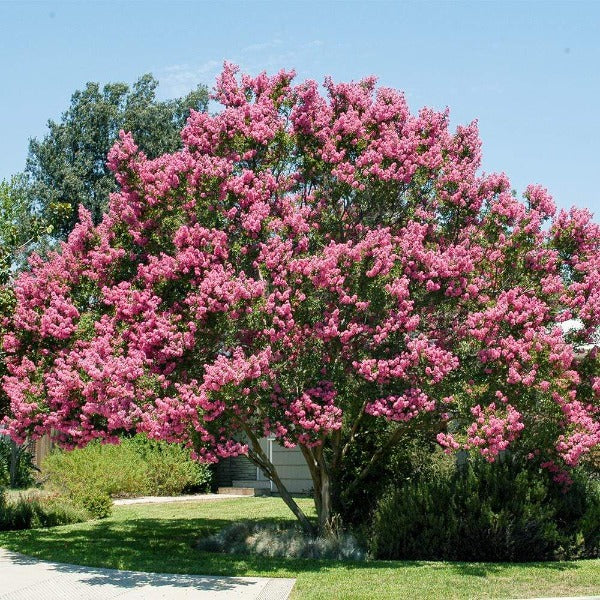
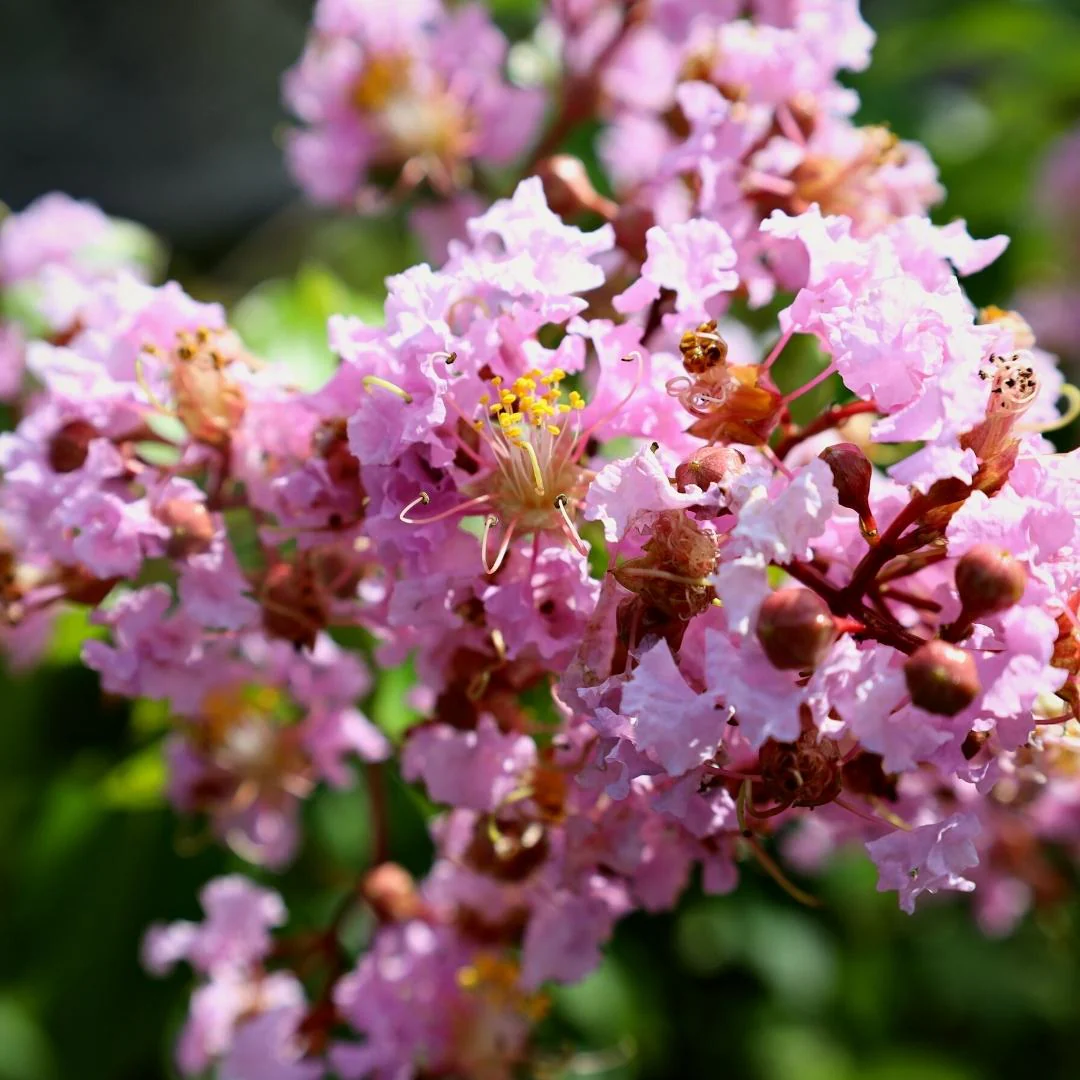
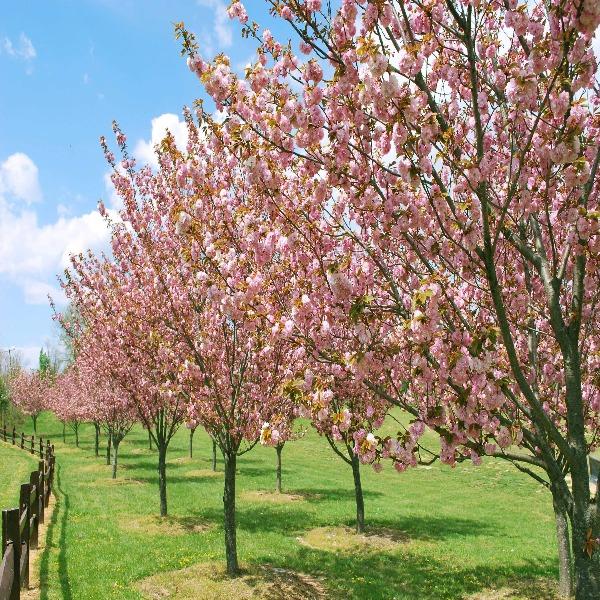
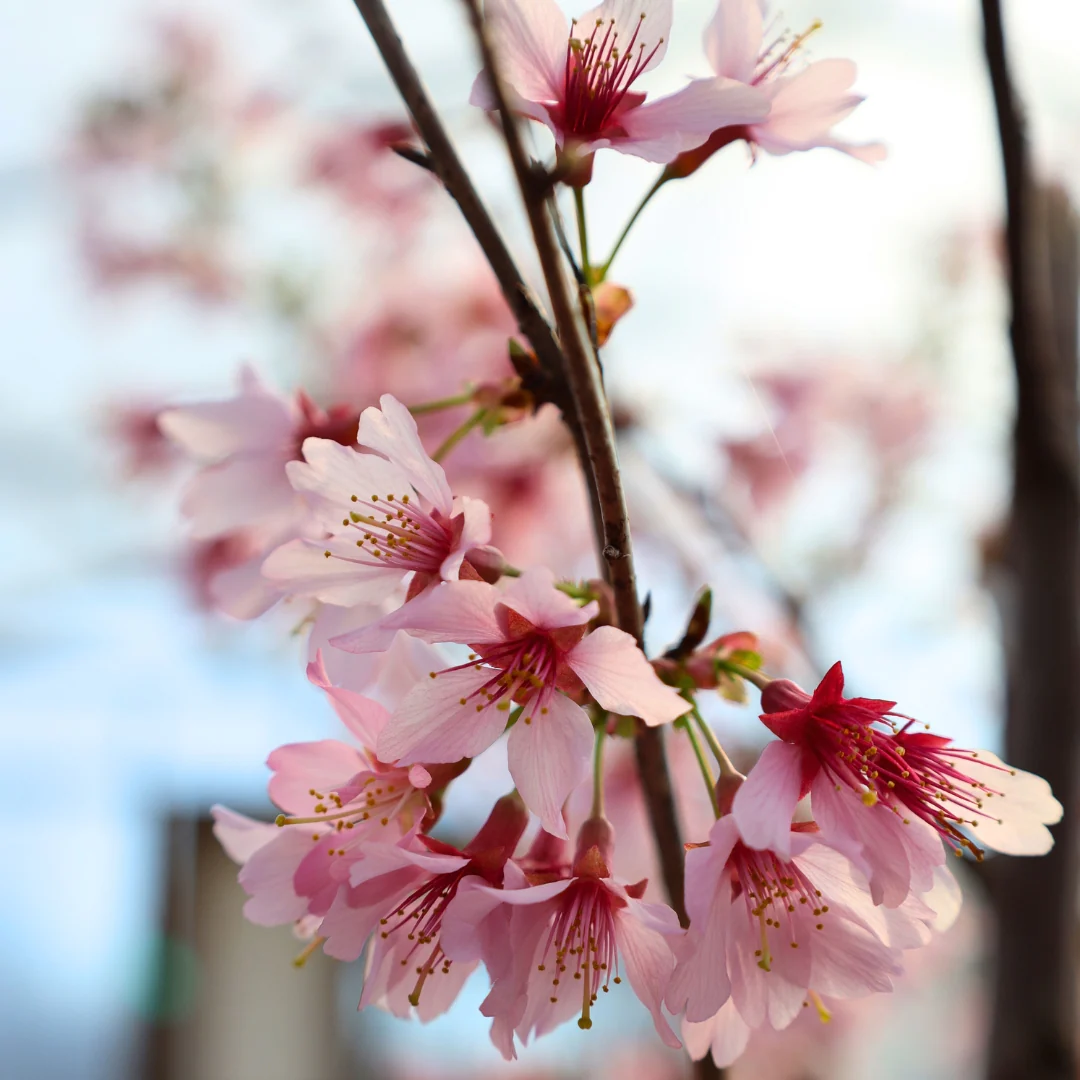
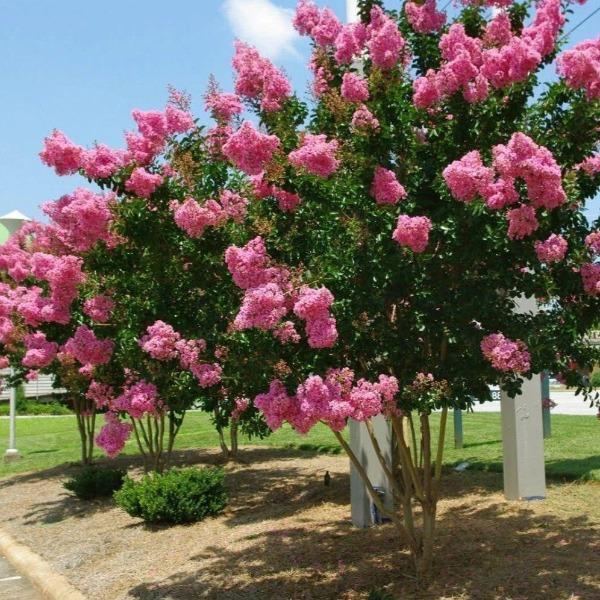
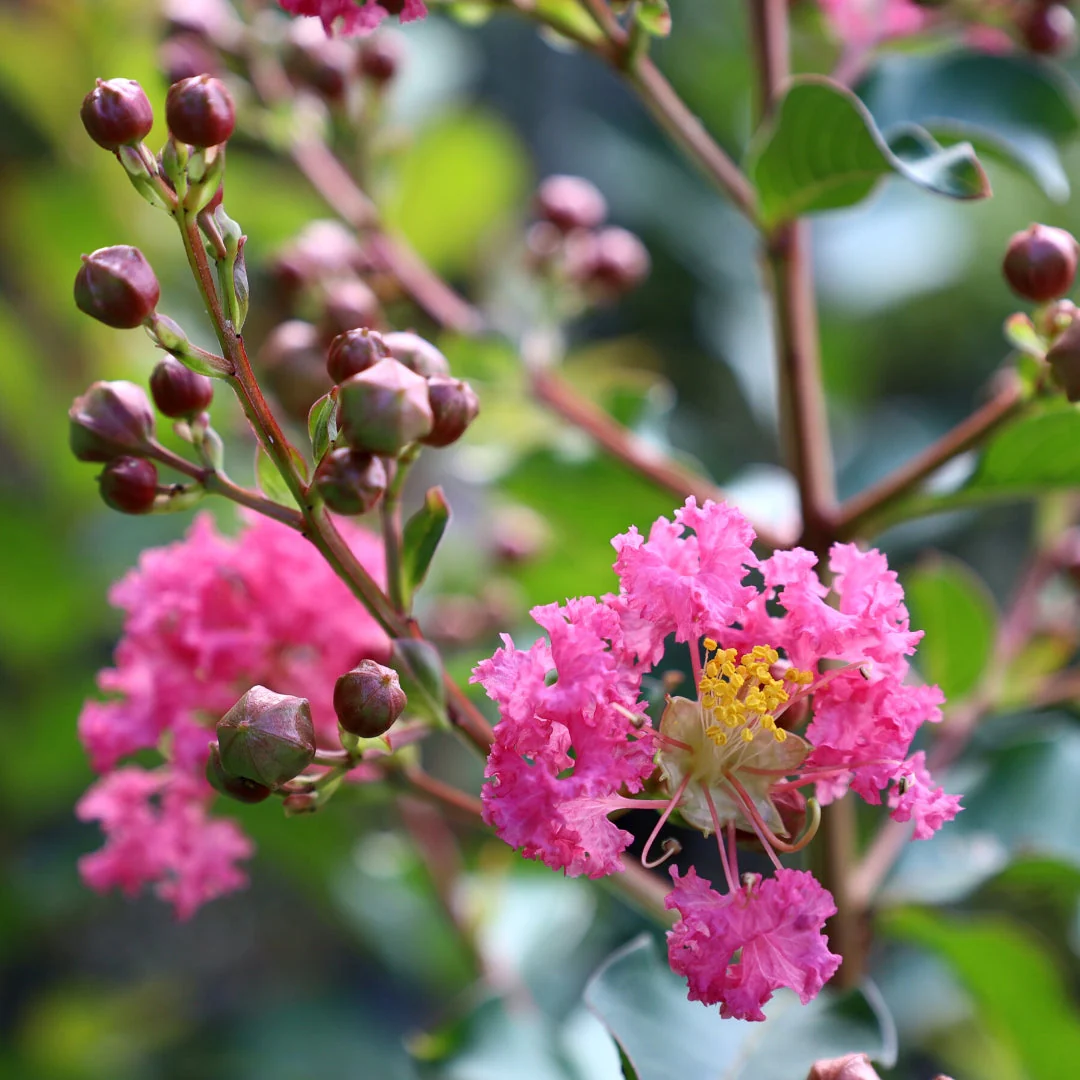
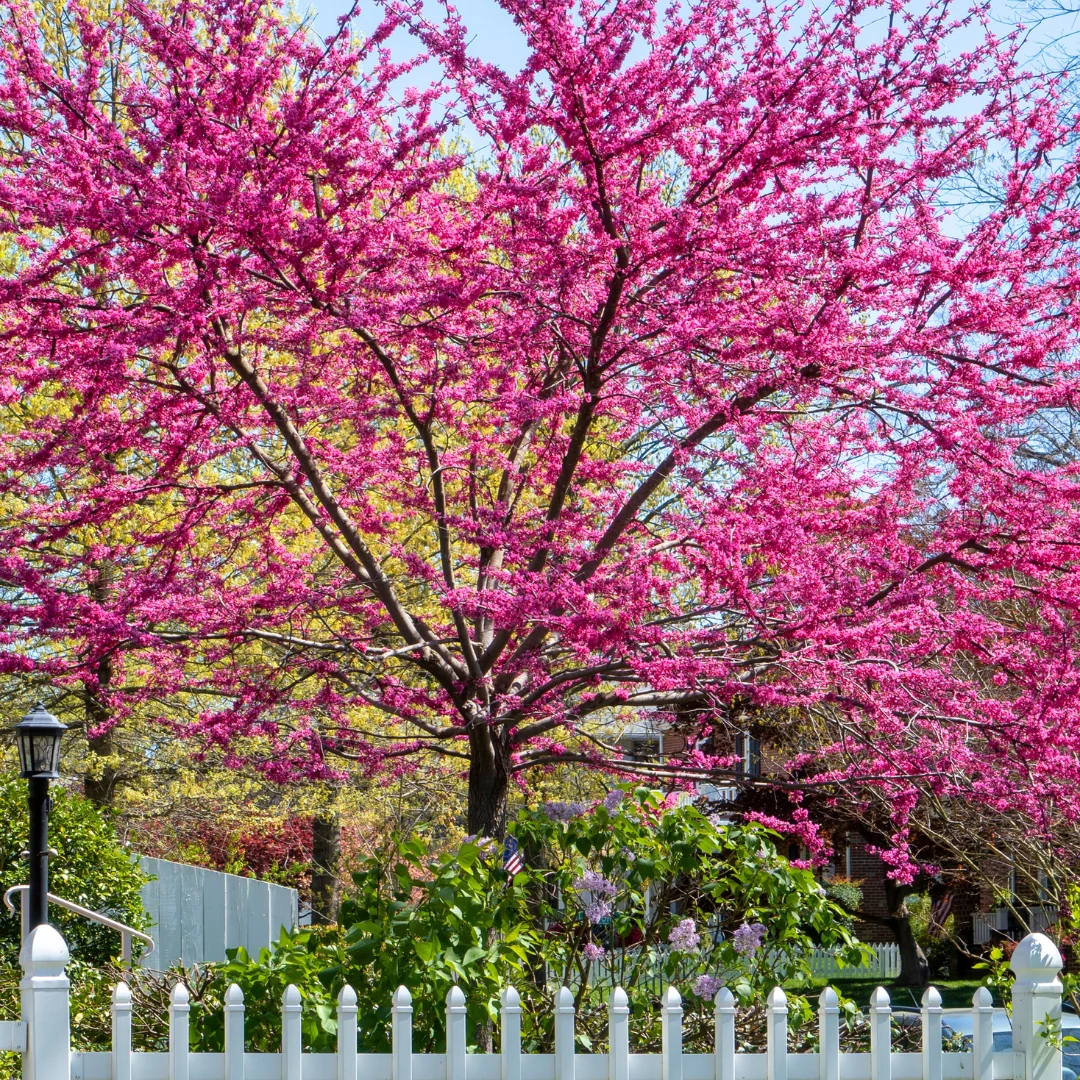
In early spring, Merlot Redbud blooms before the leaves fully emerge, covering branches with bright lavender-pink flowers. This timing is the magic: it delivers a true “first color moment” in the landscape when most trees are still waking up. Flowers appear along stems and older wood, creating a full, branch-hugging bloom display that looks lush and sculptural—like the tree is lit from within.
Those blooms are also a meaningful boost for early-season pollinators, which is a big reason redbuds are beloved in layered landscapes. Plant Merlot where you’ll see it from a window in late winter/early spring, along a driveway approach, or near a patio that needs a seasonal wow. It’s the kind of bloom that makes people ask, “What is that tree?”—and then the foliage keeps the conversation going long after spring.
Compact Size That Fits Small Yards And Modern Landscapes
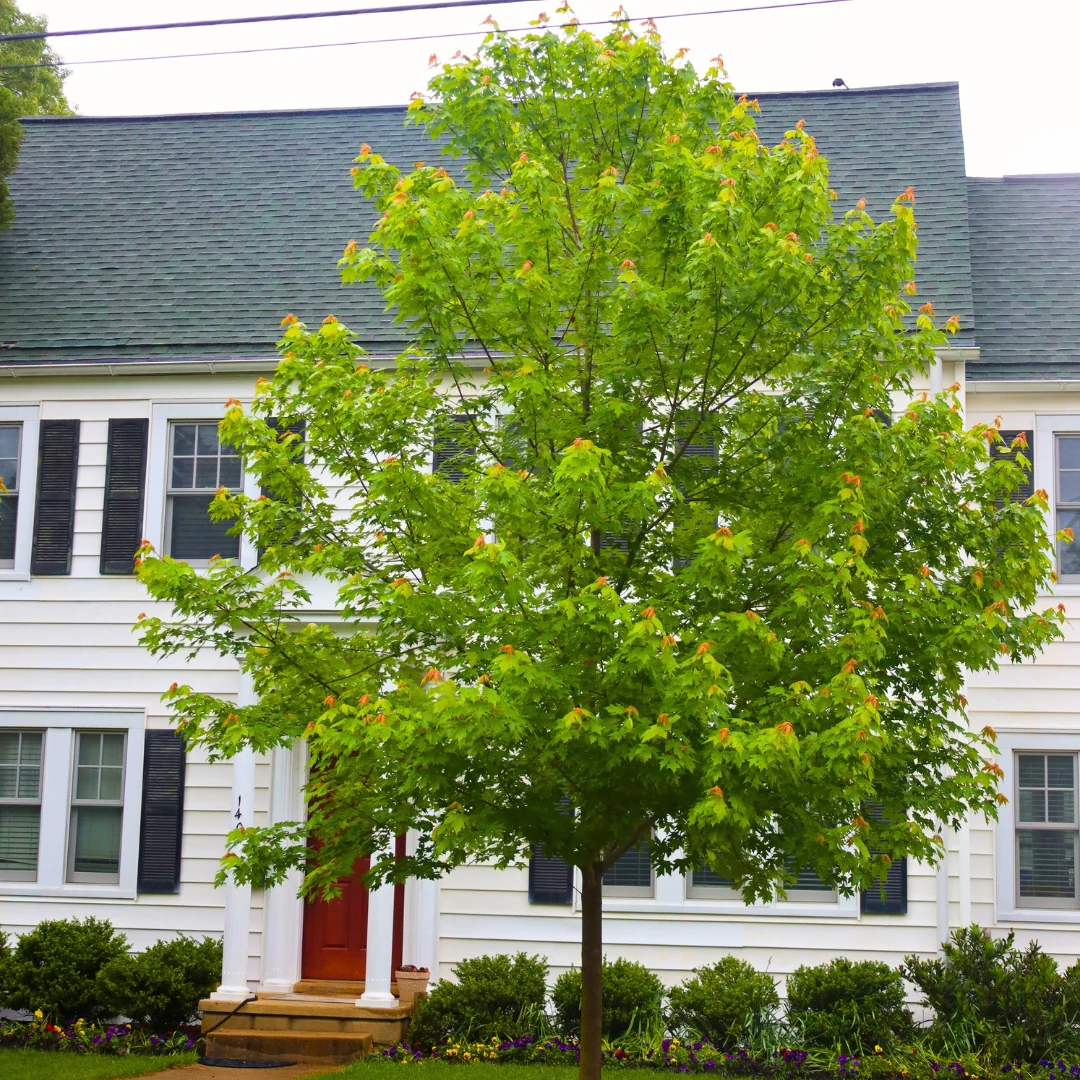
Merlot is a more compact redbud, typically maturing around 12–15 feet tall and 12–15 feet wide. That smaller footprint makes it ideal for today’s landscapes—front yards, townhouse lots, side yards, and tighter garden rooms where you want a real tree presence without overwhelming the space. The habit tends to be upright with a dense canopy, which gives it a clean silhouette and makes it easy to design around.
Because it stays manageable, Merlot works beautifully as a specimen tree, a garden “ceiling” over perennials, or a focal point near hardscape. It’s also a smart choice for layered planting: tuck low shrubs and groundcovers beneath it, and you’ll get a polished, three-tier look (ground layer, mid layer, canopy) in a relatively small footprint. In other words, this is the redbud for shoppers who want big impact in a space-smart size.
Heat-And-Drought Tolerance With Straightforward Care
Merlot was selected for strong performance in real gardens, including better tolerance to heat and periodic drought once established. Give it full sun to partial sun and well-drained soil, and it will settle in steadily without demanding constant attention. The biggest keys are simple: avoid soggy roots, mulch the root zone to stabilize moisture and temperature, and water deeply during the first growing season so the root system expands outward.
Pruning is minimal and mostly about timing. If you need to tidy the shape, do it in late spring, right after flowering, to preserve the natural habit while protecting future growth. With the right start—good drainage, a mulch ring, and consistent establishment watering—Merlot becomes the kind of ornamental tree that looks high-end and custom, but behaves refreshingly easy.
Purple Foliage That Looks Designer All Season
Merlot Redbud Tree is the “statement piece” tree for gardeners who want color beyond bloom season. New growth emerges in a rich, dark purple with a glossy finish that reads bold from the street and sophisticated up close. That dramatic foliage instantly elevates foundation plantings, mixed borders, and patio views—especially when paired with chartreuse shrubs, silver foliage, or soft greens that make the purple look even deeper. Even when flowers fade, Merlot keeps earning attention with leaf color that feels curated and intentional.
What makes Merlot especially appealing is its durable, polished look. The leaves are typically thicker and glossier than many purple-leaf redbuds, which helps the tree hold its style through summer. Use it as a focal point near an entry, as a color anchor in a mixed landscape, or as a small ornamental “canopy” that makes the yard feel finished. If you want one tree that brings color, texture, and structure—not just a short spring show—Merlot is a confident pick.
Lavender-Pink Spring Flowers That Start The Season Right
In early spring, Merlot Redbud blooms before the leaves fully emerge, covering branches with bright lavender-pink flowers. This timing is the magic: it delivers a true “first color moment” in the landscape when most trees are still waking up. Flowers appear along stems and older wood, creating a full, branch-hugging bloom display that looks lush and sculptural—like the tree is lit from within.
Those blooms are also a meaningful boost for early-season pollinators, which is a big reason redbuds are beloved in layered landscapes. Plant Merlot where you’ll see it from a window in late winter/early spring, along a driveway approach, or near a patio that needs a seasonal wow. It’s the kind of bloom that makes people ask, “What is that tree?”—and then the foliage keeps the conversation going long after spring.
Compact Size That Fits Small Yards And Modern Landscapes
Merlot is a more compact redbud, typically maturing around 12–15 feet tall and 12–15 feet wide. That smaller footprint makes it ideal for today’s landscapes—front yards, townhouse lots, side yards, and tighter garden rooms where you want a real tree presence without overwhelming the space. The habit tends to be upright with a dense canopy, which gives it a clean silhouette and makes it easy to design around.
Because it stays manageable, Merlot works beautifully as a specimen tree, a garden “ceiling” over perennials, or a focal point near hardscape. It’s also a smart choice for layered planting: tuck low shrubs and groundcovers beneath it, and you’ll get a polished, three-tier look (ground layer, mid layer, canopy) in a relatively small footprint. In other words, this is the redbud for shoppers who want big impact in a space-smart size.
Heat-And-Drought Tolerance With Straightforward Care
Merlot was selected for strong performance in real gardens, including better tolerance to heat and periodic drought once established. Give it full sun to partial sun and well-drained soil, and it will settle in steadily without demanding constant attention. The biggest keys are simple: avoid soggy roots, mulch the root zone to stabilize moisture and temperature, and water deeply during the first growing season so the root system expands outward.
Pruning is minimal and mostly about timing. If you need to tidy the shape, do it in late spring, right after flowering, to preserve the natural habit while protecting future growth. With the right start—good drainage, a mulch ring, and consistent establishment watering—Merlot becomes the kind of ornamental tree that looks high-end and custom, but behaves refreshingly easy.
Original: $149.95
-70%$149.95
$44.98Description
Purple Foliage That Looks Designer All Season
Merlot Redbud Tree is the “statement piece” tree for gardeners who want color beyond bloom season. New growth emerges in a rich, dark purple with a glossy finish that reads bold from the street and sophisticated up close. That dramatic foliage instantly elevates foundation plantings, mixed borders, and patio views—especially when paired with chartreuse shrubs, silver foliage, or soft greens that make the purple look even deeper. Even when flowers fade, Merlot keeps earning attention with leaf color that feels curated and intentional.
What makes Merlot especially appealing is its durable, polished look. The leaves are typically thicker and glossier than many purple-leaf redbuds, which helps the tree hold its style through summer. Use it as a focal point near an entry, as a color anchor in a mixed landscape, or as a small ornamental “canopy” that makes the yard feel finished. If you want one tree that brings color, texture, and structure—not just a short spring show—Merlot is a confident pick.
Lavender-Pink Spring Flowers That Start The Season Right
In early spring, Merlot Redbud blooms before the leaves fully emerge, covering branches with bright lavender-pink flowers. This timing is the magic: it delivers a true “first color moment” in the landscape when most trees are still waking up. Flowers appear along stems and older wood, creating a full, branch-hugging bloom display that looks lush and sculptural—like the tree is lit from within.
Those blooms are also a meaningful boost for early-season pollinators, which is a big reason redbuds are beloved in layered landscapes. Plant Merlot where you’ll see it from a window in late winter/early spring, along a driveway approach, or near a patio that needs a seasonal wow. It’s the kind of bloom that makes people ask, “What is that tree?”—and then the foliage keeps the conversation going long after spring.
Compact Size That Fits Small Yards And Modern Landscapes
Merlot is a more compact redbud, typically maturing around 12–15 feet tall and 12–15 feet wide. That smaller footprint makes it ideal for today’s landscapes—front yards, townhouse lots, side yards, and tighter garden rooms where you want a real tree presence without overwhelming the space. The habit tends to be upright with a dense canopy, which gives it a clean silhouette and makes it easy to design around.
Because it stays manageable, Merlot works beautifully as a specimen tree, a garden “ceiling” over perennials, or a focal point near hardscape. It’s also a smart choice for layered planting: tuck low shrubs and groundcovers beneath it, and you’ll get a polished, three-tier look (ground layer, mid layer, canopy) in a relatively small footprint. In other words, this is the redbud for shoppers who want big impact in a space-smart size.
Heat-And-Drought Tolerance With Straightforward Care
Merlot was selected for strong performance in real gardens, including better tolerance to heat and periodic drought once established. Give it full sun to partial sun and well-drained soil, and it will settle in steadily without demanding constant attention. The biggest keys are simple: avoid soggy roots, mulch the root zone to stabilize moisture and temperature, and water deeply during the first growing season so the root system expands outward.
Pruning is minimal and mostly about timing. If you need to tidy the shape, do it in late spring, right after flowering, to preserve the natural habit while protecting future growth. With the right start—good drainage, a mulch ring, and consistent establishment watering—Merlot becomes the kind of ornamental tree that looks high-end and custom, but behaves refreshingly easy.