Rose Glow Barberry
Pink-splashed purple foliage that looks “designer” all season
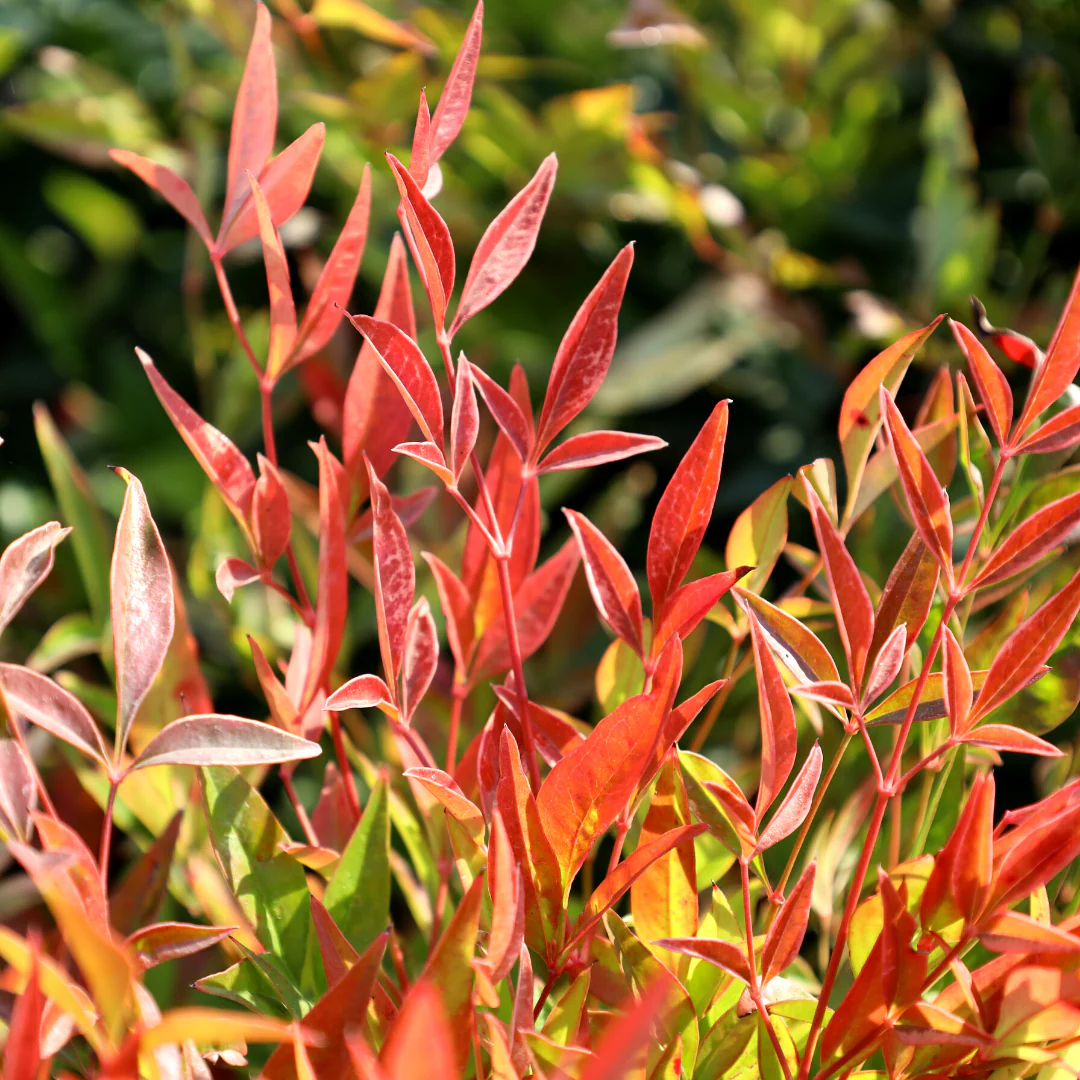
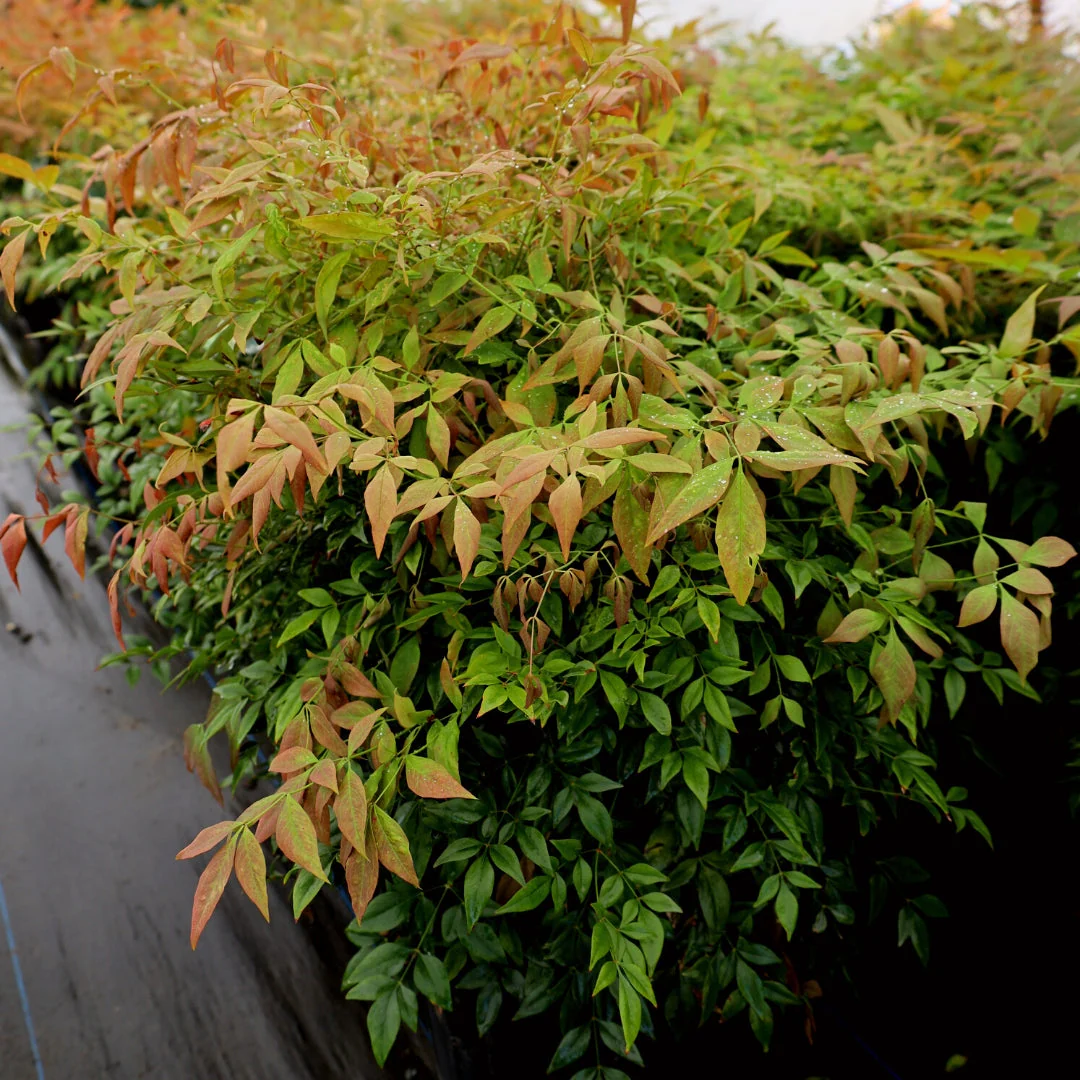
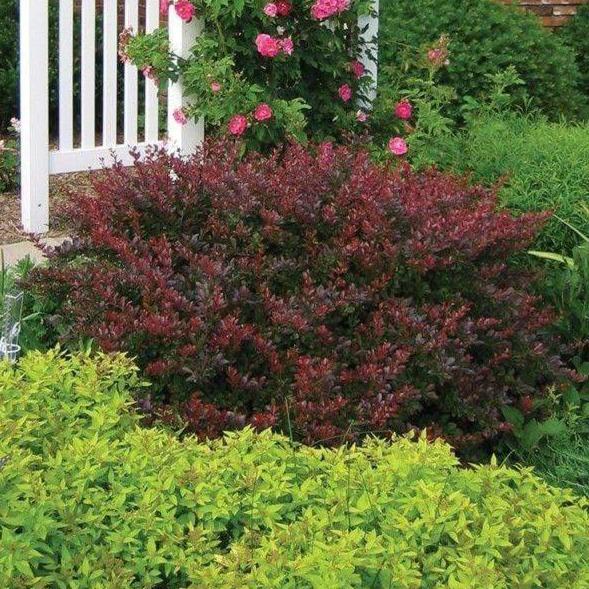
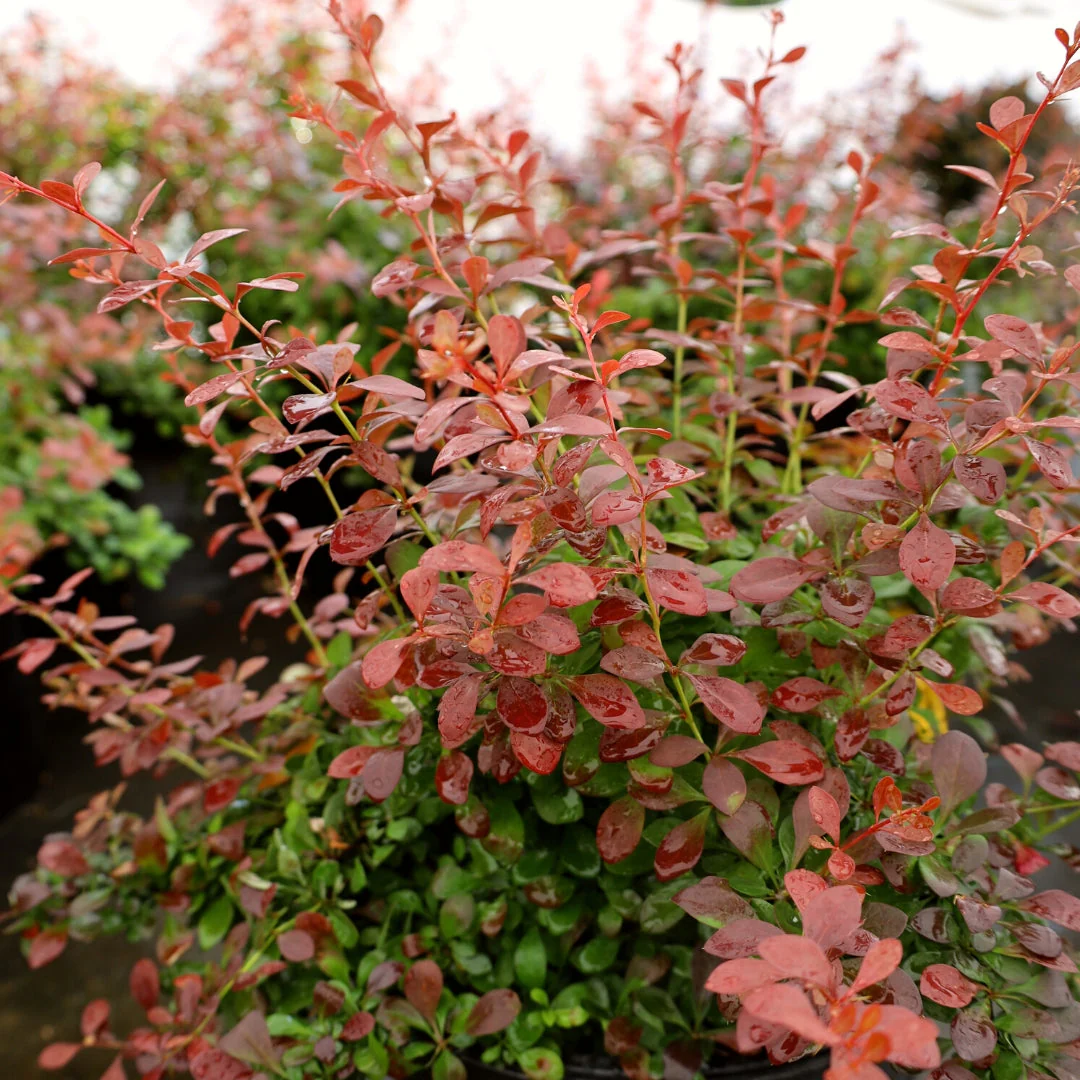
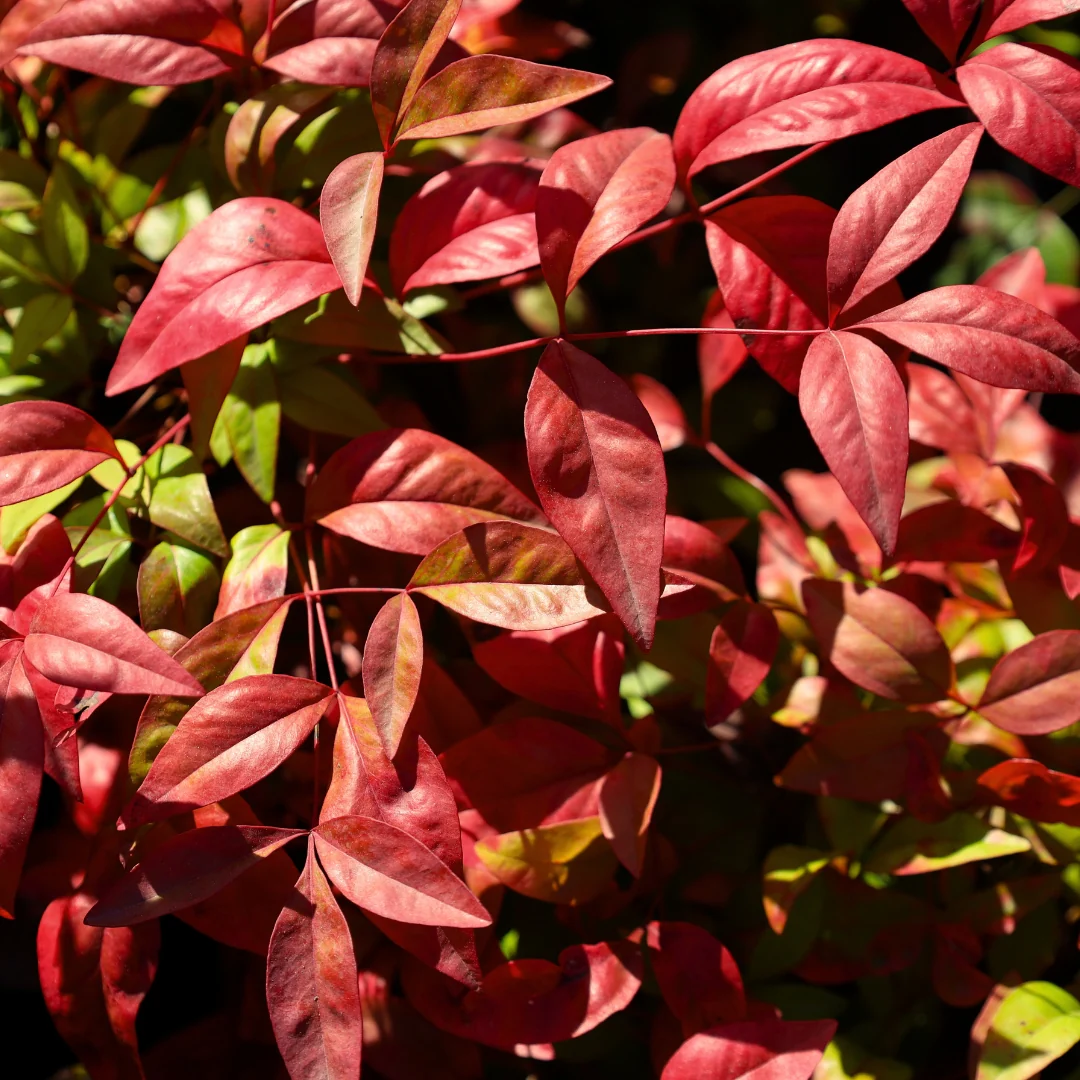
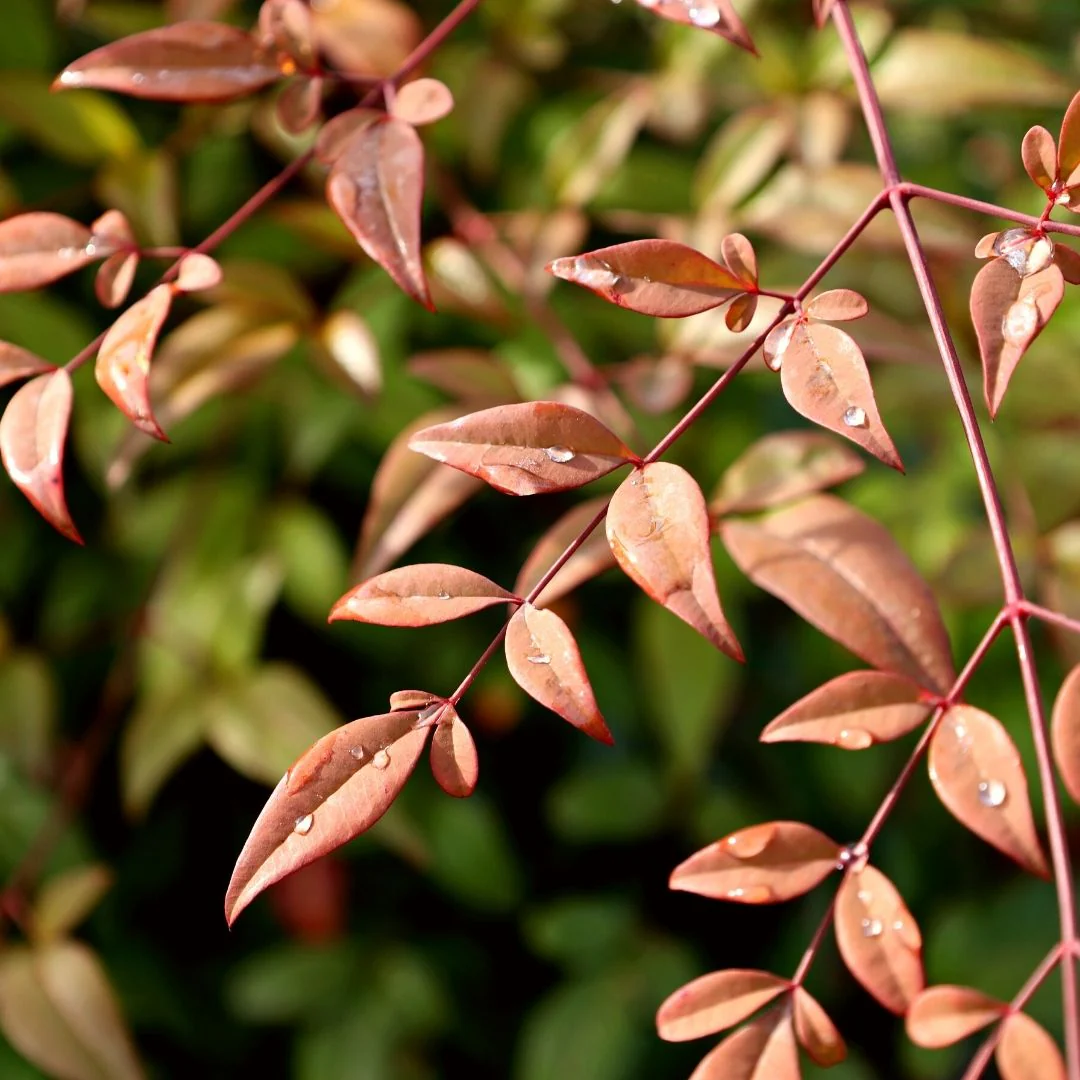
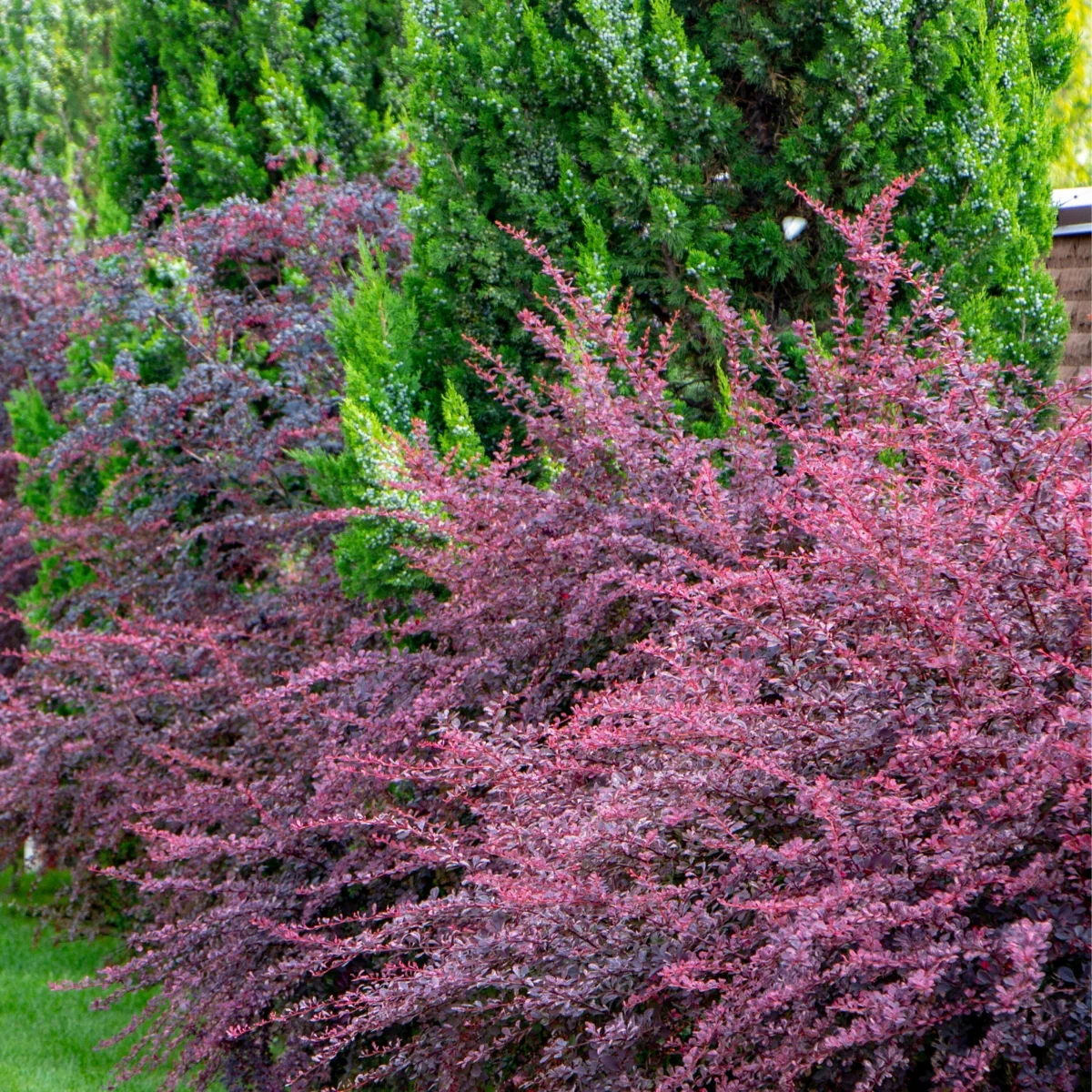
Rose Glow Barberry is the shrub you plant when you want color that doesn’t depend on flowers. Leaves emerge and mature in rich burgundy tones, then show off rosy-pink mottling that looks like a watercolor wash across the canopy. That variegated effect is strongest on fresh growth, so the plant keeps a lively, multi-toned look throughout the growing season rather than fading into a single flat color.
In fall, the foliage often shifts into warmer orange-red notes, so you get a second color season without changing a thing. Use it as a focal shrub where contrast matters, or repeat it in a border to create a rhythmic effect. Against deep green evergreens, gray stone, or dark mulch, Rose Glow reads bold, modern, and intentional.
A medium-sized shrub that fills in thick for privacy and structure
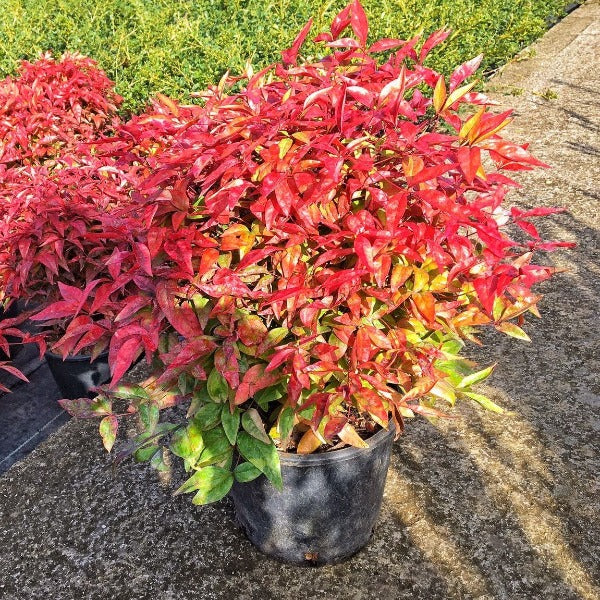
Rose Glow grows into a dense, thorny shrub that naturally fills in from the base upward, making it a strong choice when you want a thick hedge line rather than a see-through screen. It typically reaches 4–6 feet at maturity, with a similar width, which is ideal for creating mid-height privacy, defining property edges, or building a layered “shrub wall” behind perennials.
Because it’s dense, it also works as a background plant that makes other colors pop. Plant it behind gold foliage shrubs, in front of conifers, or in mixed borders where you want a sturdy backbone. Just plan for width; this is not a narrow column, so it can mature without crowding walkways or competing too hard with neighbors.
Tough, drought-tolerant, and deer resistant with thorny “security” value
Rose Glow Barberry is built for real-life landscapes. Once established, it handles heat and dry spells well, and it’s widely chosen in deer-prone areas because the thorny stems make browsing less appealing. That combination, color plus toughness, is exactly why barberry remains a favorite for foundation beds, roadside-style plantings, and low-maintenance borders where you still want strong curb appeal.
Those thorns are also a practical feature if you want a deterrent hedge under windows or along a boundary line. The only rule is placement: avoid tight, high-traffic spots where sleeves and skin will brush the plant. Set it slightly back from paths, and you get the best of both worlds: a beautiful foliage shrub that also functions as a living barrier.
Simple pruning that keeps it colorful, dense, and well-shaped
Rose Glow looks best with light, strategic pruning rather than heavy shearing. A gentle trim after the first flush of spring growth encourages branching, keeps the shrub dense, and promotes fresh new foliage—the part of the plant that shows the brightest pink mottling. If you’re growing it as a hedge, shaping the top slightly narrower than the base helps sunlight reach the lower branches, keeping the hedge full from top to bottom.
You can also refresh older plants by thinning a few of the oldest stems at the base in late winter, which encourages vigorous new shoots in spring. Keep the routine simple: good sun, well-drained soil, modest pruning, and consistent water while establishing. Do that, and Rose Glow becomes an easy, long-lived color anchor that looks “kept” without constant work.
Pink-splashed purple foliage that looks “designer” all season
Rose Glow Barberry is the shrub you plant when you want color that doesn’t depend on flowers. Leaves emerge and mature in rich burgundy tones, then show off rosy-pink mottling that looks like a watercolor wash across the canopy. That variegated effect is strongest on fresh growth, so the plant keeps a lively, multi-toned look throughout the growing season rather than fading into a single flat color.
In fall, the foliage often shifts into warmer orange-red notes, so you get a second color season without changing a thing. Use it as a focal shrub where contrast matters, or repeat it in a border to create a rhythmic effect. Against deep green evergreens, gray stone, or dark mulch, Rose Glow reads bold, modern, and intentional.
A medium-sized shrub that fills in thick for privacy and structure
Rose Glow grows into a dense, thorny shrub that naturally fills in from the base upward, making it a strong choice when you want a thick hedge line rather than a see-through screen. It typically reaches 4–6 feet at maturity, with a similar width, which is ideal for creating mid-height privacy, defining property edges, or building a layered “shrub wall” behind perennials.
Because it’s dense, it also works as a background plant that makes other colors pop. Plant it behind gold foliage shrubs, in front of conifers, or in mixed borders where you want a sturdy backbone. Just plan for width; this is not a narrow column, so it can mature without crowding walkways or competing too hard with neighbors.
Tough, drought-tolerant, and deer resistant with thorny “security” value
Rose Glow Barberry is built for real-life landscapes. Once established, it handles heat and dry spells well, and it’s widely chosen in deer-prone areas because the thorny stems make browsing less appealing. That combination, color plus toughness, is exactly why barberry remains a favorite for foundation beds, roadside-style plantings, and low-maintenance borders where you still want strong curb appeal.
Those thorns are also a practical feature if you want a deterrent hedge under windows or along a boundary line. The only rule is placement: avoid tight, high-traffic spots where sleeves and skin will brush the plant. Set it slightly back from paths, and you get the best of both worlds: a beautiful foliage shrub that also functions as a living barrier.
Simple pruning that keeps it colorful, dense, and well-shaped
Rose Glow looks best with light, strategic pruning rather than heavy shearing. A gentle trim after the first flush of spring growth encourages branching, keeps the shrub dense, and promotes fresh new foliage—the part of the plant that shows the brightest pink mottling. If you’re growing it as a hedge, shaping the top slightly narrower than the base helps sunlight reach the lower branches, keeping the hedge full from top to bottom.
You can also refresh older plants by thinning a few of the oldest stems at the base in late winter, which encourages vigorous new shoots in spring. Keep the routine simple: good sun, well-drained soil, modest pruning, and consistent water while establishing. Do that, and Rose Glow becomes an easy, long-lived color anchor that looks “kept” without constant work.
Original: $26.95
-70%$26.95
$8.08Description
Pink-splashed purple foliage that looks “designer” all season
Rose Glow Barberry is the shrub you plant when you want color that doesn’t depend on flowers. Leaves emerge and mature in rich burgundy tones, then show off rosy-pink mottling that looks like a watercolor wash across the canopy. That variegated effect is strongest on fresh growth, so the plant keeps a lively, multi-toned look throughout the growing season rather than fading into a single flat color.
In fall, the foliage often shifts into warmer orange-red notes, so you get a second color season without changing a thing. Use it as a focal shrub where contrast matters, or repeat it in a border to create a rhythmic effect. Against deep green evergreens, gray stone, or dark mulch, Rose Glow reads bold, modern, and intentional.
A medium-sized shrub that fills in thick for privacy and structure
Rose Glow grows into a dense, thorny shrub that naturally fills in from the base upward, making it a strong choice when you want a thick hedge line rather than a see-through screen. It typically reaches 4–6 feet at maturity, with a similar width, which is ideal for creating mid-height privacy, defining property edges, or building a layered “shrub wall” behind perennials.
Because it’s dense, it also works as a background plant that makes other colors pop. Plant it behind gold foliage shrubs, in front of conifers, or in mixed borders where you want a sturdy backbone. Just plan for width; this is not a narrow column, so it can mature without crowding walkways or competing too hard with neighbors.
Tough, drought-tolerant, and deer resistant with thorny “security” value
Rose Glow Barberry is built for real-life landscapes. Once established, it handles heat and dry spells well, and it’s widely chosen in deer-prone areas because the thorny stems make browsing less appealing. That combination, color plus toughness, is exactly why barberry remains a favorite for foundation beds, roadside-style plantings, and low-maintenance borders where you still want strong curb appeal.
Those thorns are also a practical feature if you want a deterrent hedge under windows or along a boundary line. The only rule is placement: avoid tight, high-traffic spots where sleeves and skin will brush the plant. Set it slightly back from paths, and you get the best of both worlds: a beautiful foliage shrub that also functions as a living barrier.
Simple pruning that keeps it colorful, dense, and well-shaped
Rose Glow looks best with light, strategic pruning rather than heavy shearing. A gentle trim after the first flush of spring growth encourages branching, keeps the shrub dense, and promotes fresh new foliage—the part of the plant that shows the brightest pink mottling. If you’re growing it as a hedge, shaping the top slightly narrower than the base helps sunlight reach the lower branches, keeping the hedge full from top to bottom.
You can also refresh older plants by thinning a few of the oldest stems at the base in late winter, which encourages vigorous new shoots in spring. Keep the routine simple: good sun, well-drained soil, modest pruning, and consistent water while establishing. Do that, and Rose Glow becomes an easy, long-lived color anchor that looks “kept” without constant work.