
Ruby Falls® Redbud Tree
A Living Waterfall Shape That Works In Small Spaces
Ruby Falls® Redbud is the definition of “garden sculpture.” Instead of growing upright like a typical redbud, it cascades in a graceful weeping habit that creates a fountain-like silhouette. That shape is pure magic near a front walk, beside a patio, or at the edge of a small garden bed where you want one plant to do the visual heavy lifting. Even from a distance, the form reads intentional—like you placed an art piece rather than just a tree.
Because Ruby Falls stays compact, it fits where many flowering trees simply can’t. You can tuck it into tighter landscape rooms, highlight a corner planting, or use it to soften hard lines around stone, fencing, or outdoor seating. Give it a clear backdrop and a little breathing room, and the cascading canopy becomes a focal point that looks as if it were designed from every angle.
Burgundy Leaves That Keep The Show Going After Bloom
Once spring bloom fades, Ruby Falls doesn’t disappear into “just green.” Its heart-shaped leaves emerge in rich burgundy tones that add contrast and depth to the landscape all season. That dark foliage is especially striking next to evergreens, ornamental grasses, or bright chartreuse shrubs, and it gives you color even when your perennials are between peak moments.
This is also a tree that photographs beautifully in the garden—those burgundy leaves create instant drama in foundation beds and mixed borders. If you want a small ornamental tree that feels upscale and curated without demanding constant attention, Ruby Falls delivers. It’s a foliage-forward choice that still gives you the classic redbud bloom moment up front.
Early Spring Flowers That Light Up Bare Branches
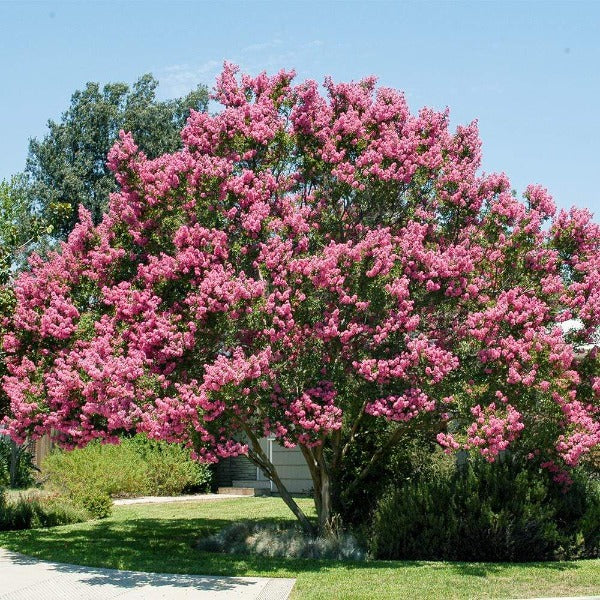
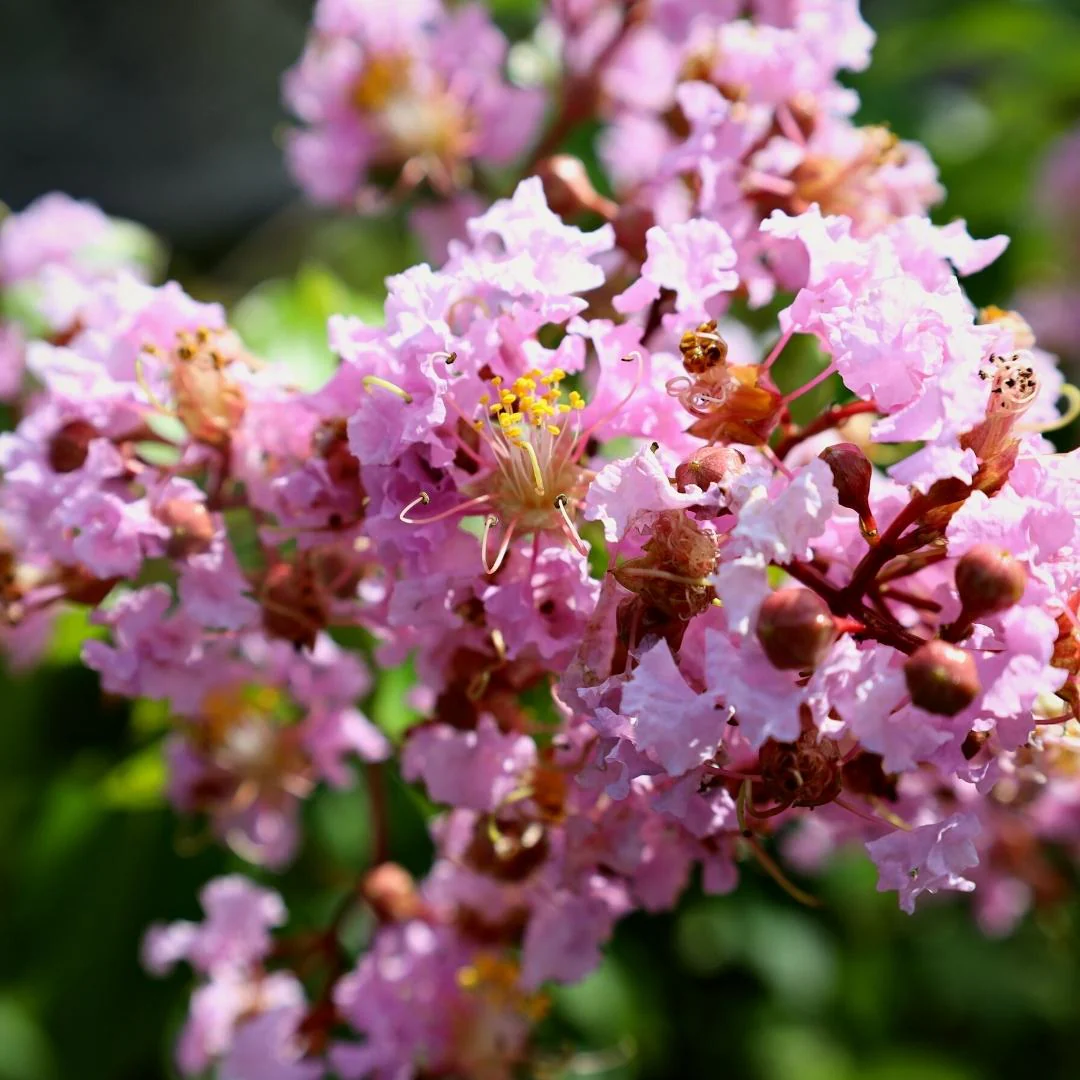
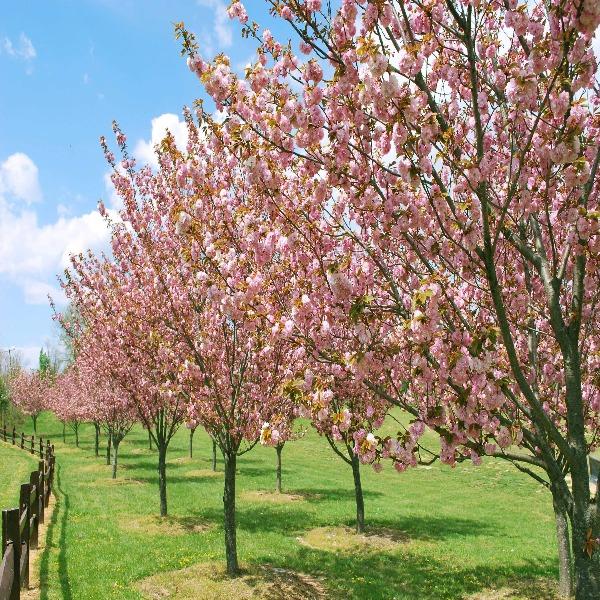
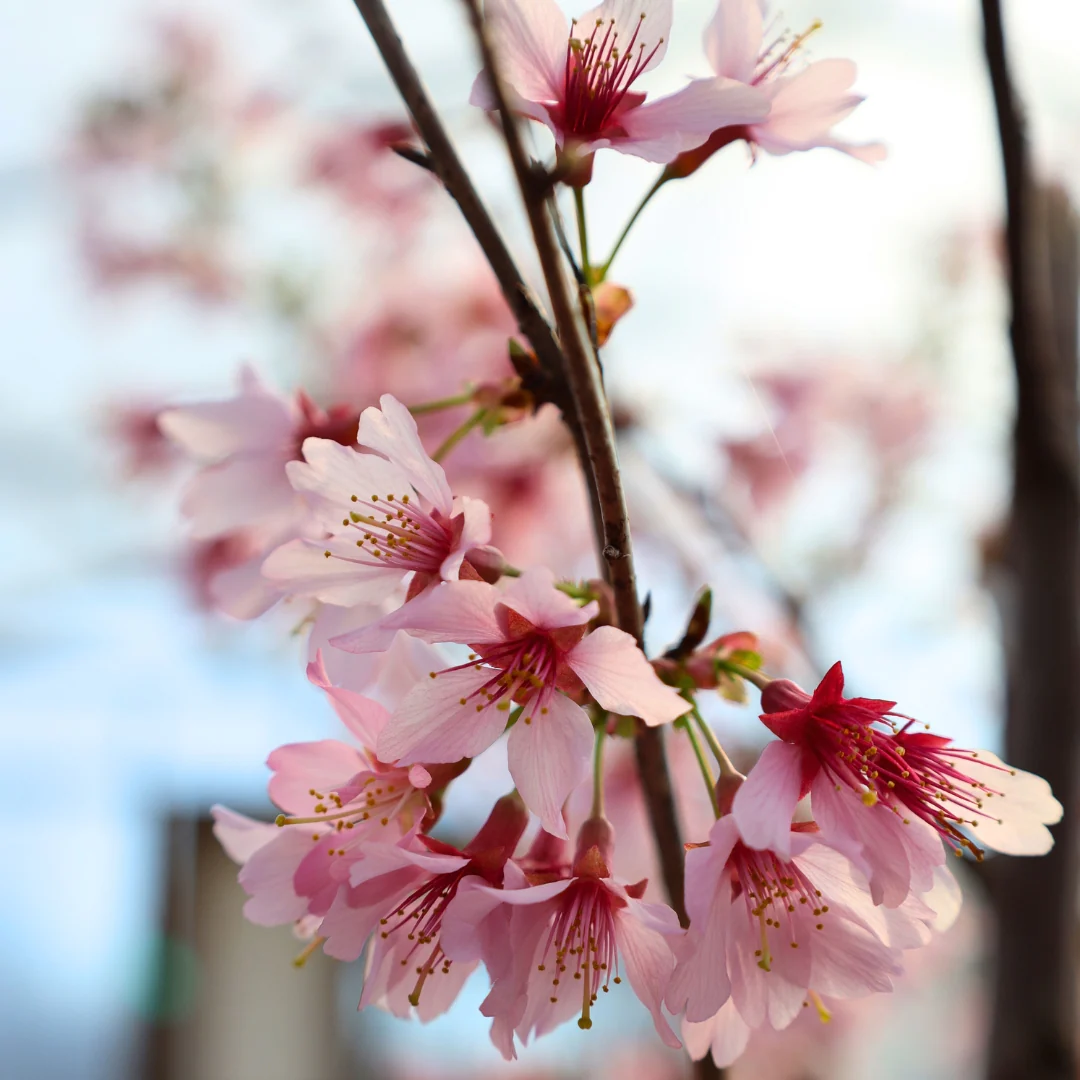
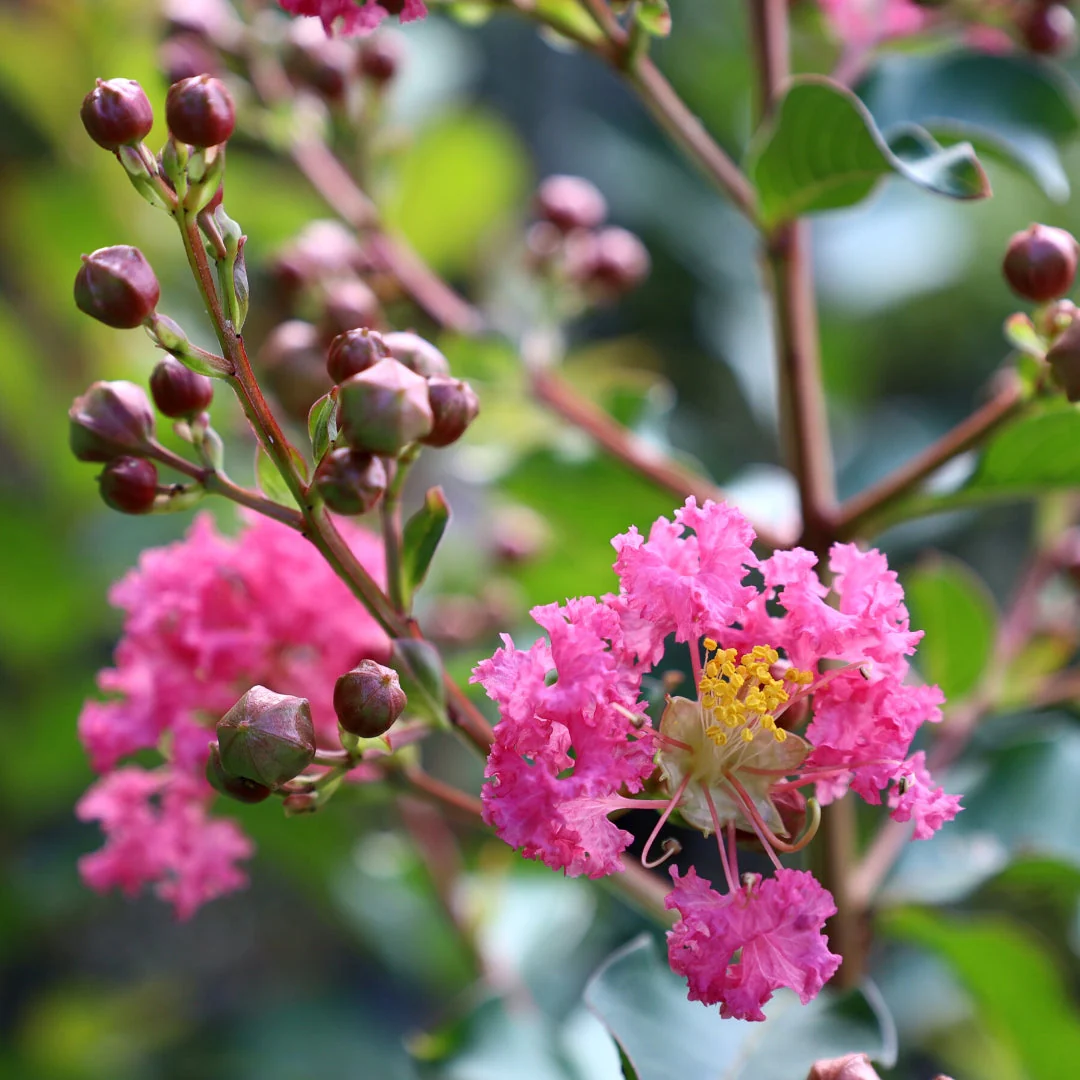
Ruby Falls blooms in early spring with pink to rosy-purple flowers that appear before the canopy fully leafs out. That timing is what makes redbuds so beloved: when the garden still looks sleepy, Ruby Falls is already celebrating. On a weeping form, the bloom show is even more dramatic—flowers line the cascading branches, creating a “pink waterfall” effect that feels both elegant and playful.
Those early blooms are also a welcome food source for pollinators when nectar is limited. Plant Ruby Falls where you’ll see it daily—near an entry, outside a favorite window, or along a path you use in late winter and early spring. It’s the kind of tree that makes the season feel like it’s officially started.
Easy Care Success With Sun, Drainage, And A Light Pruning Hand
Ruby Falls performs best in full sun to partial shade in well-drained soil. Sun helps intensify foliage color, while good drainage protects redbud roots from prolonged wetness—one of the fastest ways to stress the plant. A mulch ring helps maintain consistent moisture and keep roots cooler in summer, supporting cleaner growth and better overall vigor.
Pruning is mostly about preserving the signature weeping architecture. Remove dead, damaged, or crossing branches and do only small, selective cuts for shape—ideally after flowering if you need to refine the silhouette. With steady watering during the first growing season and a light touch on pruning, Ruby Falls stays low-maintenance while looking like a showpiece.
A Living Waterfall Shape That Works In Small Spaces
Ruby Falls® Redbud is the definition of “garden sculpture.” Instead of growing upright like a typical redbud, it cascades in a graceful weeping habit that creates a fountain-like silhouette. That shape is pure magic near a front walk, beside a patio, or at the edge of a small garden bed where you want one plant to do the visual heavy lifting. Even from a distance, the form reads intentional—like you placed an art piece rather than just a tree.
Because Ruby Falls stays compact, it fits where many flowering trees simply can’t. You can tuck it into tighter landscape rooms, highlight a corner planting, or use it to soften hard lines around stone, fencing, or outdoor seating. Give it a clear backdrop and a little breathing room, and the cascading canopy becomes a focal point that looks as if it were designed from every angle.
Burgundy Leaves That Keep The Show Going After Bloom
Once spring bloom fades, Ruby Falls doesn’t disappear into “just green.” Its heart-shaped leaves emerge in rich burgundy tones that add contrast and depth to the landscape all season. That dark foliage is especially striking next to evergreens, ornamental grasses, or bright chartreuse shrubs, and it gives you color even when your perennials are between peak moments.
This is also a tree that photographs beautifully in the garden—those burgundy leaves create instant drama in foundation beds and mixed borders. If you want a small ornamental tree that feels upscale and curated without demanding constant attention, Ruby Falls delivers. It’s a foliage-forward choice that still gives you the classic redbud bloom moment up front.
Early Spring Flowers That Light Up Bare Branches
Ruby Falls blooms in early spring with pink to rosy-purple flowers that appear before the canopy fully leafs out. That timing is what makes redbuds so beloved: when the garden still looks sleepy, Ruby Falls is already celebrating. On a weeping form, the bloom show is even more dramatic—flowers line the cascading branches, creating a “pink waterfall” effect that feels both elegant and playful.
Those early blooms are also a welcome food source for pollinators when nectar is limited. Plant Ruby Falls where you’ll see it daily—near an entry, outside a favorite window, or along a path you use in late winter and early spring. It’s the kind of tree that makes the season feel like it’s officially started.
Easy Care Success With Sun, Drainage, And A Light Pruning Hand
Ruby Falls performs best in full sun to partial shade in well-drained soil. Sun helps intensify foliage color, while good drainage protects redbud roots from prolonged wetness—one of the fastest ways to stress the plant. A mulch ring helps maintain consistent moisture and keep roots cooler in summer, supporting cleaner growth and better overall vigor.
Pruning is mostly about preserving the signature weeping architecture. Remove dead, damaged, or crossing branches and do only small, selective cuts for shape—ideally after flowering if you need to refine the silhouette. With steady watering during the first growing season and a light touch on pruning, Ruby Falls stays low-maintenance while looking like a showpiece.
Description
A Living Waterfall Shape That Works In Small Spaces
Ruby Falls® Redbud is the definition of “garden sculpture.” Instead of growing upright like a typical redbud, it cascades in a graceful weeping habit that creates a fountain-like silhouette. That shape is pure magic near a front walk, beside a patio, or at the edge of a small garden bed where you want one plant to do the visual heavy lifting. Even from a distance, the form reads intentional—like you placed an art piece rather than just a tree.
Because Ruby Falls stays compact, it fits where many flowering trees simply can’t. You can tuck it into tighter landscape rooms, highlight a corner planting, or use it to soften hard lines around stone, fencing, or outdoor seating. Give it a clear backdrop and a little breathing room, and the cascading canopy becomes a focal point that looks as if it were designed from every angle.
Burgundy Leaves That Keep The Show Going After Bloom
Once spring bloom fades, Ruby Falls doesn’t disappear into “just green.” Its heart-shaped leaves emerge in rich burgundy tones that add contrast and depth to the landscape all season. That dark foliage is especially striking next to evergreens, ornamental grasses, or bright chartreuse shrubs, and it gives you color even when your perennials are between peak moments.
This is also a tree that photographs beautifully in the garden—those burgundy leaves create instant drama in foundation beds and mixed borders. If you want a small ornamental tree that feels upscale and curated without demanding constant attention, Ruby Falls delivers. It’s a foliage-forward choice that still gives you the classic redbud bloom moment up front.
Early Spring Flowers That Light Up Bare Branches
Ruby Falls blooms in early spring with pink to rosy-purple flowers that appear before the canopy fully leafs out. That timing is what makes redbuds so beloved: when the garden still looks sleepy, Ruby Falls is already celebrating. On a weeping form, the bloom show is even more dramatic—flowers line the cascading branches, creating a “pink waterfall” effect that feels both elegant and playful.
Those early blooms are also a welcome food source for pollinators when nectar is limited. Plant Ruby Falls where you’ll see it daily—near an entry, outside a favorite window, or along a path you use in late winter and early spring. It’s the kind of tree that makes the season feel like it’s officially started.
Easy Care Success With Sun, Drainage, And A Light Pruning Hand
Ruby Falls performs best in full sun to partial shade in well-drained soil. Sun helps intensify foliage color, while good drainage protects redbud roots from prolonged wetness—one of the fastest ways to stress the plant. A mulch ring helps maintain consistent moisture and keep roots cooler in summer, supporting cleaner growth and better overall vigor.
Pruning is mostly about preserving the signature weeping architecture. Remove dead, damaged, or crossing branches and do only small, selective cuts for shape—ideally after flowering if you need to refine the silhouette. With steady watering during the first growing season and a light touch on pruning, Ruby Falls stays low-maintenance while looking like a showpiece.