Tri-colored Dappled Willow
Pink, white, and green foliage that steals the show in spring
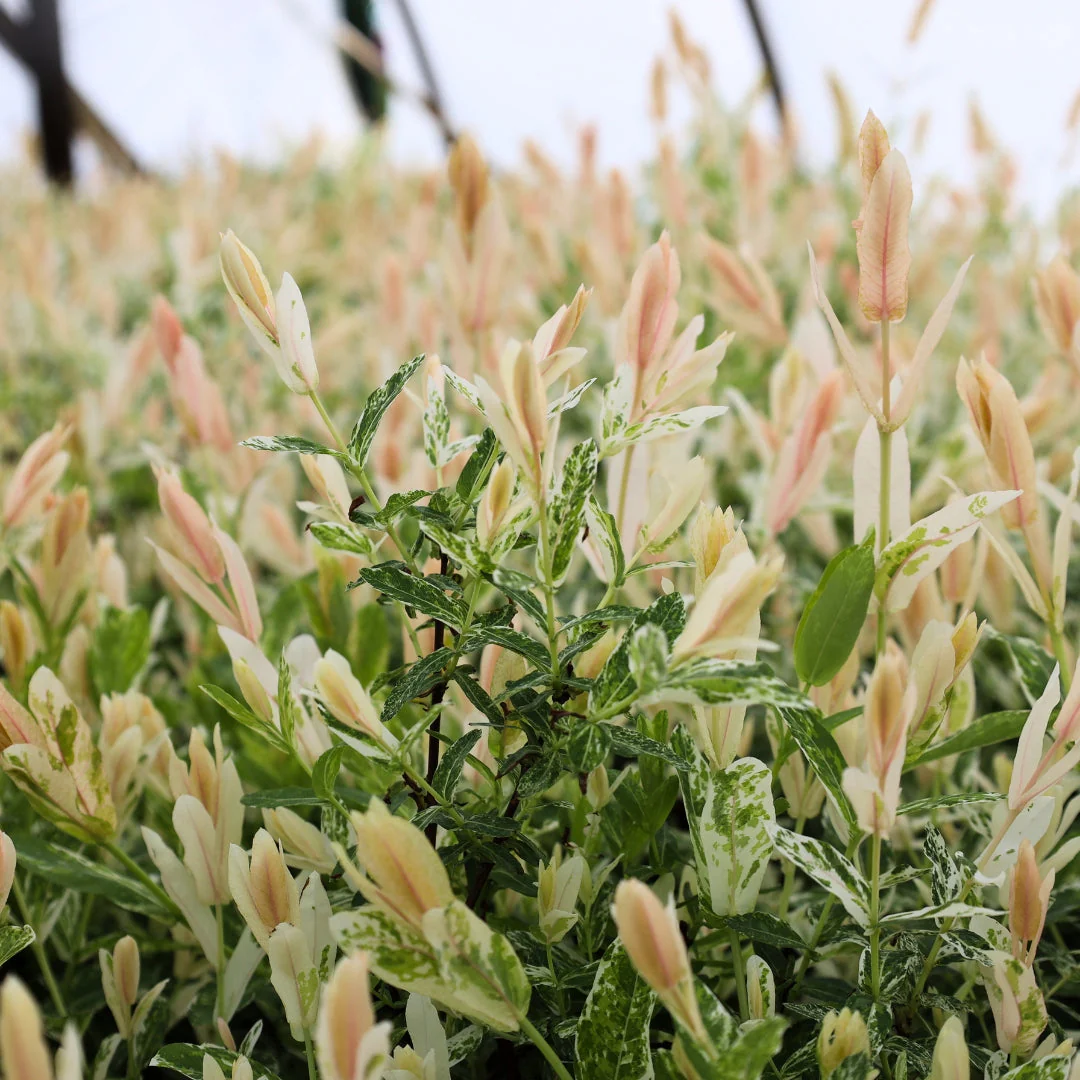
Tri-Color Dappled Willow is one of the quickest ways to add “wow” without relying on flowers. In spring, new leaves emerge with soft pink tones, then mature into a lively mix of creamy white and green. That fresh growth looks almost airbrushed, and it brightens the landscape the way a flowering shrub would, except the color comes from the foliage, so it reads bold and modern in any garden style.
This is an ideal shrub for high-visibility planting: near an entry, along a walkway, or as a focal point at the corner of a foundation bed. The foliage also plays beautifully with dark evergreens and deep green shrubs, because the variegation pops even from a distance. If your landscape needs contrast and movement early in the season, this willow delivers fast.
Fast-growing structure that makes a hedge feel “finished” sooner
Dappled willow grows quickly and branches readily, which makes it an excellent hedge and screening shrub when you want results in a reasonable timeframe. The natural habit is arching and fountain-like, and with regular trimming, it becomes denser, more of a thick, colorful living wall than a see-through shrub line. That’s perfect for property edges, backyard zones, and any spot where you want seasonal privacy and texture.
As a single specimen, it becomes a soft, rounded anchor plant that adds movement in the breeze. As a row, it becomes a vibrant hedge with a lighter, brighter feel than typical evergreen screens. The key is choosing your goal up front, specimen vs. hedge, because that determines spacing and pruning intensity.
Moist-soil friendly performance for rain gardens and low spots
Tri-Color Dappled Willow naturally tolerates moisture, making it a strong choice for sites that stay consistently damp. Use it near downspouts (with drainage), along stream-bank-style plantings, and at rain-garden edges, where many shrubs struggle. It prefers moist, well-drained soil, but it’s far more forgiving of wet conditions than most “color shrubs,” which is part of its value.
Full sun produces the best density and strongest foliage display, while part shade is workable, especially in hot climates where afternoon shade can reduce stress. If your yard includes a low spot or a moisture-retentive bed that you want to turn into a feature, this shrub can be the bright, fast-growing solution that makes the whole area feel intentional.
Pruning is the secret to brighter color and a compact, dense shape
With Tri-Color Dappled Willow, pruning isn’t just “maintenance”, it’s the color strategy. The brightest pink and cleanest variegation show on new growth, so cutting back encourages the plant to push fresh, colorful stems. A hard prune in late winter to early spring creates the boldest spring show, and light shaping after the first flush keeps the shrub dense and prevents a leggy look.
If you prefer a taller, looser shrub, you can prune less, but expect more green and a more open habit as the season progresses. Most gardeners love this willow most when it’s treated like a “cutback shrub” that stays compact, fresh, and full. Do that, and you get a dependable burst of color and structure year after year.
Pink, white, and green foliage that steals the show in spring
Tri-Color Dappled Willow is one of the quickest ways to add “wow” without relying on flowers. In spring, new leaves emerge with soft pink tones, then mature into a lively mix of creamy white and green. That fresh growth looks almost airbrushed, and it brightens the landscape the way a flowering shrub would, except the color comes from the foliage, so it reads bold and modern in any garden style.
This is an ideal shrub for high-visibility planting: near an entry, along a walkway, or as a focal point at the corner of a foundation bed. The foliage also plays beautifully with dark evergreens and deep green shrubs, because the variegation pops even from a distance. If your landscape needs contrast and movement early in the season, this willow delivers fast.
Fast-growing structure that makes a hedge feel “finished” sooner
Dappled willow grows quickly and branches readily, which makes it an excellent hedge and screening shrub when you want results in a reasonable timeframe. The natural habit is arching and fountain-like, and with regular trimming, it becomes denser, more of a thick, colorful living wall than a see-through shrub line. That’s perfect for property edges, backyard zones, and any spot where you want seasonal privacy and texture.
As a single specimen, it becomes a soft, rounded anchor plant that adds movement in the breeze. As a row, it becomes a vibrant hedge with a lighter, brighter feel than typical evergreen screens. The key is choosing your goal up front, specimen vs. hedge, because that determines spacing and pruning intensity.
Moist-soil friendly performance for rain gardens and low spots
Tri-Color Dappled Willow naturally tolerates moisture, making it a strong choice for sites that stay consistently damp. Use it near downspouts (with drainage), along stream-bank-style plantings, and at rain-garden edges, where many shrubs struggle. It prefers moist, well-drained soil, but it’s far more forgiving of wet conditions than most “color shrubs,” which is part of its value.
Full sun produces the best density and strongest foliage display, while part shade is workable, especially in hot climates where afternoon shade can reduce stress. If your yard includes a low spot or a moisture-retentive bed that you want to turn into a feature, this shrub can be the bright, fast-growing solution that makes the whole area feel intentional.
Pruning is the secret to brighter color and a compact, dense shape
With Tri-Color Dappled Willow, pruning isn’t just “maintenance”, it’s the color strategy. The brightest pink and cleanest variegation show on new growth, so cutting back encourages the plant to push fresh, colorful stems. A hard prune in late winter to early spring creates the boldest spring show, and light shaping after the first flush keeps the shrub dense and prevents a leggy look.
If you prefer a taller, looser shrub, you can prune less, but expect more green and a more open habit as the season progresses. Most gardeners love this willow most when it’s treated like a “cutback shrub” that stays compact, fresh, and full. Do that, and you get a dependable burst of color and structure year after year.
Original: $36.95
-70%$36.95
$11.09Description
Pink, white, and green foliage that steals the show in spring
Tri-Color Dappled Willow is one of the quickest ways to add “wow” without relying on flowers. In spring, new leaves emerge with soft pink tones, then mature into a lively mix of creamy white and green. That fresh growth looks almost airbrushed, and it brightens the landscape the way a flowering shrub would, except the color comes from the foliage, so it reads bold and modern in any garden style.
This is an ideal shrub for high-visibility planting: near an entry, along a walkway, or as a focal point at the corner of a foundation bed. The foliage also plays beautifully with dark evergreens and deep green shrubs, because the variegation pops even from a distance. If your landscape needs contrast and movement early in the season, this willow delivers fast.
Fast-growing structure that makes a hedge feel “finished” sooner
Dappled willow grows quickly and branches readily, which makes it an excellent hedge and screening shrub when you want results in a reasonable timeframe. The natural habit is arching and fountain-like, and with regular trimming, it becomes denser, more of a thick, colorful living wall than a see-through shrub line. That’s perfect for property edges, backyard zones, and any spot where you want seasonal privacy and texture.
As a single specimen, it becomes a soft, rounded anchor plant that adds movement in the breeze. As a row, it becomes a vibrant hedge with a lighter, brighter feel than typical evergreen screens. The key is choosing your goal up front, specimen vs. hedge, because that determines spacing and pruning intensity.
Moist-soil friendly performance for rain gardens and low spots
Tri-Color Dappled Willow naturally tolerates moisture, making it a strong choice for sites that stay consistently damp. Use it near downspouts (with drainage), along stream-bank-style plantings, and at rain-garden edges, where many shrubs struggle. It prefers moist, well-drained soil, but it’s far more forgiving of wet conditions than most “color shrubs,” which is part of its value.
Full sun produces the best density and strongest foliage display, while part shade is workable, especially in hot climates where afternoon shade can reduce stress. If your yard includes a low spot or a moisture-retentive bed that you want to turn into a feature, this shrub can be the bright, fast-growing solution that makes the whole area feel intentional.
Pruning is the secret to brighter color and a compact, dense shape
With Tri-Color Dappled Willow, pruning isn’t just “maintenance”, it’s the color strategy. The brightest pink and cleanest variegation show on new growth, so cutting back encourages the plant to push fresh, colorful stems. A hard prune in late winter to early spring creates the boldest spring show, and light shaping after the first flush keeps the shrub dense and prevents a leggy look.
If you prefer a taller, looser shrub, you can prune less, but expect more green and a more open habit as the season progresses. Most gardeners love this willow most when it’s treated like a “cutback shrub” that stays compact, fresh, and full. Do that, and you get a dependable burst of color and structure year after year.