Winter Red Winterberry Holly
Red berries that turn bare branches into winter décor
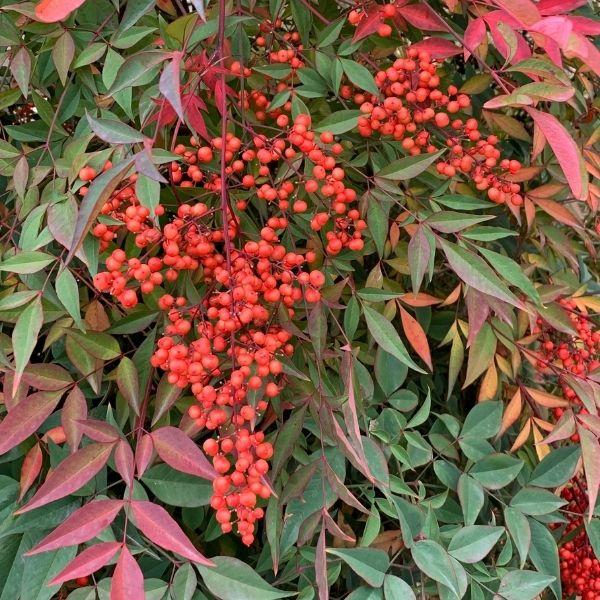
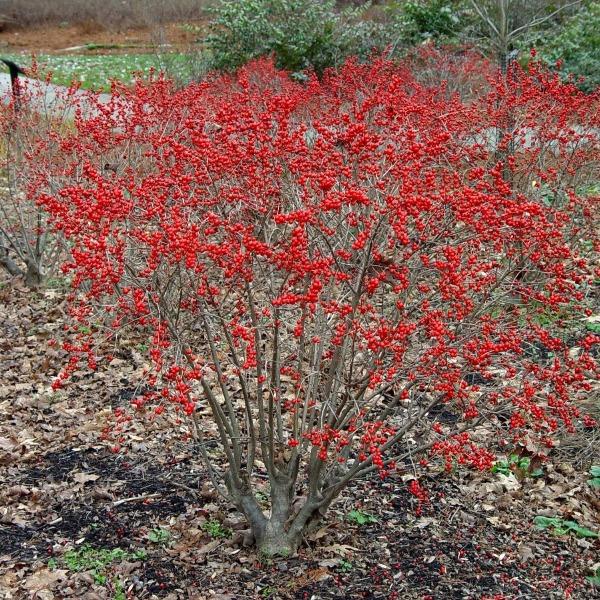
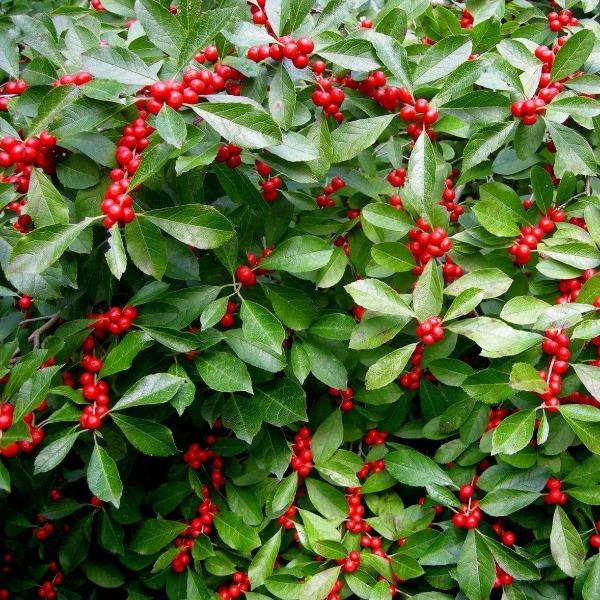
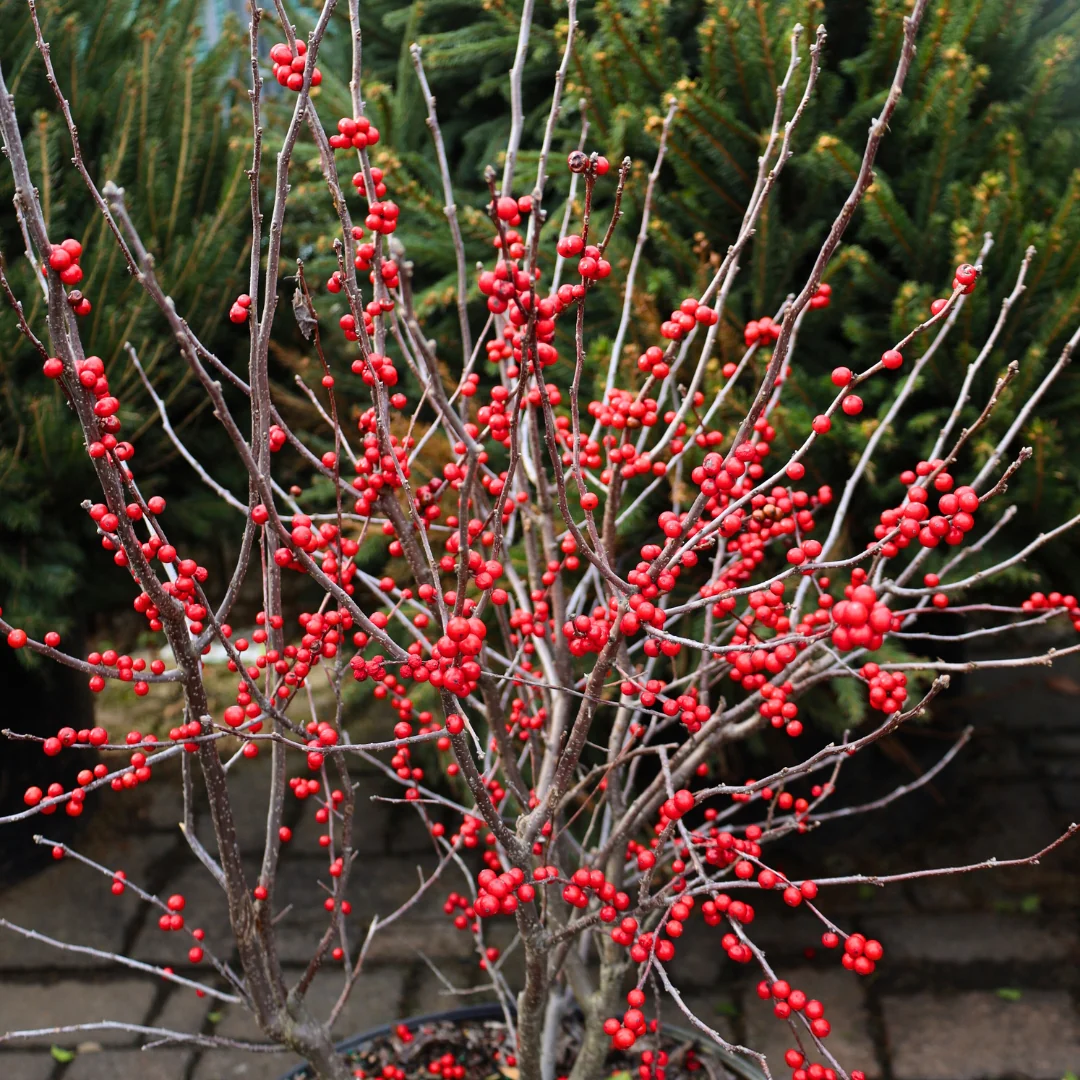
Winter Red Winterberry Holly is the classic “berries in winter” shrub. Leafless branches loaded with bright red fruit that looks incredible from late fall through the cold months. It’s the plant that makes winter landscapes feel intentional, not empty. Use it near entries, driveways, and windows where you’ll see the color daily, or mass it in a bed where the berry display becomes a true seasonal centerpiece.
Those berry-laden stems are also made for cutting. Clip a few branches for holiday arrangements, front-porch containers, and winter bouquets, and you’ll still have plenty of color left on the shrub. If your goal is winter interest that’s bold, photogenic, and genuinely useful, Winter Red delivers the kind of payoff you notice every time you come home.
A native shrub that brings birds, beauty, and real four-season value
Winterberry holly is a North American native, and Winter Red is prized for its heavy fruit set and strong landscape presence. In spring and summer, it’s a clean, green shrub that blends easily into mixed borders. In fall, the berries begin to color, and once leaves drop, the red fruit becomes the main show, exactly when your garden needs it most.
Wildlife value comes built in. Birds rely on berry shrubs through winter, and planting winterberry adds habitat and food in a way that feels natural along woodland edges, in native gardens, and in mixed shrub beds. It’s the kind of plant that looks beautiful while quietly doing something meaningful for the landscape.
Reliable berry production starts with one simple pairing
Winter Red is a female winterberry holly, which means it needs a compatible male pollinator nearby to produce berries. The easiest, most reliable match is Southern Gentleman winterberry holly planted within the same general area of the yard. With that pairing in place, you set yourself up for the heavy berry display people picture when they buy winterberry.
For the best berry set, give Winter Red plenty of sun (more sun generally means more fruit), and keep soil moisture consistent during establishment. Winterberry naturally likes moist conditions and can handle heavier soils as long as the site isn’t permanently flooded. When you combine the right pollinator with the right siting, Winter Red becomes a dependable “berries every year” shrub.
Easy care, smart spacing, and pruning that protects next winter’s show
Winter Red is low-maintenance once established, but two things matter most: spacing and pruning. Give it room to mature into a full shrub, and it will produce more flowering wood and more berries. Plant closer for a hedge effect, or give each plant space for a full, rounded specimen; either approach works when you choose spacing on purpose.
Pruning is simple: do it at the right time. Winterberry sets flower buds on the current season’s growth, so late-winter pruning is the standard approach: thin older stems, improve airflow, and encourage vigorous new shoots that will flower and fruit. A light, consistent routine keeps the shrub healthy and productive without sacrificing the berry display you’re growing it for.
Red berries that turn bare branches into winter décor
Winter Red Winterberry Holly is the classic “berries in winter” shrub. Leafless branches loaded with bright red fruit that looks incredible from late fall through the cold months. It’s the plant that makes winter landscapes feel intentional, not empty. Use it near entries, driveways, and windows where you’ll see the color daily, or mass it in a bed where the berry display becomes a true seasonal centerpiece.
Those berry-laden stems are also made for cutting. Clip a few branches for holiday arrangements, front-porch containers, and winter bouquets, and you’ll still have plenty of color left on the shrub. If your goal is winter interest that’s bold, photogenic, and genuinely useful, Winter Red delivers the kind of payoff you notice every time you come home.
A native shrub that brings birds, beauty, and real four-season value
Winterberry holly is a North American native, and Winter Red is prized for its heavy fruit set and strong landscape presence. In spring and summer, it’s a clean, green shrub that blends easily into mixed borders. In fall, the berries begin to color, and once leaves drop, the red fruit becomes the main show, exactly when your garden needs it most.
Wildlife value comes built in. Birds rely on berry shrubs through winter, and planting winterberry adds habitat and food in a way that feels natural along woodland edges, in native gardens, and in mixed shrub beds. It’s the kind of plant that looks beautiful while quietly doing something meaningful for the landscape.
Reliable berry production starts with one simple pairing
Winter Red is a female winterberry holly, which means it needs a compatible male pollinator nearby to produce berries. The easiest, most reliable match is Southern Gentleman winterberry holly planted within the same general area of the yard. With that pairing in place, you set yourself up for the heavy berry display people picture when they buy winterberry.
For the best berry set, give Winter Red plenty of sun (more sun generally means more fruit), and keep soil moisture consistent during establishment. Winterberry naturally likes moist conditions and can handle heavier soils as long as the site isn’t permanently flooded. When you combine the right pollinator with the right siting, Winter Red becomes a dependable “berries every year” shrub.
Easy care, smart spacing, and pruning that protects next winter’s show
Winter Red is low-maintenance once established, but two things matter most: spacing and pruning. Give it room to mature into a full shrub, and it will produce more flowering wood and more berries. Plant closer for a hedge effect, or give each plant space for a full, rounded specimen; either approach works when you choose spacing on purpose.
Pruning is simple: do it at the right time. Winterberry sets flower buds on the current season’s growth, so late-winter pruning is the standard approach: thin older stems, improve airflow, and encourage vigorous new shoots that will flower and fruit. A light, consistent routine keeps the shrub healthy and productive without sacrificing the berry display you’re growing it for.
Description
Red berries that turn bare branches into winter décor
Winter Red Winterberry Holly is the classic “berries in winter” shrub. Leafless branches loaded with bright red fruit that looks incredible from late fall through the cold months. It’s the plant that makes winter landscapes feel intentional, not empty. Use it near entries, driveways, and windows where you’ll see the color daily, or mass it in a bed where the berry display becomes a true seasonal centerpiece.
Those berry-laden stems are also made for cutting. Clip a few branches for holiday arrangements, front-porch containers, and winter bouquets, and you’ll still have plenty of color left on the shrub. If your goal is winter interest that’s bold, photogenic, and genuinely useful, Winter Red delivers the kind of payoff you notice every time you come home.
A native shrub that brings birds, beauty, and real four-season value
Winterberry holly is a North American native, and Winter Red is prized for its heavy fruit set and strong landscape presence. In spring and summer, it’s a clean, green shrub that blends easily into mixed borders. In fall, the berries begin to color, and once leaves drop, the red fruit becomes the main show, exactly when your garden needs it most.
Wildlife value comes built in. Birds rely on berry shrubs through winter, and planting winterberry adds habitat and food in a way that feels natural along woodland edges, in native gardens, and in mixed shrub beds. It’s the kind of plant that looks beautiful while quietly doing something meaningful for the landscape.
Reliable berry production starts with one simple pairing
Winter Red is a female winterberry holly, which means it needs a compatible male pollinator nearby to produce berries. The easiest, most reliable match is Southern Gentleman winterberry holly planted within the same general area of the yard. With that pairing in place, you set yourself up for the heavy berry display people picture when they buy winterberry.
For the best berry set, give Winter Red plenty of sun (more sun generally means more fruit), and keep soil moisture consistent during establishment. Winterberry naturally likes moist conditions and can handle heavier soils as long as the site isn’t permanently flooded. When you combine the right pollinator with the right siting, Winter Red becomes a dependable “berries every year” shrub.
Easy care, smart spacing, and pruning that protects next winter’s show
Winter Red is low-maintenance once established, but two things matter most: spacing and pruning. Give it room to mature into a full shrub, and it will produce more flowering wood and more berries. Plant closer for a hedge effect, or give each plant space for a full, rounded specimen; either approach works when you choose spacing on purpose.
Pruning is simple: do it at the right time. Winterberry sets flower buds on the current season’s growth, so late-winter pruning is the standard approach: thin older stems, improve airflow, and encourage vigorous new shoots that will flower and fruit. A light, consistent routine keeps the shrub healthy and productive without sacrificing the berry display you’re growing it for.