Hubricht’s Bluestar (Amsonia hubrichtii)
Pale Blue Spring Flowers on a Long-Lived Native Perennial
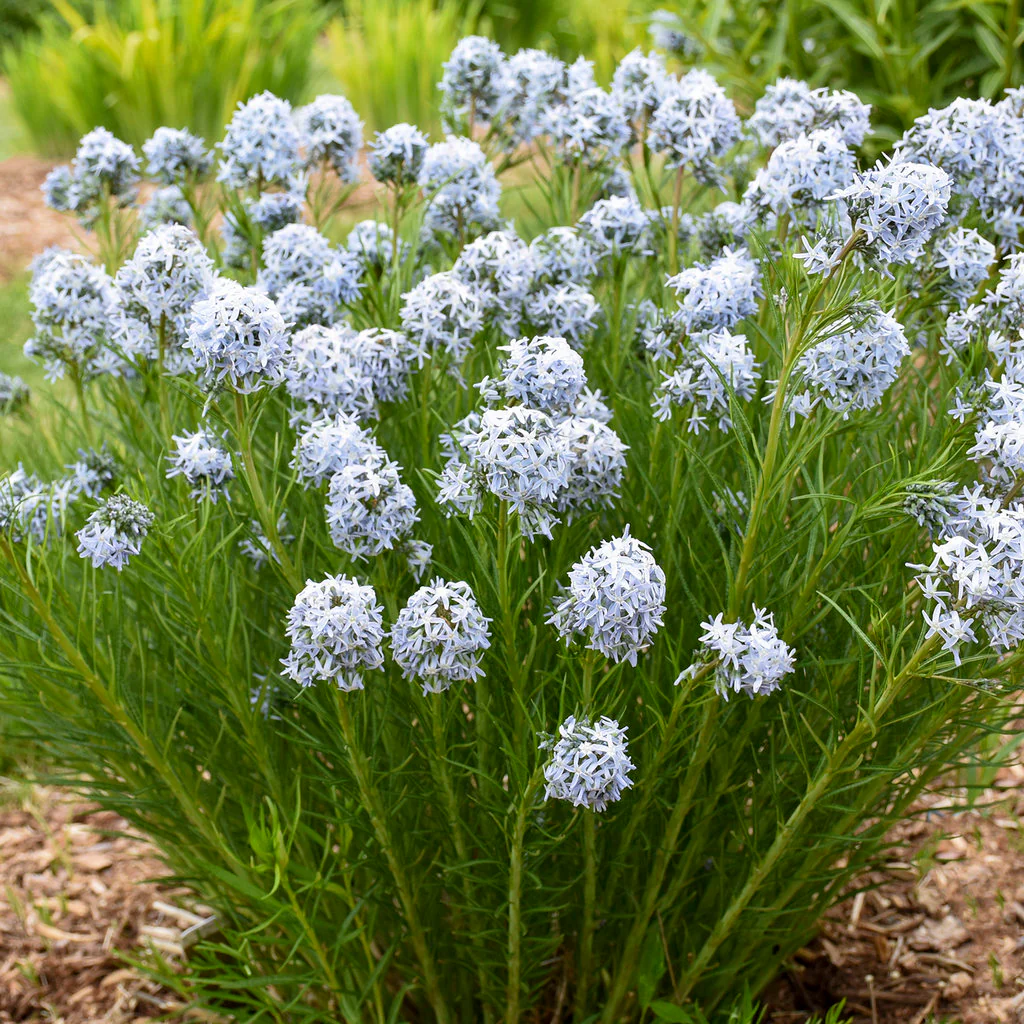
Hubricht’s Bluestar is a long-lived native perennial grown for its pale blue star-shaped flowers, fine threadlike foliage, and brilliant golden fall color. Also known as Threadleaf Bluestar or Arkansas Bluestar, Amsonia hubrichtii brings a soft, airy texture to sunny borders while remaining durable, low-maintenance, and easy to combine with other perennials.
In mid to late spring, clusters of pale blue flowers appear at the tips of upright stems. The flowers create a delicate seasonal show that pairs beautifully with spring-blooming perennials, early pollinator plants, and fresh emerging foliage in mixed borders and native gardens.
Fine Feathery Foliage for Summer Texture
After the flowers fade, Hubricht’s Bluestar continues to shine with narrow, threadlike green leaves that give the plant a soft, billowy appearance. This fine foliage is the key feature that separates it from many broader-leaf bluestar species and makes it especially useful in designed perennial plantings.
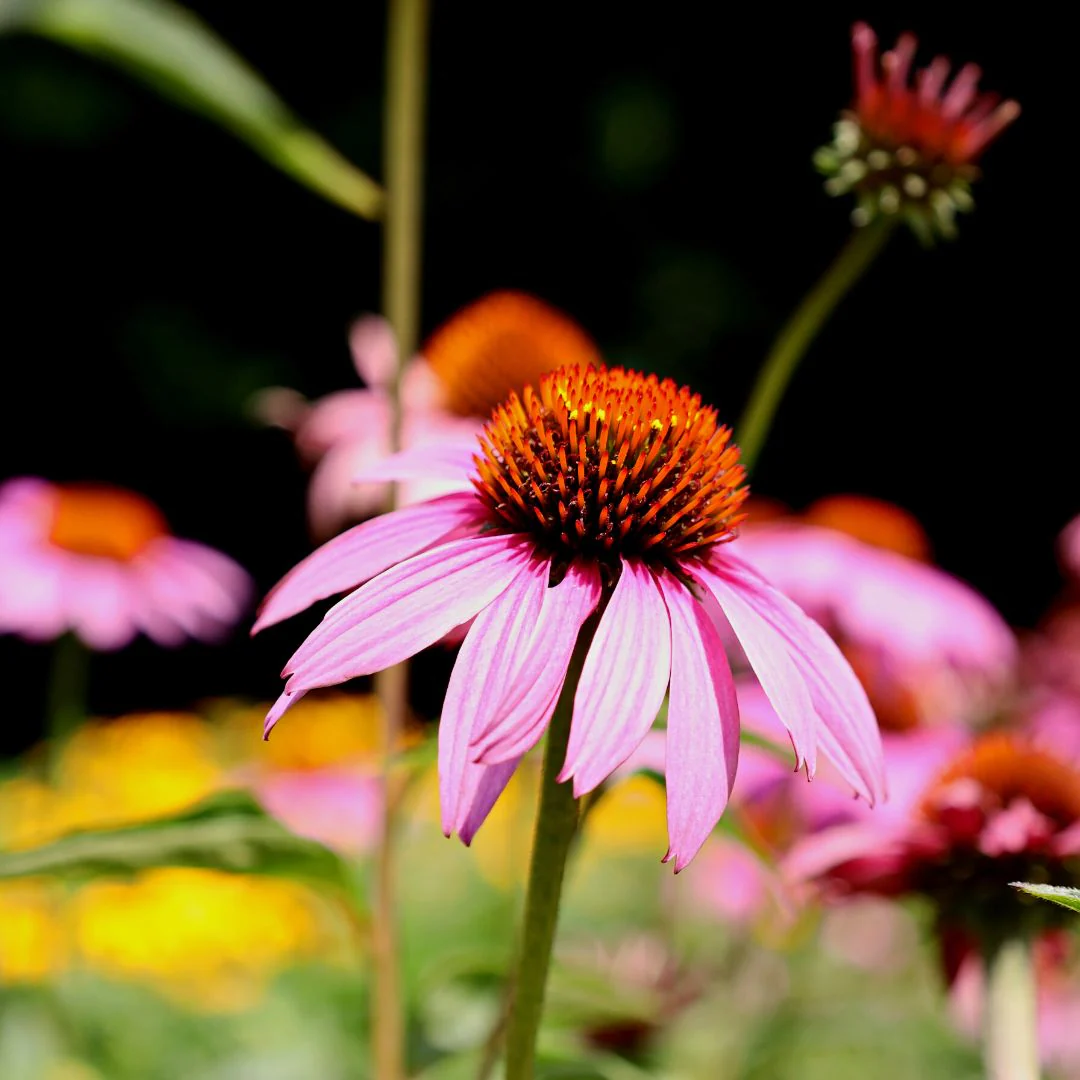
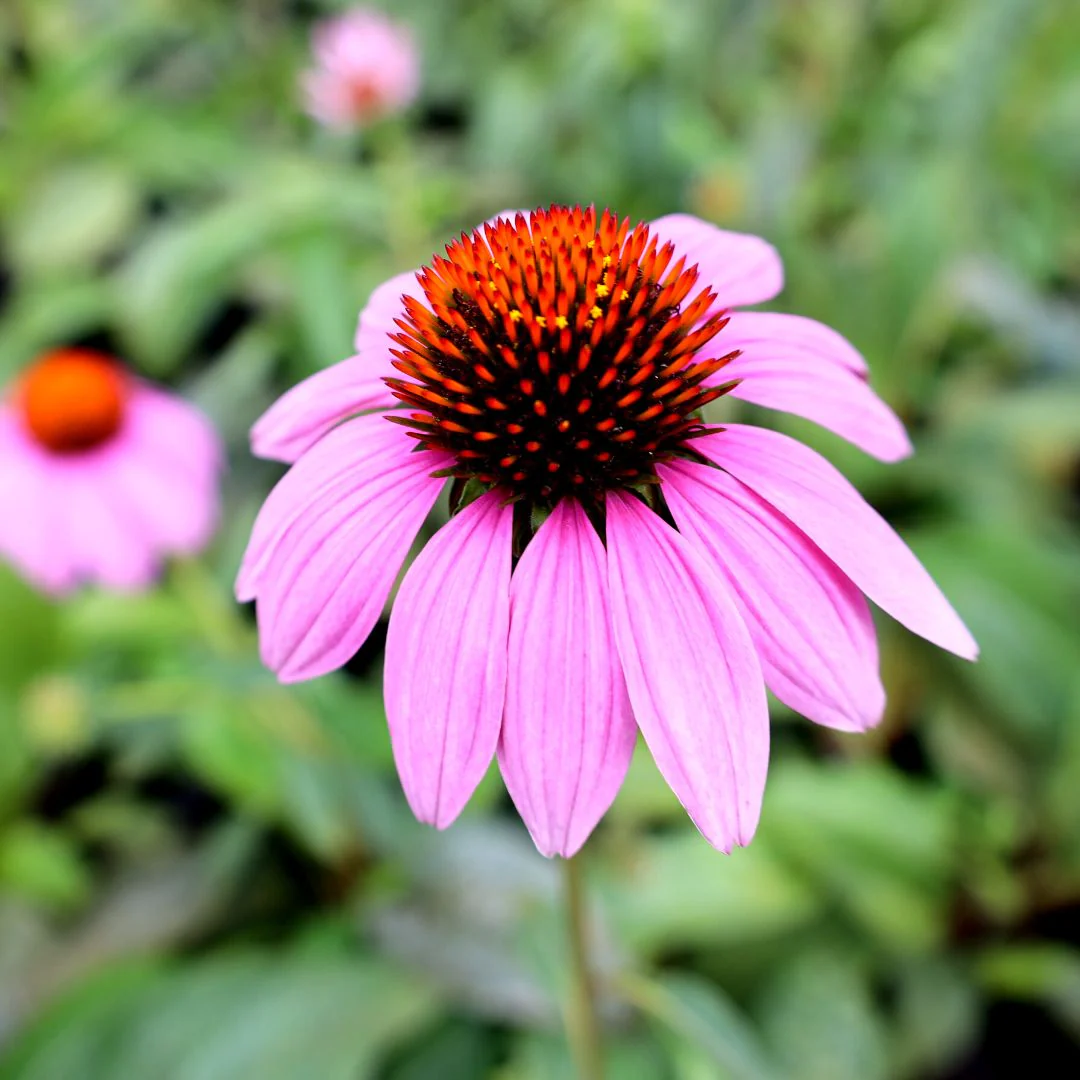
The plant forms an attractive, rounded clump over time, adding movement and texture without becoming coarse or overpowering. Use it to soften bolder plants like coneflowers, black-eyed Susans, ornamental grasses, sedum, baptisia, and shrub roses.
Brilliant Golden Fall Color
Hubricht’s Bluestar is one of the best perennials for fall foliage color. As temperatures cool, the fine green leaves turn bright yellow to golden orange, creating a glowing autumn display that can rival small shrubs in seasonal impact.
For the strongest fall color, plant Hubricht’s Bluestar in full sun. It can grow in part shade, but flowering and fall color are usually best in brighter locations. Massing several plants together creates an especially strong late-season effect in borders, meadow gardens, and native plantings.
Deer Resistant, Pollinator Friendly, and Low Maintenance
Hubricht’s Bluestar is generally deer-resistant and low-maintenance once established. The foliage contains milky sap, which helps make the plant less appealing to browsing deer and rabbits than many softer perennials.
The spring flowers support pollinators, while the dense summer foliage provides cover and structure in the garden. This is a strong choice for gardeners who want a native perennial that is beautiful, useful, and not overly demanding.
Easy Care in Sun to Part Shade
Plant Hubricht’s Bluestar in full sun to part shade with average to moist, well-drained soil. It adapts to a range of soil conditions and becomes drought-tolerant once established, though young plants benefit from regular watering while roots develop.
Maintenance is simple. Cut back old stems in late winter or early spring, before new growth emerges. Leaving some hollow stems standing through winter can provide nesting habitat for native bees, and then the remaining stems can be shortened in spring.
Pale Blue Spring Flowers on a Long-Lived Native Perennial
Hubricht’s Bluestar is a long-lived native perennial grown for its pale blue star-shaped flowers, fine threadlike foliage, and brilliant golden fall color. Also known as Threadleaf Bluestar or Arkansas Bluestar, Amsonia hubrichtii brings a soft, airy texture to sunny borders while remaining durable, low-maintenance, and easy to combine with other perennials.
In mid to late spring, clusters of pale blue flowers appear at the tips of upright stems. The flowers create a delicate seasonal show that pairs beautifully with spring-blooming perennials, early pollinator plants, and fresh emerging foliage in mixed borders and native gardens.
Fine Feathery Foliage for Summer Texture
After the flowers fade, Hubricht’s Bluestar continues to shine with narrow, threadlike green leaves that give the plant a soft, billowy appearance. This fine foliage is the key feature that separates it from many broader-leaf bluestar species and makes it especially useful in designed perennial plantings.
The plant forms an attractive, rounded clump over time, adding movement and texture without becoming coarse or overpowering. Use it to soften bolder plants like coneflowers, black-eyed Susans, ornamental grasses, sedum, baptisia, and shrub roses.
Brilliant Golden Fall Color
Hubricht’s Bluestar is one of the best perennials for fall foliage color. As temperatures cool, the fine green leaves turn bright yellow to golden orange, creating a glowing autumn display that can rival small shrubs in seasonal impact.
For the strongest fall color, plant Hubricht’s Bluestar in full sun. It can grow in part shade, but flowering and fall color are usually best in brighter locations. Massing several plants together creates an especially strong late-season effect in borders, meadow gardens, and native plantings.
Deer Resistant, Pollinator Friendly, and Low Maintenance
Hubricht’s Bluestar is generally deer-resistant and low-maintenance once established. The foliage contains milky sap, which helps make the plant less appealing to browsing deer and rabbits than many softer perennials.
The spring flowers support pollinators, while the dense summer foliage provides cover and structure in the garden. This is a strong choice for gardeners who want a native perennial that is beautiful, useful, and not overly demanding.
Easy Care in Sun to Part Shade
Plant Hubricht’s Bluestar in full sun to part shade with average to moist, well-drained soil. It adapts to a range of soil conditions and becomes drought-tolerant once established, though young plants benefit from regular watering while roots develop.
Maintenance is simple. Cut back old stems in late winter or early spring, before new growth emerges. Leaving some hollow stems standing through winter can provide nesting habitat for native bees, and then the remaining stems can be shortened in spring.
Description
Pale Blue Spring Flowers on a Long-Lived Native Perennial
Hubricht’s Bluestar is a long-lived native perennial grown for its pale blue star-shaped flowers, fine threadlike foliage, and brilliant golden fall color. Also known as Threadleaf Bluestar or Arkansas Bluestar, Amsonia hubrichtii brings a soft, airy texture to sunny borders while remaining durable, low-maintenance, and easy to combine with other perennials.
In mid to late spring, clusters of pale blue flowers appear at the tips of upright stems. The flowers create a delicate seasonal show that pairs beautifully with spring-blooming perennials, early pollinator plants, and fresh emerging foliage in mixed borders and native gardens.
Fine Feathery Foliage for Summer Texture
After the flowers fade, Hubricht’s Bluestar continues to shine with narrow, threadlike green leaves that give the plant a soft, billowy appearance. This fine foliage is the key feature that separates it from many broader-leaf bluestar species and makes it especially useful in designed perennial plantings.
The plant forms an attractive, rounded clump over time, adding movement and texture without becoming coarse or overpowering. Use it to soften bolder plants like coneflowers, black-eyed Susans, ornamental grasses, sedum, baptisia, and shrub roses.
Brilliant Golden Fall Color
Hubricht’s Bluestar is one of the best perennials for fall foliage color. As temperatures cool, the fine green leaves turn bright yellow to golden orange, creating a glowing autumn display that can rival small shrubs in seasonal impact.
For the strongest fall color, plant Hubricht’s Bluestar in full sun. It can grow in part shade, but flowering and fall color are usually best in brighter locations. Massing several plants together creates an especially strong late-season effect in borders, meadow gardens, and native plantings.
Deer Resistant, Pollinator Friendly, and Low Maintenance
Hubricht’s Bluestar is generally deer-resistant and low-maintenance once established. The foliage contains milky sap, which helps make the plant less appealing to browsing deer and rabbits than many softer perennials.
The spring flowers support pollinators, while the dense summer foliage provides cover and structure in the garden. This is a strong choice for gardeners who want a native perennial that is beautiful, useful, and not overly demanding.
Easy Care in Sun to Part Shade
Plant Hubricht’s Bluestar in full sun to part shade with average to moist, well-drained soil. It adapts to a range of soil conditions and becomes drought-tolerant once established, though young plants benefit from regular watering while roots develop.
Maintenance is simple. Cut back old stems in late winter or early spring, before new growth emerges. Leaving some hollow stems standing through winter can provide nesting habitat for native bees, and then the remaining stems can be shortened in spring.