Blue-Eyed Grass
Blue Flowers with Bright Yellow Centers
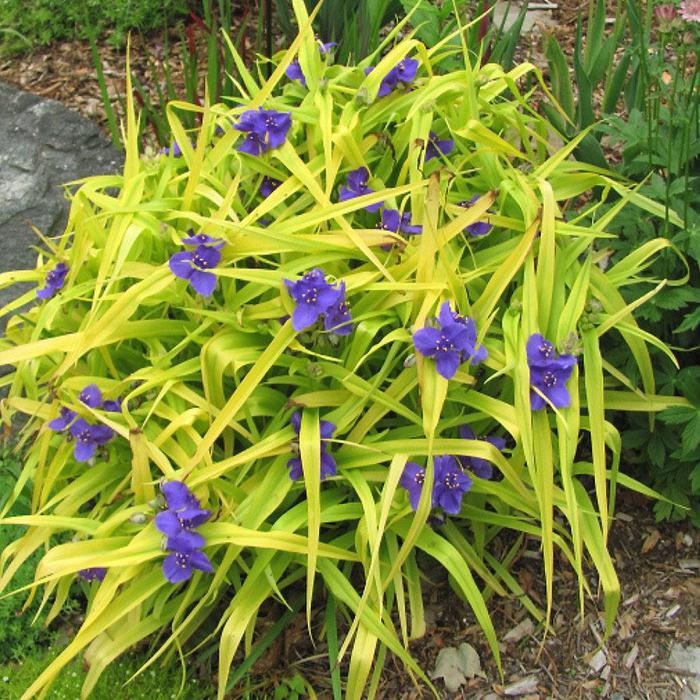
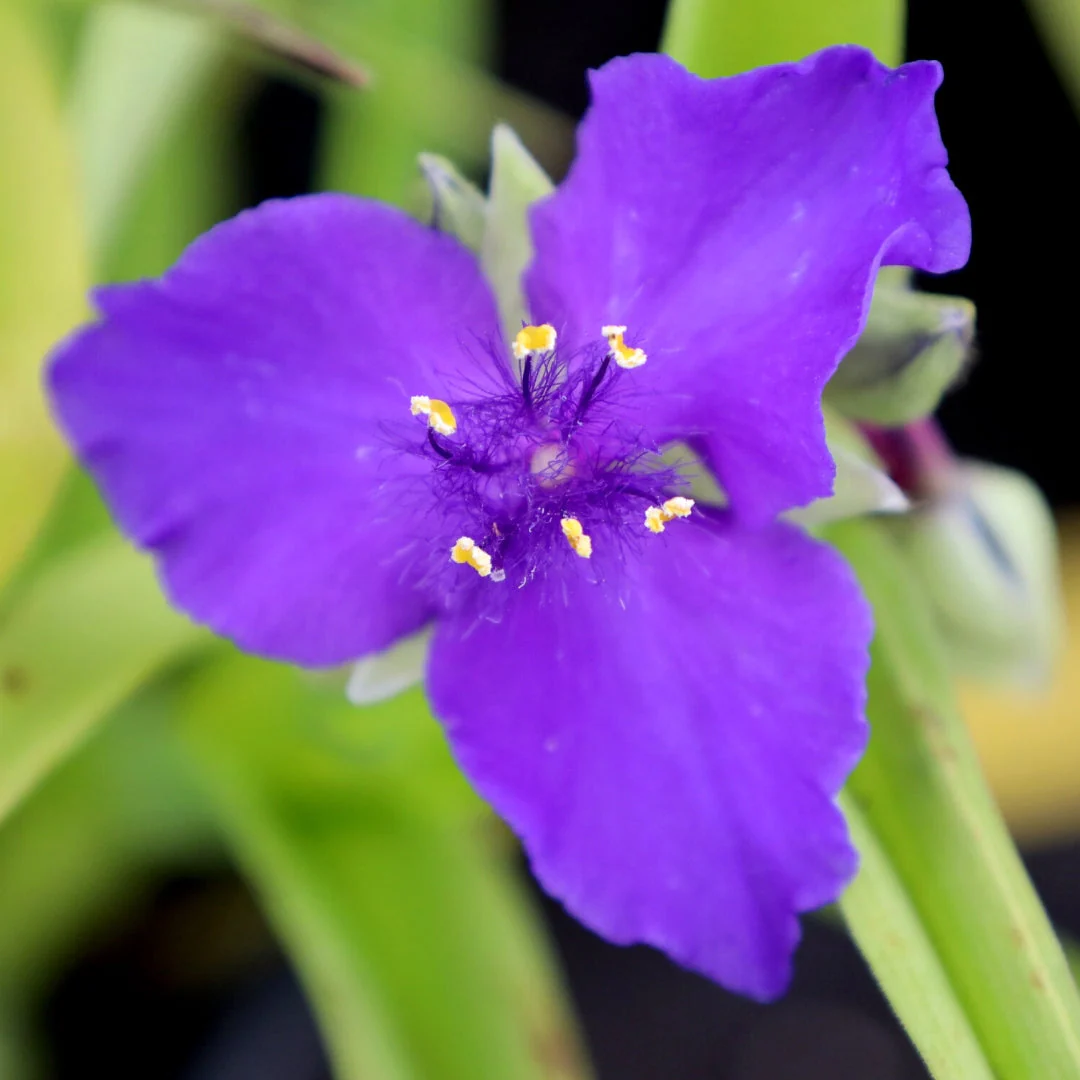
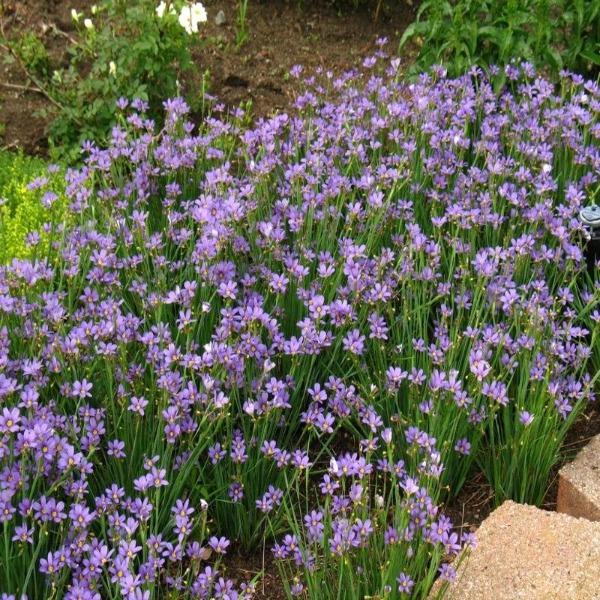
Blue-Eyed Grass is a charming native perennial grown for its narrow grass-like foliage and starry blue flowers with bright yellow centers. In spring to early summer, the small blooms rise above tidy clumps of slender green leaves, adding a fresh pop of color to sunny borders, meadow plantings, rain gardens, and naturalized beds.
Despite its common name, Sisyrinchium angustifolium is not a true grass. It belongs to the iris family, which explains its delicate flower shape and upright clumping habit. This makes it a great choice for gardeners who like the soft texture of grasses but also want colorful blooms and pollinator value in a compact perennial.
Spring-to-Early-Summer Color with Fine Foliage Texture
Blue-Eyed Grass typically blooms in late spring to early summer, with blue to violet-blue flowers that open during bright conditions and stand neatly above the foliage. The yellow “eye” at the center gives each bloom a cheerful, high-contrast look that feels natural and understated rather than flashy.
The foliage remains useful after bloom, forming a narrow, upright green clump that blends easily with other native perennials. Its fine texture makes it an excellent partner for broader-leaved plants, low groundcovers, sedges, rushes, and meadow-style flowers. In the right setting, it creates a soft, natural look without overwhelming nearby plants.
Perfect for Rain Gardens, Meadow Edges, and Border Fronts
Blue-Eyed Grass is especially useful in moist, sunny to partly shaded sites. Plant it near the front of native borders, along meadow edges, in pollinator gardens, in rain gardens, beside paths, or in naturalized areas where its small flowers can be appreciated up close. It also works well in mixed plantings where a shorter, finer-textured perennial is needed.
This plant looks best when planted in groups or drifts. A single plant can be subtle, while a small cluster creates a stronger blue flower display and more noticeable foliage texture. It is a smart choice for gardeners who want a native perennial that feels light, natural, and easy to tuck into smaller spaces.
Pollinator Friendly with Practical Wildlife and Moisture Value
Blue-Eyed Grass supports pollinators, including bees and other beneficial insects, during its spring to early summer bloom season. Its flowers help add diversity to native plantings and provide ecological value while still fitting neatly into smaller garden designs.
This plant prefers average to moist soil and should not be treated as a dry-site ornamental grass. It can tolerate some short dry periods once established, but it performs best where moisture is reasonably consistent. Deer resistance is not always listed consistently across references, so it is best described as a lower-risk native perennial rather than a deer-proof plant.
Easy Care in Sun to Part Shade with Average Moisture
Plant Blue-Eyed Grass in full sun to part shade with average to moist, well-drained soil. It thrives in moist meadows, open woods, streamside edges, and damp garden situations, but it does not need to sit in standing water. A slightly acidic to neutral soil is a good fit for healthy growth.
Water regularly after planting until the roots establish, especially during warm or dry weather. Once established, keep the soil from drying out for long stretches. Cut back tired foliage in late winter or early spring before new growth begins, and divide clumps if they become crowded or need refreshing.
Blue Flowers with Bright Yellow Centers
Blue-Eyed Grass is a charming native perennial grown for its narrow grass-like foliage and starry blue flowers with bright yellow centers. In spring to early summer, the small blooms rise above tidy clumps of slender green leaves, adding a fresh pop of color to sunny borders, meadow plantings, rain gardens, and naturalized beds.
Despite its common name, Sisyrinchium angustifolium is not a true grass. It belongs to the iris family, which explains its delicate flower shape and upright clumping habit. This makes it a great choice for gardeners who like the soft texture of grasses but also want colorful blooms and pollinator value in a compact perennial.
Spring-to-Early-Summer Color with Fine Foliage Texture
Blue-Eyed Grass typically blooms in late spring to early summer, with blue to violet-blue flowers that open during bright conditions and stand neatly above the foliage. The yellow “eye” at the center gives each bloom a cheerful, high-contrast look that feels natural and understated rather than flashy.
The foliage remains useful after bloom, forming a narrow, upright green clump that blends easily with other native perennials. Its fine texture makes it an excellent partner for broader-leaved plants, low groundcovers, sedges, rushes, and meadow-style flowers. In the right setting, it creates a soft, natural look without overwhelming nearby plants.
Perfect for Rain Gardens, Meadow Edges, and Border Fronts
Blue-Eyed Grass is especially useful in moist, sunny to partly shaded sites. Plant it near the front of native borders, along meadow edges, in pollinator gardens, in rain gardens, beside paths, or in naturalized areas where its small flowers can be appreciated up close. It also works well in mixed plantings where a shorter, finer-textured perennial is needed.
This plant looks best when planted in groups or drifts. A single plant can be subtle, while a small cluster creates a stronger blue flower display and more noticeable foliage texture. It is a smart choice for gardeners who want a native perennial that feels light, natural, and easy to tuck into smaller spaces.
Pollinator Friendly with Practical Wildlife and Moisture Value
Blue-Eyed Grass supports pollinators, including bees and other beneficial insects, during its spring to early summer bloom season. Its flowers help add diversity to native plantings and provide ecological value while still fitting neatly into smaller garden designs.
This plant prefers average to moist soil and should not be treated as a dry-site ornamental grass. It can tolerate some short dry periods once established, but it performs best where moisture is reasonably consistent. Deer resistance is not always listed consistently across references, so it is best described as a lower-risk native perennial rather than a deer-proof plant.
Easy Care in Sun to Part Shade with Average Moisture
Plant Blue-Eyed Grass in full sun to part shade with average to moist, well-drained soil. It thrives in moist meadows, open woods, streamside edges, and damp garden situations, but it does not need to sit in standing water. A slightly acidic to neutral soil is a good fit for healthy growth.
Water regularly after planting until the roots establish, especially during warm or dry weather. Once established, keep the soil from drying out for long stretches. Cut back tired foliage in late winter or early spring before new growth begins, and divide clumps if they become crowded or need refreshing.
Description
Blue Flowers with Bright Yellow Centers
Blue-Eyed Grass is a charming native perennial grown for its narrow grass-like foliage and starry blue flowers with bright yellow centers. In spring to early summer, the small blooms rise above tidy clumps of slender green leaves, adding a fresh pop of color to sunny borders, meadow plantings, rain gardens, and naturalized beds.
Despite its common name, Sisyrinchium angustifolium is not a true grass. It belongs to the iris family, which explains its delicate flower shape and upright clumping habit. This makes it a great choice for gardeners who like the soft texture of grasses but also want colorful blooms and pollinator value in a compact perennial.
Spring-to-Early-Summer Color with Fine Foliage Texture
Blue-Eyed Grass typically blooms in late spring to early summer, with blue to violet-blue flowers that open during bright conditions and stand neatly above the foliage. The yellow “eye” at the center gives each bloom a cheerful, high-contrast look that feels natural and understated rather than flashy.
The foliage remains useful after bloom, forming a narrow, upright green clump that blends easily with other native perennials. Its fine texture makes it an excellent partner for broader-leaved plants, low groundcovers, sedges, rushes, and meadow-style flowers. In the right setting, it creates a soft, natural look without overwhelming nearby plants.
Perfect for Rain Gardens, Meadow Edges, and Border Fronts
Blue-Eyed Grass is especially useful in moist, sunny to partly shaded sites. Plant it near the front of native borders, along meadow edges, in pollinator gardens, in rain gardens, beside paths, or in naturalized areas where its small flowers can be appreciated up close. It also works well in mixed plantings where a shorter, finer-textured perennial is needed.
This plant looks best when planted in groups or drifts. A single plant can be subtle, while a small cluster creates a stronger blue flower display and more noticeable foliage texture. It is a smart choice for gardeners who want a native perennial that feels light, natural, and easy to tuck into smaller spaces.
Pollinator Friendly with Practical Wildlife and Moisture Value
Blue-Eyed Grass supports pollinators, including bees and other beneficial insects, during its spring to early summer bloom season. Its flowers help add diversity to native plantings and provide ecological value while still fitting neatly into smaller garden designs.
This plant prefers average to moist soil and should not be treated as a dry-site ornamental grass. It can tolerate some short dry periods once established, but it performs best where moisture is reasonably consistent. Deer resistance is not always listed consistently across references, so it is best described as a lower-risk native perennial rather than a deer-proof plant.
Easy Care in Sun to Part Shade with Average Moisture
Plant Blue-Eyed Grass in full sun to part shade with average to moist, well-drained soil. It thrives in moist meadows, open woods, streamside edges, and damp garden situations, but it does not need to sit in standing water. A slightly acidic to neutral soil is a good fit for healthy growth.
Water regularly after planting until the roots establish, especially during warm or dry weather. Once established, keep the soil from drying out for long stretches. Cut back tired foliage in late winter or early spring before new growth begins, and divide clumps if they become crowded or need refreshing.