Anna’s Red Hellebore
Deep Red Blooms When The Garden Needs Them Most
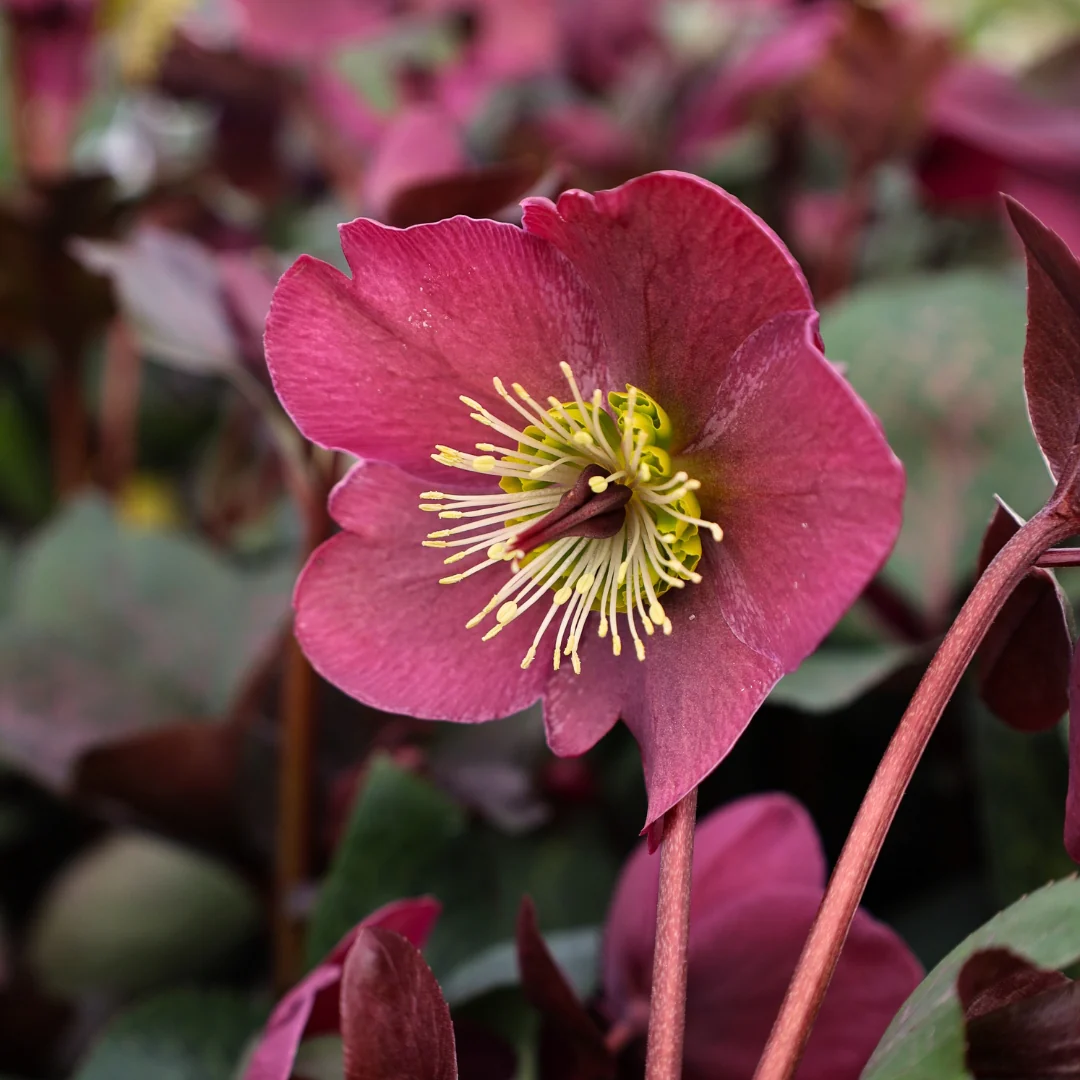
Anna’s Red Hellebore is the shade perennial that shows up early, often in late winter, when most landscapes are still quiet. The flowers open in rich, deep red tones that mature toward burgundy, carried above the foliage on sturdy stems so the color reads clearly from a distance. It’s an instant mood-lifter in the cold season, bringing real flower power to beds, borders, and containers when you’re usually staring at mulch and bare branches.
Those long-lasting blooms also make Anna’s Red a “bridge plant” between winter and spring. Tuck it near an entry, along a walkway, or beside a patio where you’ll actually see the flowers up close. In a woodland garden, it’s a natural partner to early bulbs and spring ephemerals, adding bold color and structure while everything else is still waking up.
Evergreen Texture And Four-Season Structure In The Shade
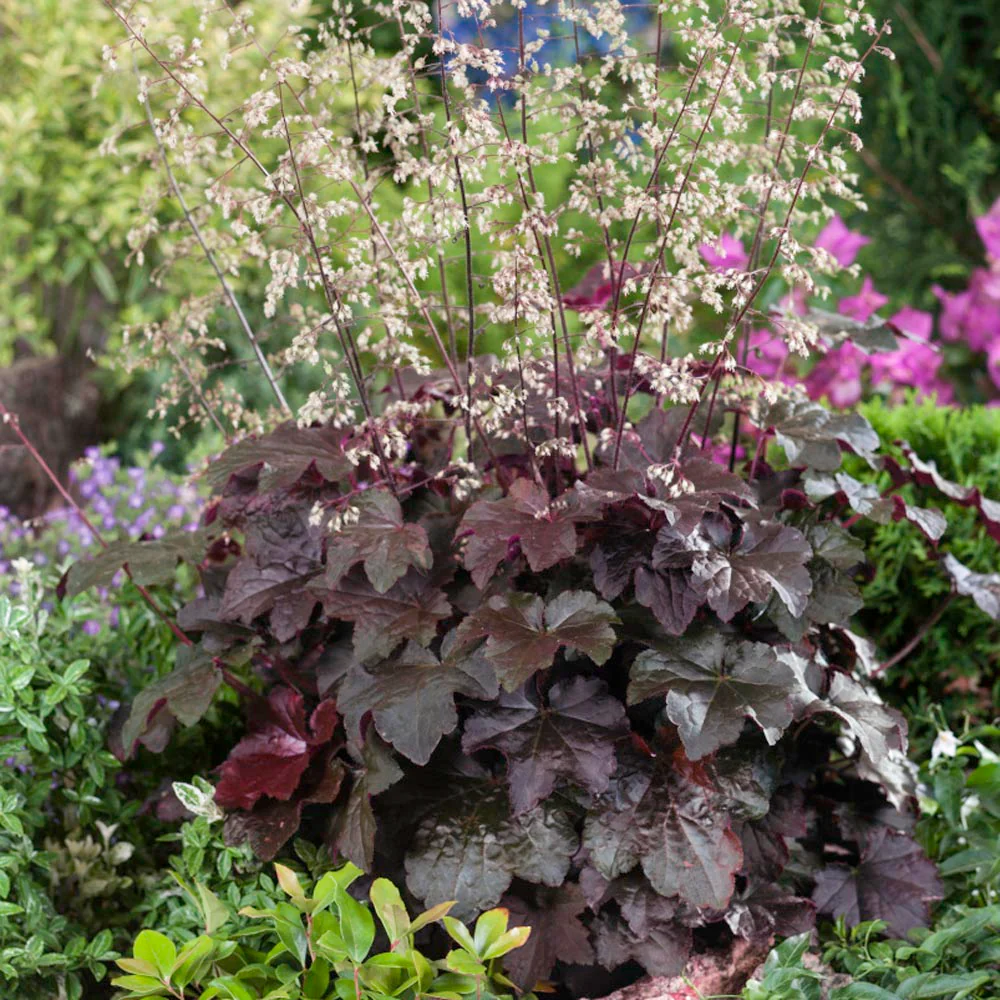
Even after the blooms fade, Anna’s Red keeps earning its space. The leathery evergreen leaves form a dense, tidy clump that looks intentional all year, especially in shaded beds where many perennials disappear. The foliage is a standout feature on its own, with a glossy finish and attractive marbling that adds texture and contrast next to hostas, ferns, heucheras, and shade shrubs.
Because it stays compact and mound-forming, it fits beautifully at the front of shaded borders and under the “high canopy” of deciduous trees. It also plays well in mixed plantings, never messy, never floppy, and rarely needing rescue staking. If you want a shade garden that looks designed in every season, hellebores like Anna’s Red are among the most reliable building blocks.
Shade-Loving Performance With Tough, Low-Fuss Reliability
Anna’s Red thrives in partial to full shade, which makes it a go-to for those “nothing wants to bloom here” spaces. Give it rich, well-drained soil and consistent moisture while it establishes, and it settles in as a remarkably durable perennial. Once rooted in, it becomes moderately drought-tolerant, and its thick foliage helps it withstand the typical ups and downs of real landscapes.
It’s also a strong pick for deer-prone areas. Like most hellebores, the foliage is tough and unappealing to browsing, which means the plant is more likely to look as good in March as it did when you planted it. For homeowners who want winter flowers without the worry, Anna’s Red checks the boxes: shade-friendly, low maintenance, and consistently handsome.
A Perfect Fit For Containers, Woodland Edges, And Polished Borders
Anna’s Red is especially good in containers because it stays compact, looks full at the base, and blooms when pots are usually bare. Use it as a winter-and-early-spring focal point in shaded entries, then let the evergreen foliage carry the container through the rest of the season. In the ground, it shines along woodland edges, beneath trees, and in foundation beds wherever evergreen structure matters.
The secret to making it look “high-end” is simple placement and spacing. Plant it where you can enjoy the flowers, and give each clump room to mature into a dense mound. With a quick late-winter cleanup of older leaves, the blooms stand out even more, and the whole plant looks freshly groomed—like a designer perennial that never needs constant attention.
Deep Red Blooms When The Garden Needs Them Most
Anna’s Red Hellebore is the shade perennial that shows up early, often in late winter, when most landscapes are still quiet. The flowers open in rich, deep red tones that mature toward burgundy, carried above the foliage on sturdy stems so the color reads clearly from a distance. It’s an instant mood-lifter in the cold season, bringing real flower power to beds, borders, and containers when you’re usually staring at mulch and bare branches.
Those long-lasting blooms also make Anna’s Red a “bridge plant” between winter and spring. Tuck it near an entry, along a walkway, or beside a patio where you’ll actually see the flowers up close. In a woodland garden, it’s a natural partner to early bulbs and spring ephemerals, adding bold color and structure while everything else is still waking up.
Evergreen Texture And Four-Season Structure In The Shade
Even after the blooms fade, Anna’s Red keeps earning its space. The leathery evergreen leaves form a dense, tidy clump that looks intentional all year, especially in shaded beds where many perennials disappear. The foliage is a standout feature on its own, with a glossy finish and attractive marbling that adds texture and contrast next to hostas, ferns, heucheras, and shade shrubs.
Because it stays compact and mound-forming, it fits beautifully at the front of shaded borders and under the “high canopy” of deciduous trees. It also plays well in mixed plantings, never messy, never floppy, and rarely needing rescue staking. If you want a shade garden that looks designed in every season, hellebores like Anna’s Red are among the most reliable building blocks.
Shade-Loving Performance With Tough, Low-Fuss Reliability
Anna’s Red thrives in partial to full shade, which makes it a go-to for those “nothing wants to bloom here” spaces. Give it rich, well-drained soil and consistent moisture while it establishes, and it settles in as a remarkably durable perennial. Once rooted in, it becomes moderately drought-tolerant, and its thick foliage helps it withstand the typical ups and downs of real landscapes.
It’s also a strong pick for deer-prone areas. Like most hellebores, the foliage is tough and unappealing to browsing, which means the plant is more likely to look as good in March as it did when you planted it. For homeowners who want winter flowers without the worry, Anna’s Red checks the boxes: shade-friendly, low maintenance, and consistently handsome.
A Perfect Fit For Containers, Woodland Edges, And Polished Borders
Anna’s Red is especially good in containers because it stays compact, looks full at the base, and blooms when pots are usually bare. Use it as a winter-and-early-spring focal point in shaded entries, then let the evergreen foliage carry the container through the rest of the season. In the ground, it shines along woodland edges, beneath trees, and in foundation beds wherever evergreen structure matters.
The secret to making it look “high-end” is simple placement and spacing. Plant it where you can enjoy the flowers, and give each clump room to mature into a dense mound. With a quick late-winter cleanup of older leaves, the blooms stand out even more, and the whole plant looks freshly groomed—like a designer perennial that never needs constant attention.
Original: $64.95
-70%$64.95
$19.48Description
Deep Red Blooms When The Garden Needs Them Most
Anna’s Red Hellebore is the shade perennial that shows up early, often in late winter, when most landscapes are still quiet. The flowers open in rich, deep red tones that mature toward burgundy, carried above the foliage on sturdy stems so the color reads clearly from a distance. It’s an instant mood-lifter in the cold season, bringing real flower power to beds, borders, and containers when you’re usually staring at mulch and bare branches.
Those long-lasting blooms also make Anna’s Red a “bridge plant” between winter and spring. Tuck it near an entry, along a walkway, or beside a patio where you’ll actually see the flowers up close. In a woodland garden, it’s a natural partner to early bulbs and spring ephemerals, adding bold color and structure while everything else is still waking up.
Evergreen Texture And Four-Season Structure In The Shade
Even after the blooms fade, Anna’s Red keeps earning its space. The leathery evergreen leaves form a dense, tidy clump that looks intentional all year, especially in shaded beds where many perennials disappear. The foliage is a standout feature on its own, with a glossy finish and attractive marbling that adds texture and contrast next to hostas, ferns, heucheras, and shade shrubs.
Because it stays compact and mound-forming, it fits beautifully at the front of shaded borders and under the “high canopy” of deciduous trees. It also plays well in mixed plantings, never messy, never floppy, and rarely needing rescue staking. If you want a shade garden that looks designed in every season, hellebores like Anna’s Red are among the most reliable building blocks.
Shade-Loving Performance With Tough, Low-Fuss Reliability
Anna’s Red thrives in partial to full shade, which makes it a go-to for those “nothing wants to bloom here” spaces. Give it rich, well-drained soil and consistent moisture while it establishes, and it settles in as a remarkably durable perennial. Once rooted in, it becomes moderately drought-tolerant, and its thick foliage helps it withstand the typical ups and downs of real landscapes.
It’s also a strong pick for deer-prone areas. Like most hellebores, the foliage is tough and unappealing to browsing, which means the plant is more likely to look as good in March as it did when you planted it. For homeowners who want winter flowers without the worry, Anna’s Red checks the boxes: shade-friendly, low maintenance, and consistently handsome.
A Perfect Fit For Containers, Woodland Edges, And Polished Borders
Anna’s Red is especially good in containers because it stays compact, looks full at the base, and blooms when pots are usually bare. Use it as a winter-and-early-spring focal point in shaded entries, then let the evergreen foliage carry the container through the rest of the season. In the ground, it shines along woodland edges, beneath trees, and in foundation beds wherever evergreen structure matters.
The secret to making it look “high-end” is simple placement and spacing. Plant it where you can enjoy the flowers, and give each clump room to mature into a dense mound. With a quick late-winter cleanup of older leaves, the blooms stand out even more, and the whole plant looks freshly groomed—like a designer perennial that never needs constant attention.