
Sandy Shores Hellebore
Warm Apricot Blooms That Brighten Late Winter Shade
Sandy Shores Hellebore brings a soft, sunlit glow to the shade garden when you need it most. Blooms typically begin in late winter and carry into early spring, with large single flowers in pale apricot tones that feel warm and inviting in cold-season landscapes. Each bloom has extra character up close, with a burgundy flare near the center and subtle pink edging that adds depth without looking busy.
The real magic is how long the flowers hold. Hellebore blooms don’t “flash and fade” like many early flowers, so you get weeks of color that stays attractive through temperature swings. Plant it near an entry, along a path, or under deciduous trees where it can be enjoyed in the quiet season, then let it transition naturally into spring companions like bulbs, ferns, and woodland perennials.
Evergreen Clumps That Keep Shade Beds Looking Finished
Even after bloom time, Sandy Shores keeps earning its spot with handsome evergreen foliage. The leaves are thick and leathery, forming a tidy mound that looks intentional year-round, especially valuable in shade, where many perennials disappear by summer or collapse into messy gaps. That evergreen presence acts like a living “base layer” in woodland borders, under shrubs, and in foundation plantings.
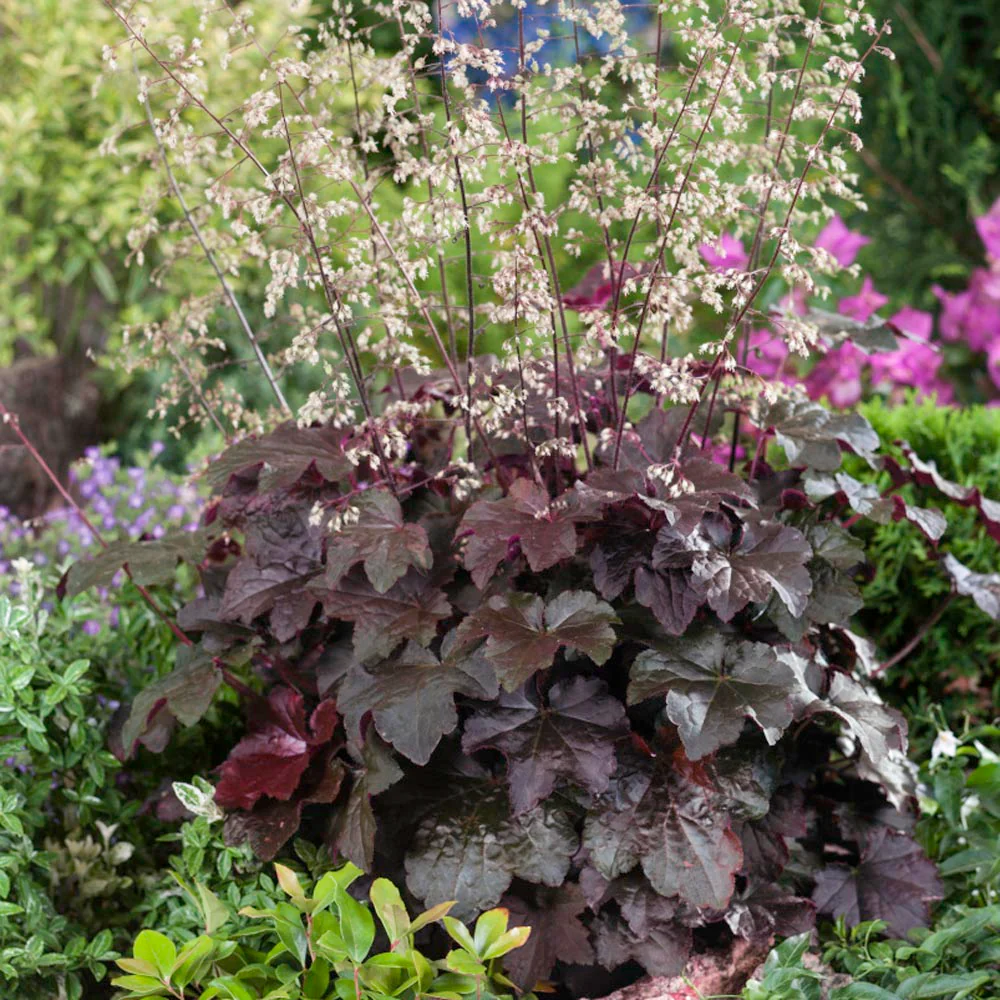
Because it stays clump-forming and well-behaved, it layers beautifully with hostas, heuchera, epimedium, and shade grasses without swallowing neighbors. It also gives you structure in winter, when the garden’s bones matter most. If your goal is a shade planting that looks well-designed year-round, Sandy Shores is a strong anchor plant that adds both texture and reliability.
Shade-Tough, Deer Resistant, And Surprisingly Low-Fuss
Sandy Shores thrives in partial to full shade and prefers rich, well-drained soil with consistent moisture, especially during establishment. Once it settles in, it’s notably resilient and handles the real-world conditions of shaded gardens, including root competition from trees and the moisture swings that come with canopy cover. A mulch layer helps keep roots cooler in summer and supports stronger flowering the following season.
It’s also a smart choice for deer-prone landscapes. Like most hellebores, the foliage is generally unappealing to browsing, which means the plant is more likely to stay intact and handsome when other shade favorites get nibbled down. If you want winter flowers that don’t require constant protection or pampering, Sandy Shores delivers dependable performance with minimal maintenance.
Easy To Style In Borders, Containers, And Woodland Edges
Sandy Shores looks especially polished when you treat it like a focal point in the shade. Use it in small drifts along the front of a border, as a repeating “rhythm plant” under trees, or as a winter-forward feature in a container near the front door. The apricot blooms pair beautifully with dark evergreens, stone, and bark mulch, while the burgundy center ties in nicely with heuchera, coral bells, and other deep-toned shade plants.
For the cleanest look, plan spacing and do one quick seasonal cleanup. Removing older leaves in late winter lets the flowers show clearly and gives the whole clump a freshly groomed appearance. With the right placement, Sandy Shores becomes the kind of perennial that quietly upgrades the entire garden, long-blooming, evergreen, and consistently refined.
Warm Apricot Blooms That Brighten Late Winter Shade
Sandy Shores Hellebore brings a soft, sunlit glow to the shade garden when you need it most. Blooms typically begin in late winter and carry into early spring, with large single flowers in pale apricot tones that feel warm and inviting in cold-season landscapes. Each bloom has extra character up close, with a burgundy flare near the center and subtle pink edging that adds depth without looking busy.
The real magic is how long the flowers hold. Hellebore blooms don’t “flash and fade” like many early flowers, so you get weeks of color that stays attractive through temperature swings. Plant it near an entry, along a path, or under deciduous trees where it can be enjoyed in the quiet season, then let it transition naturally into spring companions like bulbs, ferns, and woodland perennials.
Evergreen Clumps That Keep Shade Beds Looking Finished
Even after bloom time, Sandy Shores keeps earning its spot with handsome evergreen foliage. The leaves are thick and leathery, forming a tidy mound that looks intentional year-round, especially valuable in shade, where many perennials disappear by summer or collapse into messy gaps. That evergreen presence acts like a living “base layer” in woodland borders, under shrubs, and in foundation plantings.
Because it stays clump-forming and well-behaved, it layers beautifully with hostas, heuchera, epimedium, and shade grasses without swallowing neighbors. It also gives you structure in winter, when the garden’s bones matter most. If your goal is a shade planting that looks well-designed year-round, Sandy Shores is a strong anchor plant that adds both texture and reliability.
Shade-Tough, Deer Resistant, And Surprisingly Low-Fuss
Sandy Shores thrives in partial to full shade and prefers rich, well-drained soil with consistent moisture, especially during establishment. Once it settles in, it’s notably resilient and handles the real-world conditions of shaded gardens, including root competition from trees and the moisture swings that come with canopy cover. A mulch layer helps keep roots cooler in summer and supports stronger flowering the following season.
It’s also a smart choice for deer-prone landscapes. Like most hellebores, the foliage is generally unappealing to browsing, which means the plant is more likely to stay intact and handsome when other shade favorites get nibbled down. If you want winter flowers that don’t require constant protection or pampering, Sandy Shores delivers dependable performance with minimal maintenance.
Easy To Style In Borders, Containers, And Woodland Edges
Sandy Shores looks especially polished when you treat it like a focal point in the shade. Use it in small drifts along the front of a border, as a repeating “rhythm plant” under trees, or as a winter-forward feature in a container near the front door. The apricot blooms pair beautifully with dark evergreens, stone, and bark mulch, while the burgundy center ties in nicely with heuchera, coral bells, and other deep-toned shade plants.
For the cleanest look, plan spacing and do one quick seasonal cleanup. Removing older leaves in late winter lets the flowers show clearly and gives the whole clump a freshly groomed appearance. With the right placement, Sandy Shores becomes the kind of perennial that quietly upgrades the entire garden, long-blooming, evergreen, and consistently refined.
Original: $79.95
-70%$79.95
$23.98Description
Warm Apricot Blooms That Brighten Late Winter Shade
Sandy Shores Hellebore brings a soft, sunlit glow to the shade garden when you need it most. Blooms typically begin in late winter and carry into early spring, with large single flowers in pale apricot tones that feel warm and inviting in cold-season landscapes. Each bloom has extra character up close, with a burgundy flare near the center and subtle pink edging that adds depth without looking busy.
The real magic is how long the flowers hold. Hellebore blooms don’t “flash and fade” like many early flowers, so you get weeks of color that stays attractive through temperature swings. Plant it near an entry, along a path, or under deciduous trees where it can be enjoyed in the quiet season, then let it transition naturally into spring companions like bulbs, ferns, and woodland perennials.
Evergreen Clumps That Keep Shade Beds Looking Finished
Even after bloom time, Sandy Shores keeps earning its spot with handsome evergreen foliage. The leaves are thick and leathery, forming a tidy mound that looks intentional year-round, especially valuable in shade, where many perennials disappear by summer or collapse into messy gaps. That evergreen presence acts like a living “base layer” in woodland borders, under shrubs, and in foundation plantings.
Because it stays clump-forming and well-behaved, it layers beautifully with hostas, heuchera, epimedium, and shade grasses without swallowing neighbors. It also gives you structure in winter, when the garden’s bones matter most. If your goal is a shade planting that looks well-designed year-round, Sandy Shores is a strong anchor plant that adds both texture and reliability.
Shade-Tough, Deer Resistant, And Surprisingly Low-Fuss
Sandy Shores thrives in partial to full shade and prefers rich, well-drained soil with consistent moisture, especially during establishment. Once it settles in, it’s notably resilient and handles the real-world conditions of shaded gardens, including root competition from trees and the moisture swings that come with canopy cover. A mulch layer helps keep roots cooler in summer and supports stronger flowering the following season.
It’s also a smart choice for deer-prone landscapes. Like most hellebores, the foliage is generally unappealing to browsing, which means the plant is more likely to stay intact and handsome when other shade favorites get nibbled down. If you want winter flowers that don’t require constant protection or pampering, Sandy Shores delivers dependable performance with minimal maintenance.
Easy To Style In Borders, Containers, And Woodland Edges
Sandy Shores looks especially polished when you treat it like a focal point in the shade. Use it in small drifts along the front of a border, as a repeating “rhythm plant” under trees, or as a winter-forward feature in a container near the front door. The apricot blooms pair beautifully with dark evergreens, stone, and bark mulch, while the burgundy center ties in nicely with heuchera, coral bells, and other deep-toned shade plants.
For the cleanest look, plan spacing and do one quick seasonal cleanup. Removing older leaves in late winter lets the flowers show clearly and gives the whole clump a freshly groomed appearance. With the right placement, Sandy Shores becomes the kind of perennial that quietly upgrades the entire garden, long-blooming, evergreen, and consistently refined.