Frances Williams Hosta
Large Variegated Leaves with Classic Hosta Appeal.
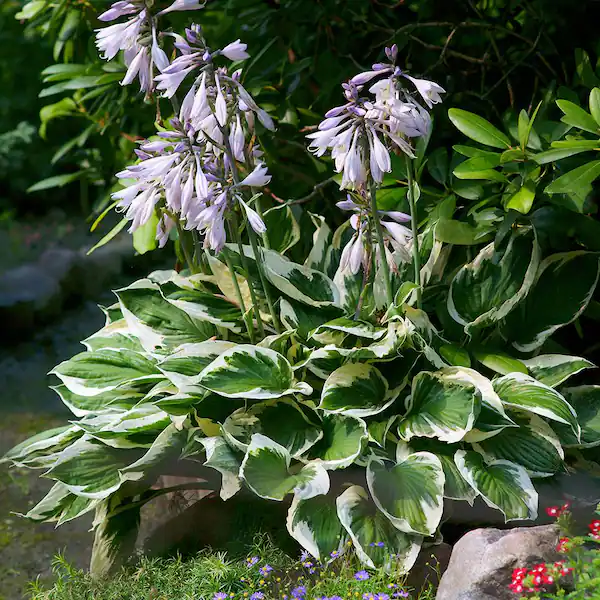
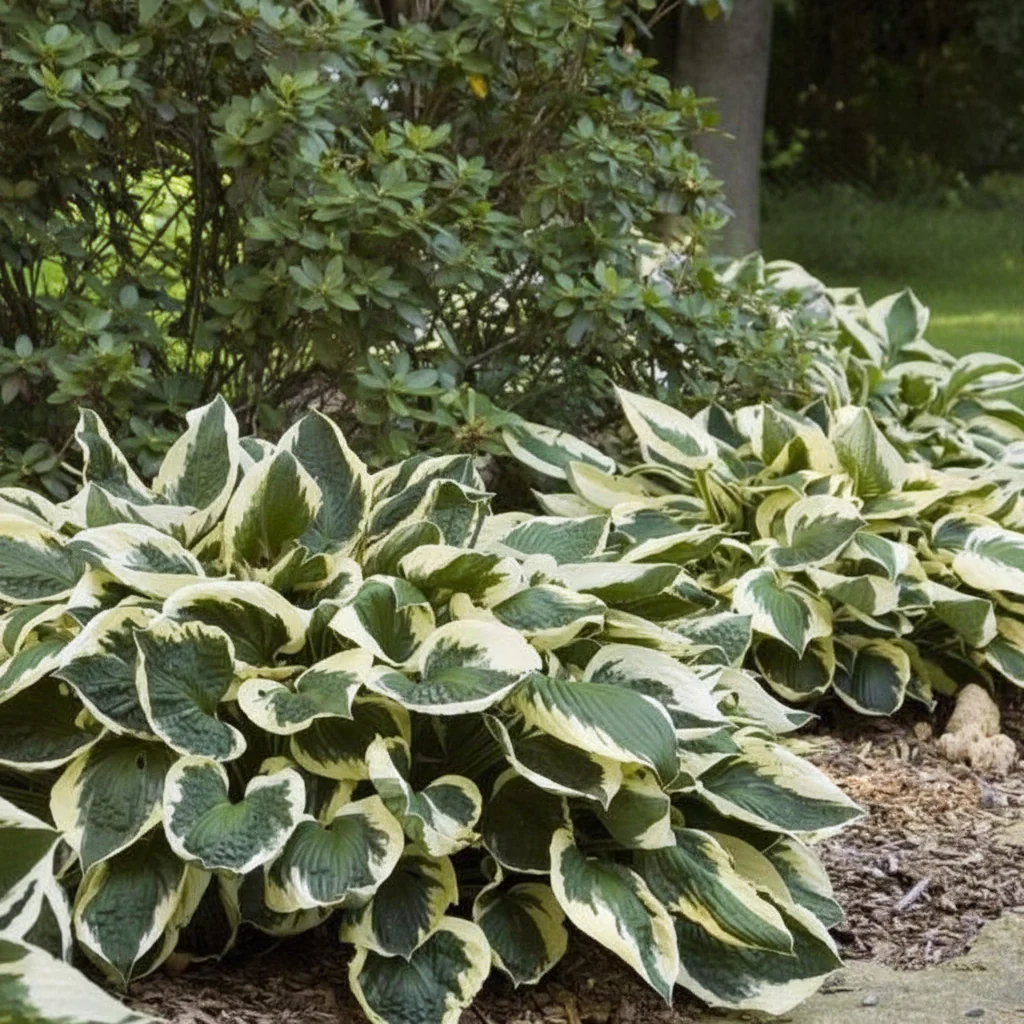
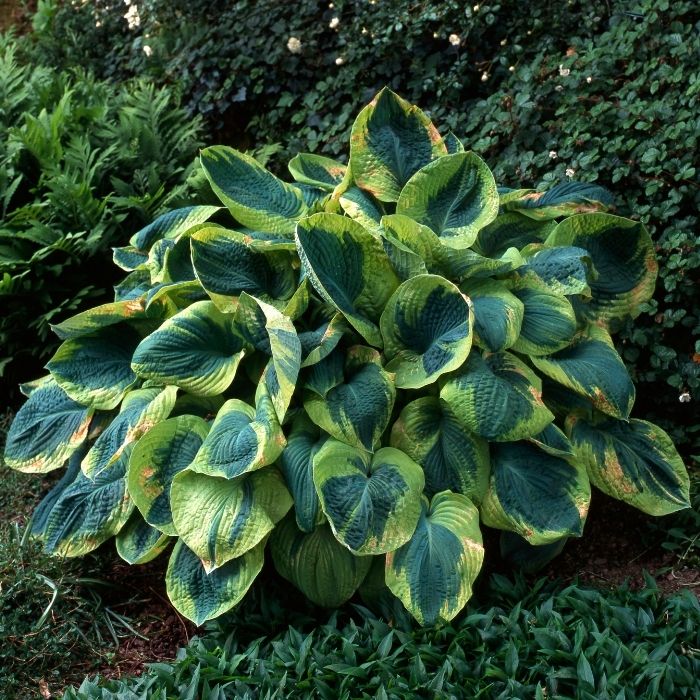
Frances Williams Hosta is a beloved shade perennial grown for its large, blue-green leaves edged with wide, chartreuse to yellow margins. The foliage has a bold, corrugated texture, giving the plant a substantial look in the garden. Its bright leaf margins help illuminate shaded beds, while the blue-green centers add depth, contrast, and a cool woodland feel.
A Strong Specimen Hosta for Shade Design.
This large hosta forms a broad, mounded clump that works beautifully as a specimen, focal point, mass planting, or background plant in shade gardens. Use Frances Williams near shaded walkways, under high-canopied trees, along foundation beds, or in woodland borders where its size and texture can anchor the planting. It is especially effective when repeated through a bed to create rhythm and structure.
White Summer Flowers Above Bold Foliage.
In summer, Frances Williams Hosta produces white to near-white flowers that rise above the foliage on tall scapes. The flowers add a soft seasonal accent and may attract hummingbirds and pollinators. While this hosta is primarily grown for its dramatic foliage, the blooms provide extra height and movement during the summer season.
Best in Part Shade to Full Shade.
Frances Williams Hosta performs best in part shade to full shade with moist, organically rich, well-drained soil. Morning sun or filtered light can be tolerated, but hot afternoon sun can scorch the leaves and diminish variegation quality. Mulch around the root zone to conserve moisture, keep roots cool, and support full, healthy foliage through the growing season.
Low Maintenance with Deer and Slug Awareness.
Frances Williams Hosta is easy to grow in the right site, but it is not deer-proof. Deer commonly browse hostas, and protection may be needed in landscapes with regular deer activity. Its thick, corrugated leaves are often noted for better slug resistance than thinner-leaved hostas, but slugs can still cause damage in damp shade. Monitor early in the season, remove old foliage after dormancy, and keep the planting area clean for best results.
Large Variegated Leaves with Classic Hosta Appeal.
Frances Williams Hosta is a beloved shade perennial grown for its large, blue-green leaves edged with wide, chartreuse to yellow margins. The foliage has a bold, corrugated texture, giving the plant a substantial look in the garden. Its bright leaf margins help illuminate shaded beds, while the blue-green centers add depth, contrast, and a cool woodland feel.
A Strong Specimen Hosta for Shade Design.
This large hosta forms a broad, mounded clump that works beautifully as a specimen, focal point, mass planting, or background plant in shade gardens. Use Frances Williams near shaded walkways, under high-canopied trees, along foundation beds, or in woodland borders where its size and texture can anchor the planting. It is especially effective when repeated through a bed to create rhythm and structure.
White Summer Flowers Above Bold Foliage.
In summer, Frances Williams Hosta produces white to near-white flowers that rise above the foliage on tall scapes. The flowers add a soft seasonal accent and may attract hummingbirds and pollinators. While this hosta is primarily grown for its dramatic foliage, the blooms provide extra height and movement during the summer season.
Best in Part Shade to Full Shade.
Frances Williams Hosta performs best in part shade to full shade with moist, organically rich, well-drained soil. Morning sun or filtered light can be tolerated, but hot afternoon sun can scorch the leaves and diminish variegation quality. Mulch around the root zone to conserve moisture, keep roots cool, and support full, healthy foliage through the growing season.
Low Maintenance with Deer and Slug Awareness.
Frances Williams Hosta is easy to grow in the right site, but it is not deer-proof. Deer commonly browse hostas, and protection may be needed in landscapes with regular deer activity. Its thick, corrugated leaves are often noted for better slug resistance than thinner-leaved hostas, but slugs can still cause damage in damp shade. Monitor early in the season, remove old foliage after dormancy, and keep the planting area clean for best results.
Original: $29.95
-70%$29.95
$8.98Description
Large Variegated Leaves with Classic Hosta Appeal.
Frances Williams Hosta is a beloved shade perennial grown for its large, blue-green leaves edged with wide, chartreuse to yellow margins. The foliage has a bold, corrugated texture, giving the plant a substantial look in the garden. Its bright leaf margins help illuminate shaded beds, while the blue-green centers add depth, contrast, and a cool woodland feel.
A Strong Specimen Hosta for Shade Design.
This large hosta forms a broad, mounded clump that works beautifully as a specimen, focal point, mass planting, or background plant in shade gardens. Use Frances Williams near shaded walkways, under high-canopied trees, along foundation beds, or in woodland borders where its size and texture can anchor the planting. It is especially effective when repeated through a bed to create rhythm and structure.
White Summer Flowers Above Bold Foliage.
In summer, Frances Williams Hosta produces white to near-white flowers that rise above the foliage on tall scapes. The flowers add a soft seasonal accent and may attract hummingbirds and pollinators. While this hosta is primarily grown for its dramatic foliage, the blooms provide extra height and movement during the summer season.
Best in Part Shade to Full Shade.
Frances Williams Hosta performs best in part shade to full shade with moist, organically rich, well-drained soil. Morning sun or filtered light can be tolerated, but hot afternoon sun can scorch the leaves and diminish variegation quality. Mulch around the root zone to conserve moisture, keep roots cool, and support full, healthy foliage through the growing season.
Low Maintenance with Deer and Slug Awareness.
Frances Williams Hosta is easy to grow in the right site, but it is not deer-proof. Deer commonly browse hostas, and protection may be needed in landscapes with regular deer activity. Its thick, corrugated leaves are often noted for better slug resistance than thinner-leaved hostas, but slugs can still cause damage in damp shade. Monitor early in the season, remove old foliage after dormancy, and keep the planting area clean for best results.