
Black Truffle Lobelia
Dark Chocolate Foliage with High-Impact Contrast
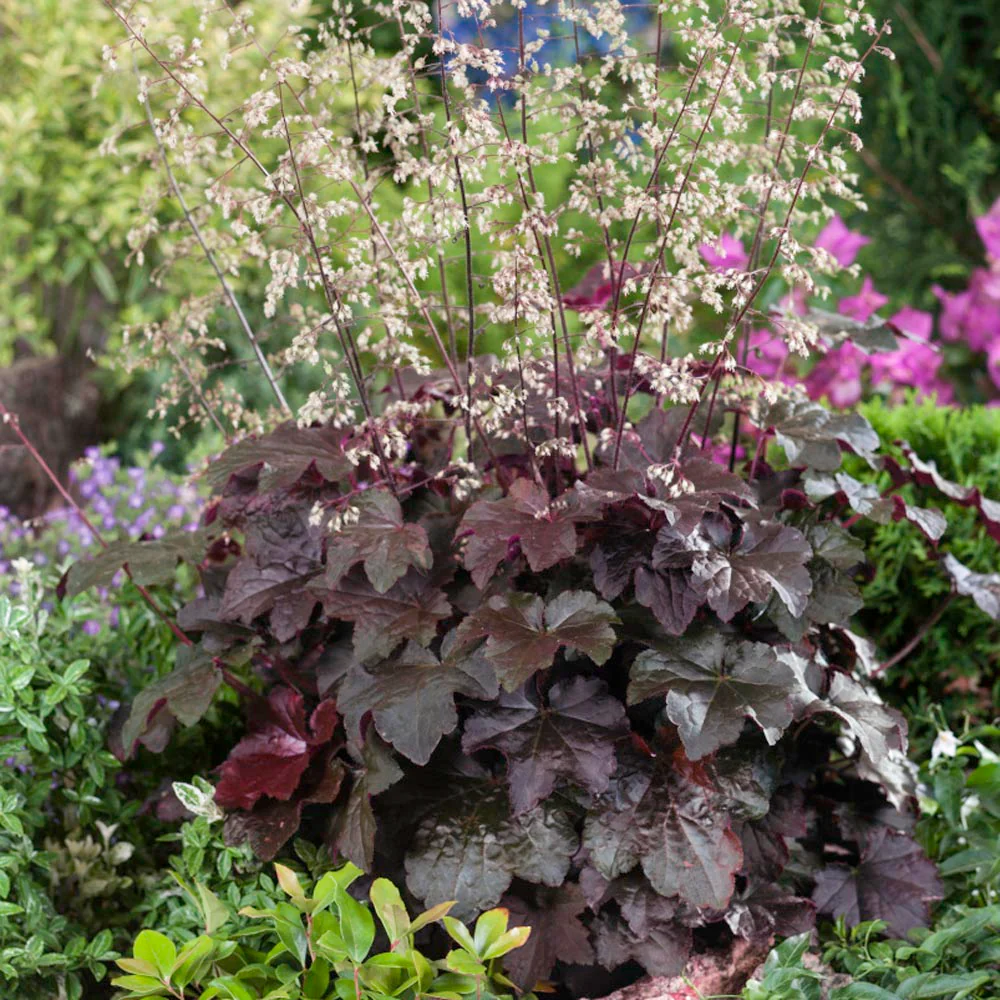
Black Truffle Lobelia is a dramatic cardinal flower cultivar grown for its dark chocolate-purple foliage and brilliant red flower spikes. Also called Black Truffle Cardinal Flower, this upright perennial brings bold contrast to moist borders, rain gardens, pond edges, and pollinator beds.
The foliage emerges especially dark in spring, often appearing shiny and nearly black before warming to rich maroon and dark purple tones during the growing season. This foliage color gives Black Truffle more season-long interest than many green-leaved cardinal flowers, even before the flowers open.
Scarlet-Red Flower Spikes for Hummingbirds
From midsummer into fall, Black Truffle Lobelia produces upright spikes of deep red tubular flowers. These blooms add strong vertical color and pair beautifully with the dark foliage below.
The red flowers are especially valuable for hummingbirds, making this plant a standout choice for hummingbird gardens, pollinator plantings, rain gardens, and moist native-style beds. Butterflies and other pollinators may also visit the flowers, adding ecological value to the showy display.
Perfect for Rain Gardens, Pond Edges, and Moist Borders
Black Truffle Lobelia performs best where the soil stays consistently moist. Use it in rain gardens, low spots, pond edges, streamside beds, moist meadows, and along reliable water borders. It can also grow in average garden soil if watering is consistent, especially during establishment and hot weather.
This is not a dry-soil perennial. For best performance, avoid sites that dry out for long periods. In full sun, steady moisture is especially important. In warmer climates, part shade can help protect foliage and reduce stress during summer heat.
Upright Structure with Native Cardinal Flower Heritage
Black Truffle typically grows about 3–4 feet tall and 2–3 feet wide, giving it enough presence to stand out in the garden without becoming woody or bulky. The upright flower spikes add height and drama to mixed perennial beds.
Because it is a selection of Lobelia cardinalis, Black Truffle carries the garden appeal of native cardinal flower with the added benefit of dark foliage. Use it with other moisture-loving perennials to create layered late-season color and a stronger habitat planting.
Low Maintenance with Moisture and Seasonal Cleanup
Plant Black Truffle Lobelia in full sun to part shade with moist to wet, well-drained soil. It appreciates organic matter and consistent moisture, especially during the first growing season and while flowering.
Cut back old stems in late winter or early spring, before new growth begins. Deadheading is optional, but leaving some spent flowers can support natural reseeding where conditions are favorable. Divide or thin clumps in spring if plants become crowded.
Dark Chocolate Foliage with High-Impact Contrast
Black Truffle Lobelia is a dramatic cardinal flower cultivar grown for its dark chocolate-purple foliage and brilliant red flower spikes. Also called Black Truffle Cardinal Flower, this upright perennial brings bold contrast to moist borders, rain gardens, pond edges, and pollinator beds.
The foliage emerges especially dark in spring, often appearing shiny and nearly black before warming to rich maroon and dark purple tones during the growing season. This foliage color gives Black Truffle more season-long interest than many green-leaved cardinal flowers, even before the flowers open.
Scarlet-Red Flower Spikes for Hummingbirds
From midsummer into fall, Black Truffle Lobelia produces upright spikes of deep red tubular flowers. These blooms add strong vertical color and pair beautifully with the dark foliage below.
The red flowers are especially valuable for hummingbirds, making this plant a standout choice for hummingbird gardens, pollinator plantings, rain gardens, and moist native-style beds. Butterflies and other pollinators may also visit the flowers, adding ecological value to the showy display.
Perfect for Rain Gardens, Pond Edges, and Moist Borders
Black Truffle Lobelia performs best where the soil stays consistently moist. Use it in rain gardens, low spots, pond edges, streamside beds, moist meadows, and along reliable water borders. It can also grow in average garden soil if watering is consistent, especially during establishment and hot weather.
This is not a dry-soil perennial. For best performance, avoid sites that dry out for long periods. In full sun, steady moisture is especially important. In warmer climates, part shade can help protect foliage and reduce stress during summer heat.
Upright Structure with Native Cardinal Flower Heritage
Black Truffle typically grows about 3–4 feet tall and 2–3 feet wide, giving it enough presence to stand out in the garden without becoming woody or bulky. The upright flower spikes add height and drama to mixed perennial beds.
Because it is a selection of Lobelia cardinalis, Black Truffle carries the garden appeal of native cardinal flower with the added benefit of dark foliage. Use it with other moisture-loving perennials to create layered late-season color and a stronger habitat planting.
Low Maintenance with Moisture and Seasonal Cleanup
Plant Black Truffle Lobelia in full sun to part shade with moist to wet, well-drained soil. It appreciates organic matter and consistent moisture, especially during the first growing season and while flowering.
Cut back old stems in late winter or early spring, before new growth begins. Deadheading is optional, but leaving some spent flowers can support natural reseeding where conditions are favorable. Divide or thin clumps in spring if plants become crowded.
Description
Dark Chocolate Foliage with High-Impact Contrast
Black Truffle Lobelia is a dramatic cardinal flower cultivar grown for its dark chocolate-purple foliage and brilliant red flower spikes. Also called Black Truffle Cardinal Flower, this upright perennial brings bold contrast to moist borders, rain gardens, pond edges, and pollinator beds.
The foliage emerges especially dark in spring, often appearing shiny and nearly black before warming to rich maroon and dark purple tones during the growing season. This foliage color gives Black Truffle more season-long interest than many green-leaved cardinal flowers, even before the flowers open.
Scarlet-Red Flower Spikes for Hummingbirds
From midsummer into fall, Black Truffle Lobelia produces upright spikes of deep red tubular flowers. These blooms add strong vertical color and pair beautifully with the dark foliage below.
The red flowers are especially valuable for hummingbirds, making this plant a standout choice for hummingbird gardens, pollinator plantings, rain gardens, and moist native-style beds. Butterflies and other pollinators may also visit the flowers, adding ecological value to the showy display.
Perfect for Rain Gardens, Pond Edges, and Moist Borders
Black Truffle Lobelia performs best where the soil stays consistently moist. Use it in rain gardens, low spots, pond edges, streamside beds, moist meadows, and along reliable water borders. It can also grow in average garden soil if watering is consistent, especially during establishment and hot weather.
This is not a dry-soil perennial. For best performance, avoid sites that dry out for long periods. In full sun, steady moisture is especially important. In warmer climates, part shade can help protect foliage and reduce stress during summer heat.
Upright Structure with Native Cardinal Flower Heritage
Black Truffle typically grows about 3–4 feet tall and 2–3 feet wide, giving it enough presence to stand out in the garden without becoming woody or bulky. The upright flower spikes add height and drama to mixed perennial beds.
Because it is a selection of Lobelia cardinalis, Black Truffle carries the garden appeal of native cardinal flower with the added benefit of dark foliage. Use it with other moisture-loving perennials to create layered late-season color and a stronger habitat planting.
Low Maintenance with Moisture and Seasonal Cleanup
Plant Black Truffle Lobelia in full sun to part shade with moist to wet, well-drained soil. It appreciates organic matter and consistent moisture, especially during the first growing season and while flowering.
Cut back old stems in late winter or early spring, before new growth begins. Deadheading is optional, but leaving some spent flowers can support natural reseeding where conditions are favorable. Divide or thin clumps in spring if plants become crowded.