Adagio Miscanthus
Graceful Foliage in a Smaller Miscanthus
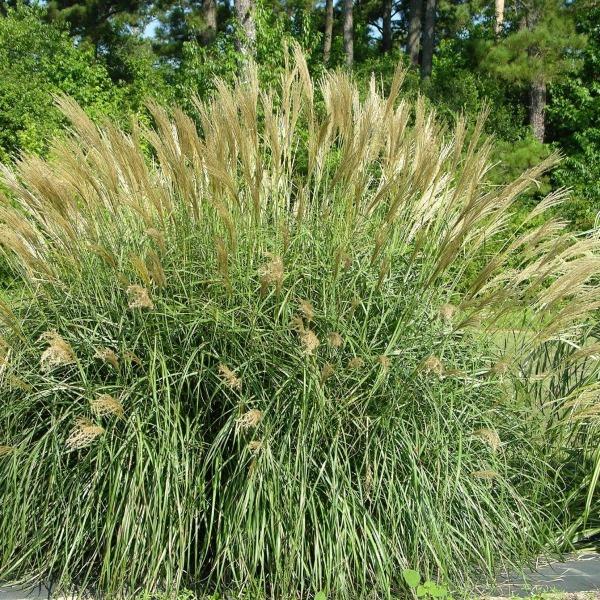
Adagio Miscanthus is a compact maiden grass grown for its fine-textured, silver-green foliage and graceful upright-arching habit. Botanically known as Miscanthus sinensis ‘Adagio’, this dwarf ornamental grass gives homeowners the soft movement and late-season beauty of maiden grass in a more manageable size.
The narrow blades create a refined texture that works beautifully in sunny borders, foundation beds, mixed perennial gardens, and smaller landscapes. Use Adagio where you want movement and structure without planting one of the larger Miscanthus varieties that can overwhelm residential beds.
Pink-Tinged Plumes That Mature Creamy White
In late summer, Adagio Miscanthus produces airy flower plumes that emerge with a soft pink tint above the foliage. As the season progresses, the plumes mature to creamy white and add a light, feathery texture through fall.
These plumes are especially useful for extending interest after many flowering perennials have passed peak bloom. Leave them standing through winter for movement, structure, and soft seasonal color, or cut a few stems for dried arrangements.
A Compact Grass for Borders, Foundations, and Mass Planting
Adagio typically grows about 3–4 feet tall, with plumes reaching up to about 5 feet. This makes it one of the more compact Miscanthus choices and easier to use in home landscapes than many full-size maiden grasses.
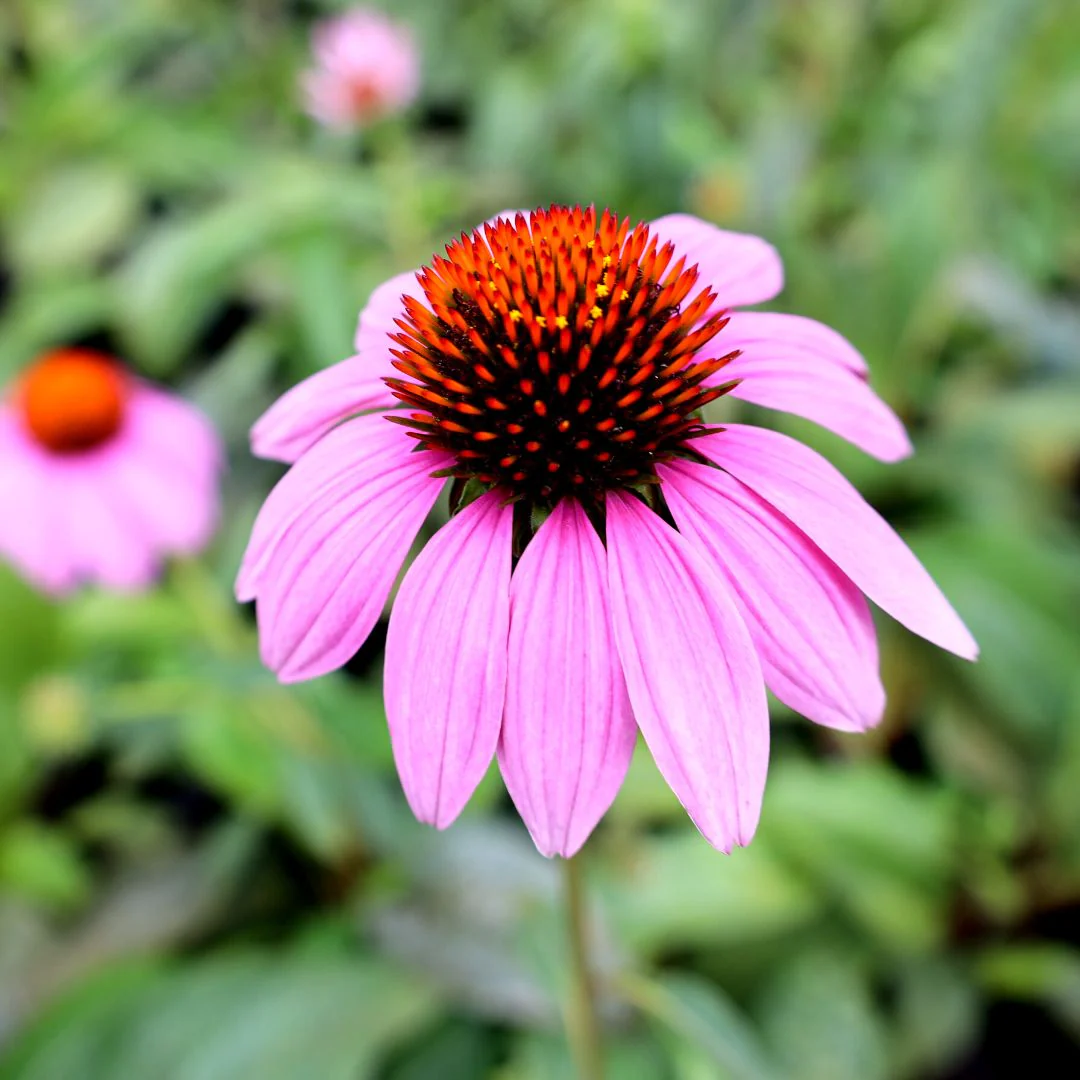
Plant it as a specimen grass, a repeating border accent, foundation texture, a low screen, mass planting, or a backdrop for sun-loving perennials. Its soft shape pairs well with coneflowers, black-eyed Susan, sedum, catmint, Russian sage, salvia, asters, and other late-season bloomers.
Fall Color and Winter Structure
The fine foliage of Adagio Miscanthus turns yellow to golden in fall, adding another season of color before the blades dry to tan. In winter, the dried foliage and plumes provide structure and movement when the garden is otherwise quiet.
This winter presence is one of the reasons ornamental grasses are so useful in low-maintenance landscapes. Adagio gives sunny beds a finished look from summer through winter, then starts fresh again after the spring cutback.
Low Maintenance, Sun Loving, and Deer Resistant
Plant Adagio Miscanthus in full sun for the strongest habit and best plume production. It adapts to average, well-drained soil and becomes drought-tolerant once established, though regular watering during the first season helps it root in properly.
Adagio is generally considered deer-resistant and low-maintenance. Cut the clump back in late winter or early spring before new growth begins. Because Miscanthus can reseed or be restricted in some regions, check local guidance before planting, especially near natural areas.
Graceful Foliage in a Smaller Miscanthus
Adagio Miscanthus is a compact maiden grass grown for its fine-textured, silver-green foliage and graceful upright-arching habit. Botanically known as Miscanthus sinensis ‘Adagio’, this dwarf ornamental grass gives homeowners the soft movement and late-season beauty of maiden grass in a more manageable size.
The narrow blades create a refined texture that works beautifully in sunny borders, foundation beds, mixed perennial gardens, and smaller landscapes. Use Adagio where you want movement and structure without planting one of the larger Miscanthus varieties that can overwhelm residential beds.
Pink-Tinged Plumes That Mature Creamy White
In late summer, Adagio Miscanthus produces airy flower plumes that emerge with a soft pink tint above the foliage. As the season progresses, the plumes mature to creamy white and add a light, feathery texture through fall.
These plumes are especially useful for extending interest after many flowering perennials have passed peak bloom. Leave them standing through winter for movement, structure, and soft seasonal color, or cut a few stems for dried arrangements.
A Compact Grass for Borders, Foundations, and Mass Planting
Adagio typically grows about 3–4 feet tall, with plumes reaching up to about 5 feet. This makes it one of the more compact Miscanthus choices and easier to use in home landscapes than many full-size maiden grasses.
Plant it as a specimen grass, a repeating border accent, foundation texture, a low screen, mass planting, or a backdrop for sun-loving perennials. Its soft shape pairs well with coneflowers, black-eyed Susan, sedum, catmint, Russian sage, salvia, asters, and other late-season bloomers.
Fall Color and Winter Structure
The fine foliage of Adagio Miscanthus turns yellow to golden in fall, adding another season of color before the blades dry to tan. In winter, the dried foliage and plumes provide structure and movement when the garden is otherwise quiet.
This winter presence is one of the reasons ornamental grasses are so useful in low-maintenance landscapes. Adagio gives sunny beds a finished look from summer through winter, then starts fresh again after the spring cutback.
Low Maintenance, Sun Loving, and Deer Resistant
Plant Adagio Miscanthus in full sun for the strongest habit and best plume production. It adapts to average, well-drained soil and becomes drought-tolerant once established, though regular watering during the first season helps it root in properly.
Adagio is generally considered deer-resistant and low-maintenance. Cut the clump back in late winter or early spring before new growth begins. Because Miscanthus can reseed or be restricted in some regions, check local guidance before planting, especially near natural areas.
Original: $26.95
-70%$26.95
$8.08Description
Graceful Foliage in a Smaller Miscanthus
Adagio Miscanthus is a compact maiden grass grown for its fine-textured, silver-green foliage and graceful upright-arching habit. Botanically known as Miscanthus sinensis ‘Adagio’, this dwarf ornamental grass gives homeowners the soft movement and late-season beauty of maiden grass in a more manageable size.
The narrow blades create a refined texture that works beautifully in sunny borders, foundation beds, mixed perennial gardens, and smaller landscapes. Use Adagio where you want movement and structure without planting one of the larger Miscanthus varieties that can overwhelm residential beds.
Pink-Tinged Plumes That Mature Creamy White
In late summer, Adagio Miscanthus produces airy flower plumes that emerge with a soft pink tint above the foliage. As the season progresses, the plumes mature to creamy white and add a light, feathery texture through fall.
These plumes are especially useful for extending interest after many flowering perennials have passed peak bloom. Leave them standing through winter for movement, structure, and soft seasonal color, or cut a few stems for dried arrangements.
A Compact Grass for Borders, Foundations, and Mass Planting
Adagio typically grows about 3–4 feet tall, with plumes reaching up to about 5 feet. This makes it one of the more compact Miscanthus choices and easier to use in home landscapes than many full-size maiden grasses.
Plant it as a specimen grass, a repeating border accent, foundation texture, a low screen, mass planting, or a backdrop for sun-loving perennials. Its soft shape pairs well with coneflowers, black-eyed Susan, sedum, catmint, Russian sage, salvia, asters, and other late-season bloomers.
Fall Color and Winter Structure
The fine foliage of Adagio Miscanthus turns yellow to golden in fall, adding another season of color before the blades dry to tan. In winter, the dried foliage and plumes provide structure and movement when the garden is otherwise quiet.
This winter presence is one of the reasons ornamental grasses are so useful in low-maintenance landscapes. Adagio gives sunny beds a finished look from summer through winter, then starts fresh again after the spring cutback.
Low Maintenance, Sun Loving, and Deer Resistant
Plant Adagio Miscanthus in full sun for the strongest habit and best plume production. It adapts to average, well-drained soil and becomes drought-tolerant once established, though regular watering during the first season helps it root in properly.
Adagio is generally considered deer-resistant and low-maintenance. Cut the clump back in late winter or early spring before new growth begins. Because Miscanthus can reseed or be restricted in some regions, check local guidance before planting, especially near natural areas.