Little Zebra Miscanthus
Horizontal Gold Bands in a Smaller Ornamental Grass
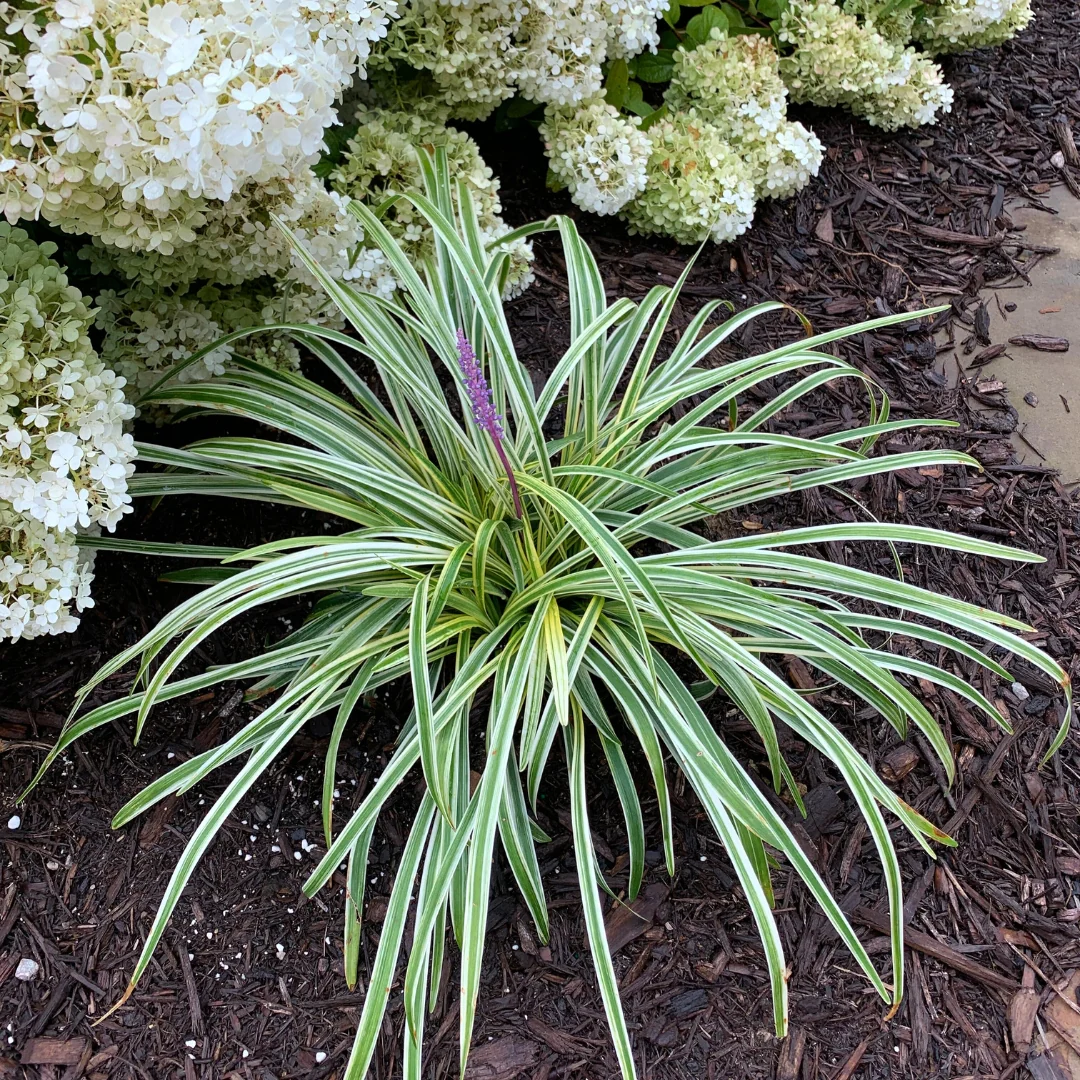
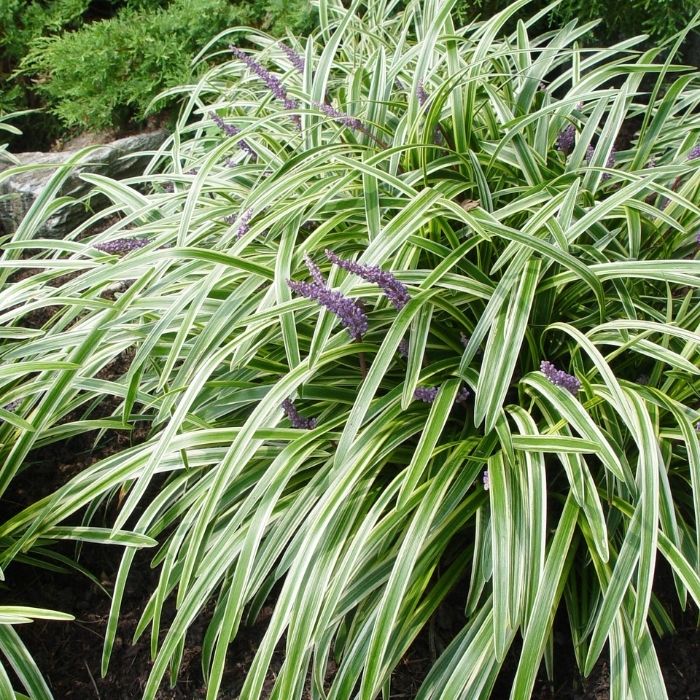
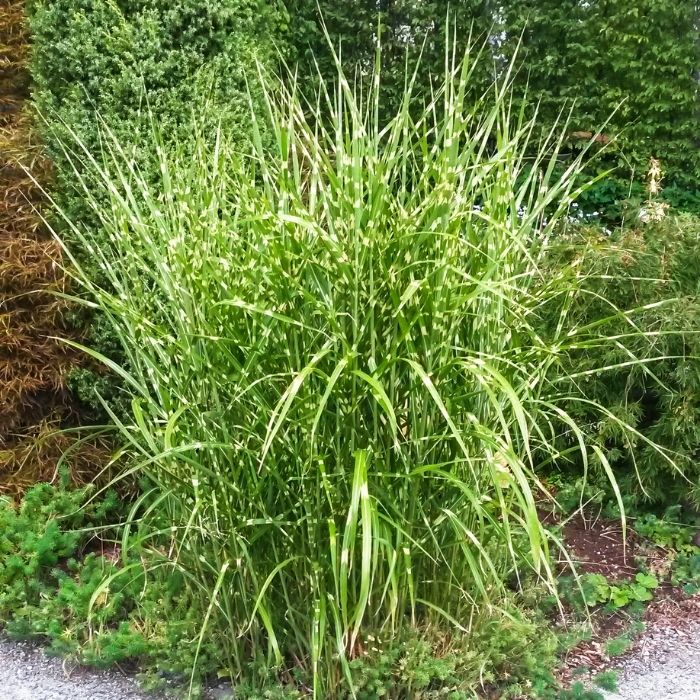
Little Zebra Miscanthus is a compact ornamental grass grown for its bold green blades marked with horizontal gold bands. Also called Little Zebra Grass or dwarf zebra grass, this cultivar gives homeowners the distinctive striped look of Zebra Grass in a shorter, more manageable size.
The upright foliage adds texture, movement, and structure from summer through winter. Its banded leaves make it especially useful where you want a strong visual accent without using a very tall grass. Plant it near patios, foundations, sunny borders, walkways, or mixed perennial beds where the variegated foliage can be seen up close.
Reddish-Purple Plumes That Mature to Tan
In late summer, Little Zebra Miscanthus produces reddish-purple flower plumes that rise above the foliage. As the season progresses, the plumes mature to tan, adding soft texture and winter interest after many perennials have finished flowering.
The plume display adds seasonal value to Little Zebra beyond its foliage. Leave the stems standing through winter for structure, movement, and soft color in the landscape, then cut the plant back before new growth begins in spring.
A Dwarf Zebra Grass for Smaller Landscapes
Little Zebra is a better choice than traditional Zebra Grass when space is limited. It typically grows about 3–4 feet tall and 2–3 feet wide, giving it enough presence to stand out without overwhelming smaller beds.
Use it as a specimen grass, a repeating accent, a sunny border plant, a foundation texture, a container thriller, or a soft screen in groups. Its compact habit also makes it easier to use in residential landscapes where larger Miscanthus varieties may become too wide or tall.
Deer Resistant, Low Maintenance, and Sun Loving
Little Zebra Miscanthus is generally considered deer-resistant, making it useful in landscapes with high browsing pressure. It is also low maintenance once established and tolerant of summer heat, average soils, and seasonal dryness.
For the best habit and strongest banding, plant it in full sun. It can tolerate light part shade, but too much shade may reduce flowering, loosen the habit, and make the plant less upright. Good sunlight and proper spacing help keep the clump full and attractive.
Easy Care for Sunny Beds and Containers
Plant Little Zebra Miscanthus in full sun with well-drained soil. It adapts to average garden soil and can tolerate poor soil once established, but it performs best with consistent moisture during establishment and periods of drought.
Because it is a warm-season grass, Little Zebra may be slow to emerge in spring. Cut back old foliage in late winter or early spring before new growth appears. Divide mature clumps in spring if they become crowded or outgrow their space.
Horizontal Gold Bands in a Smaller Ornamental Grass
Little Zebra Miscanthus is a compact ornamental grass grown for its bold green blades marked with horizontal gold bands. Also called Little Zebra Grass or dwarf zebra grass, this cultivar gives homeowners the distinctive striped look of Zebra Grass in a shorter, more manageable size.
The upright foliage adds texture, movement, and structure from summer through winter. Its banded leaves make it especially useful where you want a strong visual accent without using a very tall grass. Plant it near patios, foundations, sunny borders, walkways, or mixed perennial beds where the variegated foliage can be seen up close.
Reddish-Purple Plumes That Mature to Tan
In late summer, Little Zebra Miscanthus produces reddish-purple flower plumes that rise above the foliage. As the season progresses, the plumes mature to tan, adding soft texture and winter interest after many perennials have finished flowering.
The plume display adds seasonal value to Little Zebra beyond its foliage. Leave the stems standing through winter for structure, movement, and soft color in the landscape, then cut the plant back before new growth begins in spring.
A Dwarf Zebra Grass for Smaller Landscapes
Little Zebra is a better choice than traditional Zebra Grass when space is limited. It typically grows about 3–4 feet tall and 2–3 feet wide, giving it enough presence to stand out without overwhelming smaller beds.
Use it as a specimen grass, a repeating accent, a sunny border plant, a foundation texture, a container thriller, or a soft screen in groups. Its compact habit also makes it easier to use in residential landscapes where larger Miscanthus varieties may become too wide or tall.
Deer Resistant, Low Maintenance, and Sun Loving
Little Zebra Miscanthus is generally considered deer-resistant, making it useful in landscapes with high browsing pressure. It is also low maintenance once established and tolerant of summer heat, average soils, and seasonal dryness.
For the best habit and strongest banding, plant it in full sun. It can tolerate light part shade, but too much shade may reduce flowering, loosen the habit, and make the plant less upright. Good sunlight and proper spacing help keep the clump full and attractive.
Easy Care for Sunny Beds and Containers
Plant Little Zebra Miscanthus in full sun with well-drained soil. It adapts to average garden soil and can tolerate poor soil once established, but it performs best with consistent moisture during establishment and periods of drought.
Because it is a warm-season grass, Little Zebra may be slow to emerge in spring. Cut back old foliage in late winter or early spring before new growth appears. Divide mature clumps in spring if they become crowded or outgrow their space.
Original: $29.95
-70%$29.95
$8.98Description
Horizontal Gold Bands in a Smaller Ornamental Grass
Little Zebra Miscanthus is a compact ornamental grass grown for its bold green blades marked with horizontal gold bands. Also called Little Zebra Grass or dwarf zebra grass, this cultivar gives homeowners the distinctive striped look of Zebra Grass in a shorter, more manageable size.
The upright foliage adds texture, movement, and structure from summer through winter. Its banded leaves make it especially useful where you want a strong visual accent without using a very tall grass. Plant it near patios, foundations, sunny borders, walkways, or mixed perennial beds where the variegated foliage can be seen up close.
Reddish-Purple Plumes That Mature to Tan
In late summer, Little Zebra Miscanthus produces reddish-purple flower plumes that rise above the foliage. As the season progresses, the plumes mature to tan, adding soft texture and winter interest after many perennials have finished flowering.
The plume display adds seasonal value to Little Zebra beyond its foliage. Leave the stems standing through winter for structure, movement, and soft color in the landscape, then cut the plant back before new growth begins in spring.
A Dwarf Zebra Grass for Smaller Landscapes
Little Zebra is a better choice than traditional Zebra Grass when space is limited. It typically grows about 3–4 feet tall and 2–3 feet wide, giving it enough presence to stand out without overwhelming smaller beds.
Use it as a specimen grass, a repeating accent, a sunny border plant, a foundation texture, a container thriller, or a soft screen in groups. Its compact habit also makes it easier to use in residential landscapes where larger Miscanthus varieties may become too wide or tall.
Deer Resistant, Low Maintenance, and Sun Loving
Little Zebra Miscanthus is generally considered deer-resistant, making it useful in landscapes with high browsing pressure. It is also low maintenance once established and tolerant of summer heat, average soils, and seasonal dryness.
For the best habit and strongest banding, plant it in full sun. It can tolerate light part shade, but too much shade may reduce flowering, loosen the habit, and make the plant less upright. Good sunlight and proper spacing help keep the clump full and attractive.
Easy Care for Sunny Beds and Containers
Plant Little Zebra Miscanthus in full sun with well-drained soil. It adapts to average garden soil and can tolerate poor soil once established, but it performs best with consistent moisture during establishment and periods of drought.
Because it is a warm-season grass, Little Zebra may be slow to emerge in spring. Cut back old foliage in late winter or early spring before new growth appears. Divide mature clumps in spring if they become crowded or outgrow their space.