Junior Walker Catmint
A Smaller Catmint with Classic Walker’s Low Appeal.
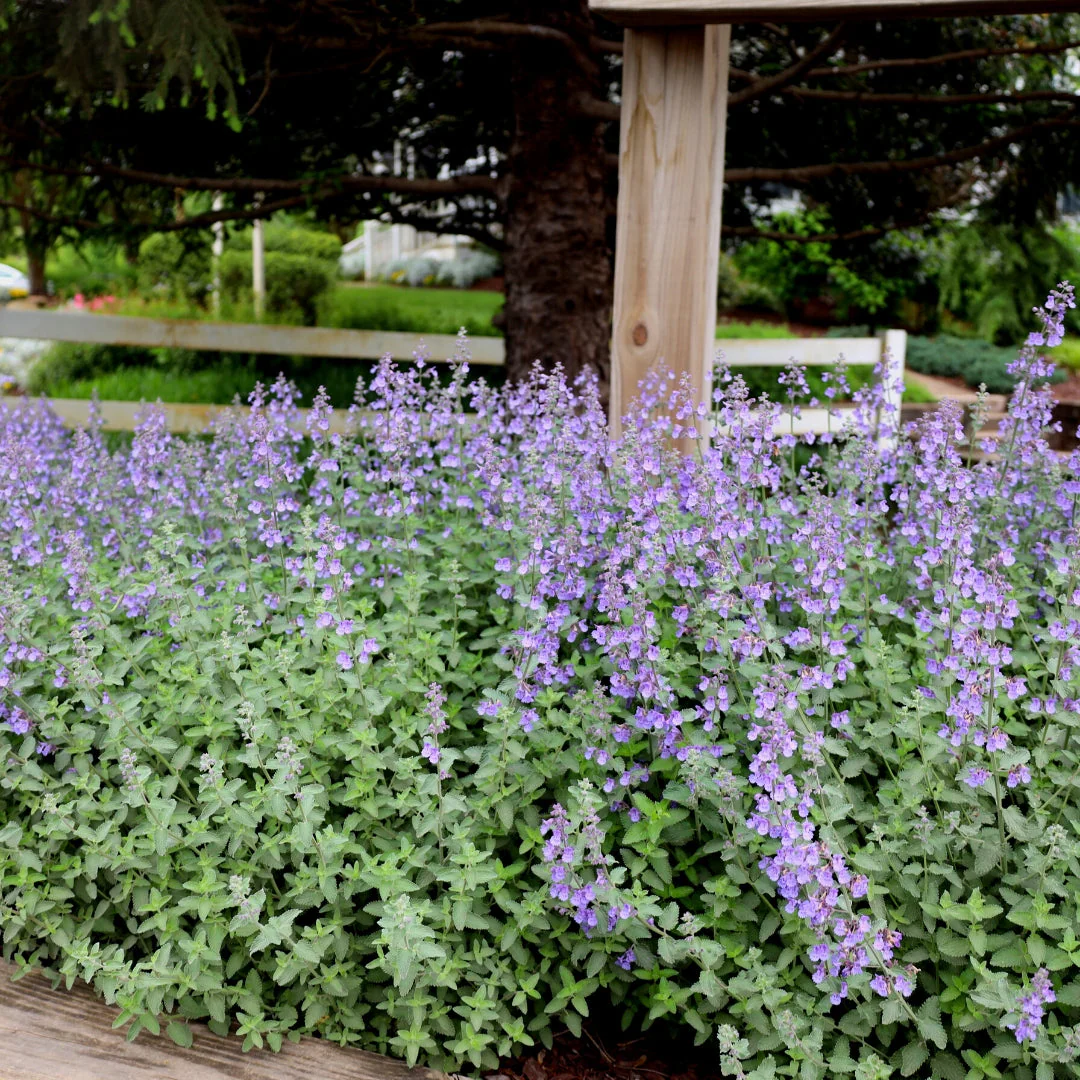
Junior Walker Catmint is a compact Nepeta grown for its lavender-blue flowers, aromatic gray-green foliage, and tidy mounded habit. It offers the soft color and easy-care performance gardeners love in classic catmint, but in a smaller form that fits neatly into tighter spaces. Use it along walkways, at the front of borders, in containers, around patios, or repeated in sunny beds for a clean, colorful edge.
Lavender-Blue Flowers with a Long Bloom Season.
Junior Walker Catmint produces masses of lavender-blue flowers over fragrant foliage, creating a cool, soft look in the garden. The blooms are especially attractive in drifts, edging rows, and mixed perennial borders where they can weave between roses, salvia, yarrow, coneflowers, lavender, coreopsis, and ornamental grasses. A light shear after the first bloom flush encourages fresh foliage and additional flowers.
Fragrant Foliage and Pollinator Value.
The aromatic silver-gray to gray-green foliage adds texture and scent, especially near paths and patios where the leaves can be brushed as people pass. Bees, butterflies, hummingbirds, and other beneficial pollinators are drawn to the flowers, making Junior Walker Catmint a strong choice for sunny pollinator gardens. It brings color, movement, and habitat value without requiring a high-maintenance care routine.
Deer Resistant and Drought Tolerant Once Established.
Junior Walker Catmint is generally considered deer-resistant because its fragrant foliage is less appealing to browsing animals. Once established, it is also drought-tolerant and well-suited to sunny, well-drained landscape beds. No plant is completely deer-proof, but catmint is one of the better perennial choices for deer-aware gardens, hot sunny borders, and low-water plantings.
Easy Care for Sunny Garden Beds.
Plant Junior Walker Catmint in full sun with well-drained soil. It grows well in average to lean garden soil and usually does not need heavy fertilizer. Avoid soggy soil and overwatering, especially in humid climates. Trim after flowering to refresh the plant, cut back old stems in late fall or early spring, and divide mature clumps only when needed to maintain vigor or manage spacing.
A Smaller Catmint with Classic Walker’s Low Appeal.
Junior Walker Catmint is a compact Nepeta grown for its lavender-blue flowers, aromatic gray-green foliage, and tidy mounded habit. It offers the soft color and easy-care performance gardeners love in classic catmint, but in a smaller form that fits neatly into tighter spaces. Use it along walkways, at the front of borders, in containers, around patios, or repeated in sunny beds for a clean, colorful edge.
Lavender-Blue Flowers with a Long Bloom Season.
Junior Walker Catmint produces masses of lavender-blue flowers over fragrant foliage, creating a cool, soft look in the garden. The blooms are especially attractive in drifts, edging rows, and mixed perennial borders where they can weave between roses, salvia, yarrow, coneflowers, lavender, coreopsis, and ornamental grasses. A light shear after the first bloom flush encourages fresh foliage and additional flowers.
Fragrant Foliage and Pollinator Value.
The aromatic silver-gray to gray-green foliage adds texture and scent, especially near paths and patios where the leaves can be brushed as people pass. Bees, butterflies, hummingbirds, and other beneficial pollinators are drawn to the flowers, making Junior Walker Catmint a strong choice for sunny pollinator gardens. It brings color, movement, and habitat value without requiring a high-maintenance care routine.
Deer Resistant and Drought Tolerant Once Established.
Junior Walker Catmint is generally considered deer-resistant because its fragrant foliage is less appealing to browsing animals. Once established, it is also drought-tolerant and well-suited to sunny, well-drained landscape beds. No plant is completely deer-proof, but catmint is one of the better perennial choices for deer-aware gardens, hot sunny borders, and low-water plantings.
Easy Care for Sunny Garden Beds.
Plant Junior Walker Catmint in full sun with well-drained soil. It grows well in average to lean garden soil and usually does not need heavy fertilizer. Avoid soggy soil and overwatering, especially in humid climates. Trim after flowering to refresh the plant, cut back old stems in late fall or early spring, and divide mature clumps only when needed to maintain vigor or manage spacing.
Original: $17.95
-70%$17.95
$5.38Description
A Smaller Catmint with Classic Walker’s Low Appeal.
Junior Walker Catmint is a compact Nepeta grown for its lavender-blue flowers, aromatic gray-green foliage, and tidy mounded habit. It offers the soft color and easy-care performance gardeners love in classic catmint, but in a smaller form that fits neatly into tighter spaces. Use it along walkways, at the front of borders, in containers, around patios, or repeated in sunny beds for a clean, colorful edge.
Lavender-Blue Flowers with a Long Bloom Season.
Junior Walker Catmint produces masses of lavender-blue flowers over fragrant foliage, creating a cool, soft look in the garden. The blooms are especially attractive in drifts, edging rows, and mixed perennial borders where they can weave between roses, salvia, yarrow, coneflowers, lavender, coreopsis, and ornamental grasses. A light shear after the first bloom flush encourages fresh foliage and additional flowers.
Fragrant Foliage and Pollinator Value.
The aromatic silver-gray to gray-green foliage adds texture and scent, especially near paths and patios where the leaves can be brushed as people pass. Bees, butterflies, hummingbirds, and other beneficial pollinators are drawn to the flowers, making Junior Walker Catmint a strong choice for sunny pollinator gardens. It brings color, movement, and habitat value without requiring a high-maintenance care routine.
Deer Resistant and Drought Tolerant Once Established.
Junior Walker Catmint is generally considered deer-resistant because its fragrant foliage is less appealing to browsing animals. Once established, it is also drought-tolerant and well-suited to sunny, well-drained landscape beds. No plant is completely deer-proof, but catmint is one of the better perennial choices for deer-aware gardens, hot sunny borders, and low-water plantings.
Easy Care for Sunny Garden Beds.
Plant Junior Walker Catmint in full sun with well-drained soil. It grows well in average to lean garden soil and usually does not need heavy fertilizer. Avoid soggy soil and overwatering, especially in humid climates. Trim after flowering to refresh the plant, cut back old stems in late fall or early spring, and divide mature clumps only when needed to maintain vigor or manage spacing.