May Night Salvia
A Classic Dark Purple Meadow Sage.
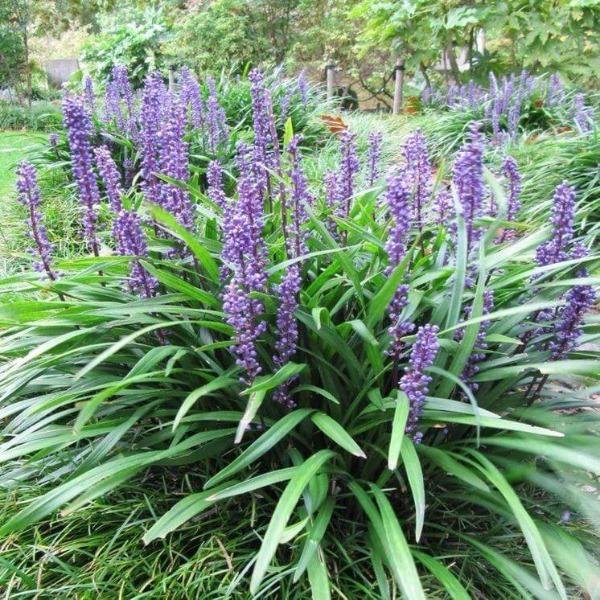
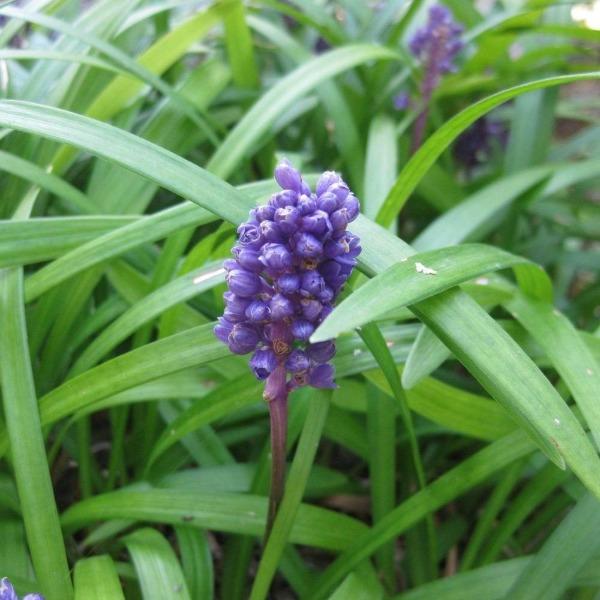
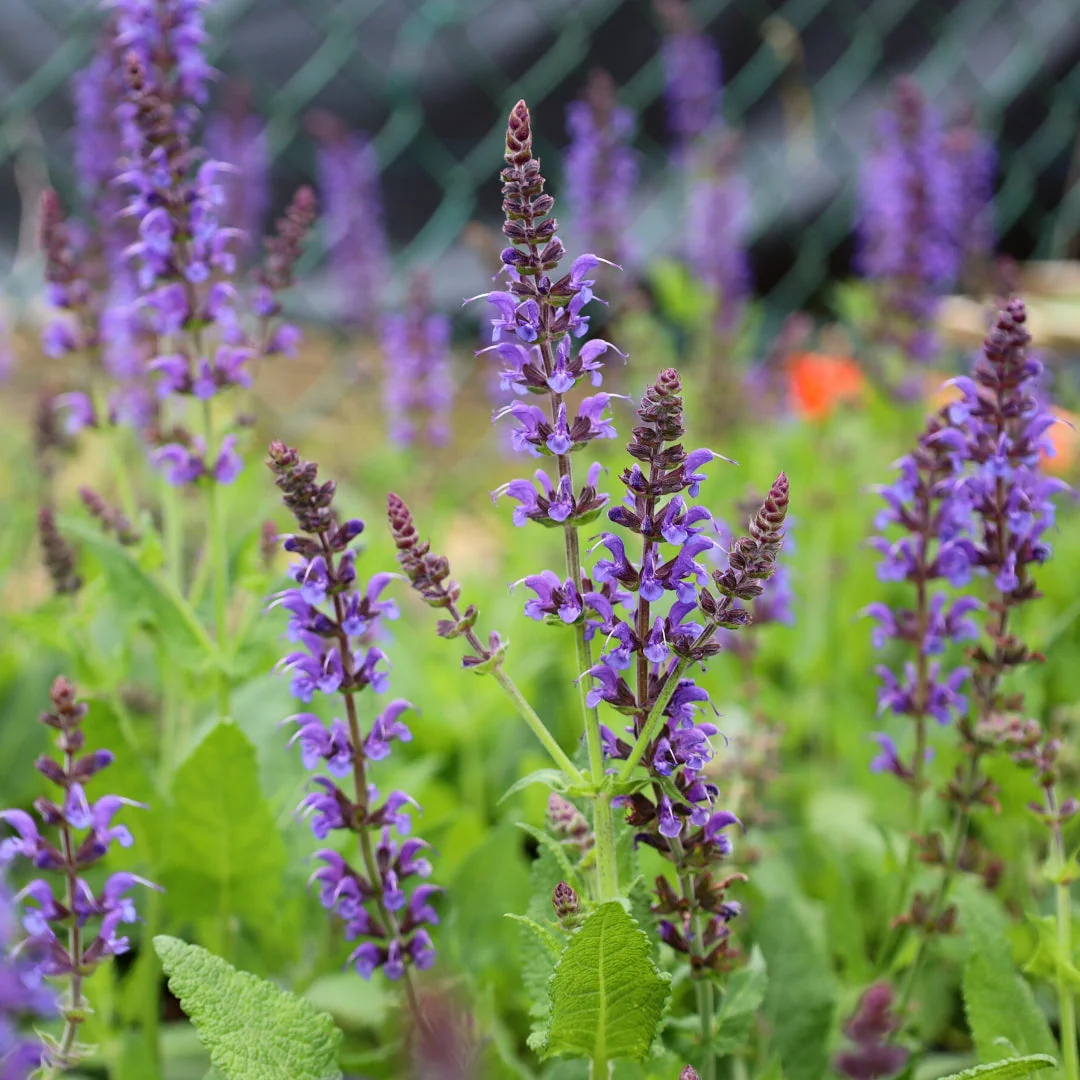
May Night Salvia is a dependable perennial sage grown for its deep violet-blue to dark purple flower spikes, aromatic foliage, and easy full-sun performance. Also known as May Night Meadow Sage or Mainacht Salvia, this variety brings strong vertical color to sunny borders, cottage gardens, foundation plantings, walkway edges, rose beds, and pollinator gardens. Its darker flower color makes it especially useful where a bold, saturated salvia is needed.
Long Blooming Color with Rebloom Potential.
May Night Salvia begins blooming in late spring to early summer and can continue with additional flowers when spent spikes are removed. The upright bloom stems rise above a compact mound of green to gray-green foliage, creating a strong seasonal display. Plant it in groups for the most dramatic effect, or repeat it through a sunny border to create rhythm, structure, and pollinator movement.
Pollinator Friendly and Deer Resistant.
The flowers attract bees, butterflies, hummingbirds, and other beneficial pollinators during bloom. The aromatic foliage also helps make May Night Salvia less appealing to deer and rabbits than many softer perennials. No plant is completely deer-proof, but perennial salvia is one of the better choices for sunny landscapes where gardeners want dependable color and browsing resistance.
Drought-tolerant once established.
Once established, May Night Salvia can handle periods of dry weather and performs well in average, well-drained garden soil. It is a strong fit for low-maintenance perennial beds, rock gardens, curbside gardens, cottage plantings, sunny foundation beds, and water-wise designs. Avoid soggy soil, heavy shade, and overly rich conditions, which can reduce flowering and weaken the plant.
Easy Care with a Clean Seasonal Refresh.
Plant May Night Salvia in full sun with well-drained soil. Water regularly during the first growing season, then reduce watering once roots are established. Deadhead individual flower spikes or shear the plant after the first major bloom flush to encourage fresh foliage and repeat flowers. Cut back old stems in late fall or early spring, before new growth begins.
Perennial Plant of the Year 1997
A Classic Dark Purple Meadow Sage.
May Night Salvia is a dependable perennial sage grown for its deep violet-blue to dark purple flower spikes, aromatic foliage, and easy full-sun performance. Also known as May Night Meadow Sage or Mainacht Salvia, this variety brings strong vertical color to sunny borders, cottage gardens, foundation plantings, walkway edges, rose beds, and pollinator gardens. Its darker flower color makes it especially useful where a bold, saturated salvia is needed.
Long Blooming Color with Rebloom Potential.
May Night Salvia begins blooming in late spring to early summer and can continue with additional flowers when spent spikes are removed. The upright bloom stems rise above a compact mound of green to gray-green foliage, creating a strong seasonal display. Plant it in groups for the most dramatic effect, or repeat it through a sunny border to create rhythm, structure, and pollinator movement.
Pollinator Friendly and Deer Resistant.
The flowers attract bees, butterflies, hummingbirds, and other beneficial pollinators during bloom. The aromatic foliage also helps make May Night Salvia less appealing to deer and rabbits than many softer perennials. No plant is completely deer-proof, but perennial salvia is one of the better choices for sunny landscapes where gardeners want dependable color and browsing resistance.
Drought-tolerant once established.
Once established, May Night Salvia can handle periods of dry weather and performs well in average, well-drained garden soil. It is a strong fit for low-maintenance perennial beds, rock gardens, curbside gardens, cottage plantings, sunny foundation beds, and water-wise designs. Avoid soggy soil, heavy shade, and overly rich conditions, which can reduce flowering and weaken the plant.
Easy Care with a Clean Seasonal Refresh.
Plant May Night Salvia in full sun with well-drained soil. Water regularly during the first growing season, then reduce watering once roots are established. Deadhead individual flower spikes or shear the plant after the first major bloom flush to encourage fresh foliage and repeat flowers. Cut back old stems in late fall or early spring, before new growth begins.
Perennial Plant of the Year 1997
Original: $18.95
-70%$18.95
$5.68Description
A Classic Dark Purple Meadow Sage.
May Night Salvia is a dependable perennial sage grown for its deep violet-blue to dark purple flower spikes, aromatic foliage, and easy full-sun performance. Also known as May Night Meadow Sage or Mainacht Salvia, this variety brings strong vertical color to sunny borders, cottage gardens, foundation plantings, walkway edges, rose beds, and pollinator gardens. Its darker flower color makes it especially useful where a bold, saturated salvia is needed.
Long Blooming Color with Rebloom Potential.
May Night Salvia begins blooming in late spring to early summer and can continue with additional flowers when spent spikes are removed. The upright bloom stems rise above a compact mound of green to gray-green foliage, creating a strong seasonal display. Plant it in groups for the most dramatic effect, or repeat it through a sunny border to create rhythm, structure, and pollinator movement.
Pollinator Friendly and Deer Resistant.
The flowers attract bees, butterflies, hummingbirds, and other beneficial pollinators during bloom. The aromatic foliage also helps make May Night Salvia less appealing to deer and rabbits than many softer perennials. No plant is completely deer-proof, but perennial salvia is one of the better choices for sunny landscapes where gardeners want dependable color and browsing resistance.
Drought-tolerant once established.
Once established, May Night Salvia can handle periods of dry weather and performs well in average, well-drained garden soil. It is a strong fit for low-maintenance perennial beds, rock gardens, curbside gardens, cottage plantings, sunny foundation beds, and water-wise designs. Avoid soggy soil, heavy shade, and overly rich conditions, which can reduce flowering and weaken the plant.
Easy Care with a Clean Seasonal Refresh.
Plant May Night Salvia in full sun with well-drained soil. Water regularly during the first growing season, then reduce watering once roots are established. Deadhead individual flower spikes or shear the plant after the first major bloom flush to encourage fresh foliage and repeat flowers. Cut back old stems in late fall or early spring, before new growth begins.